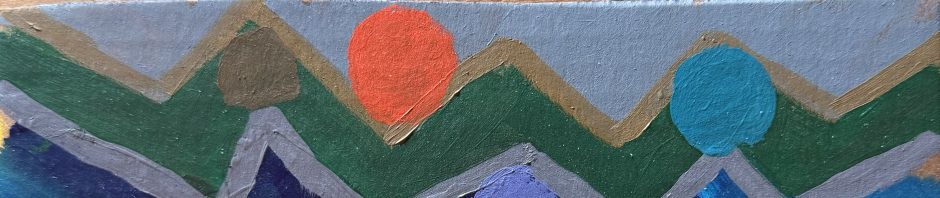
I painted it all tried to paint my thoughts / And caught so little / The world still grows it grows relentlessly / And yet there is always less of it
(From “The Old Painter on a Walk” by Adam Zagajewski, translated from the Polish by Clare Cavanagh, The New Yorker, 11-21-22)
Poetry! How do you translate it? I don’t know a word of Polish, but surely translator Clare Cavanagh has tapped transmissible gold from Adam Zagajewski’s poem? Look alone at how the transgressive run-on sentences evoke a perception of headlong welter!
Does winkeling out what a poem says shed light on what it’s “about”? A poet may say, “You’re asking the wrong question; the poem is about what it says. Just feel the burn, revel in the mystery!” Perhaps followed by tips on “how to read poetry.” My dinghy sails past these rodomontades with me lashed to the mast. Words that aren’t more than the sum of themselves are forgettable, and my project is to remember them.
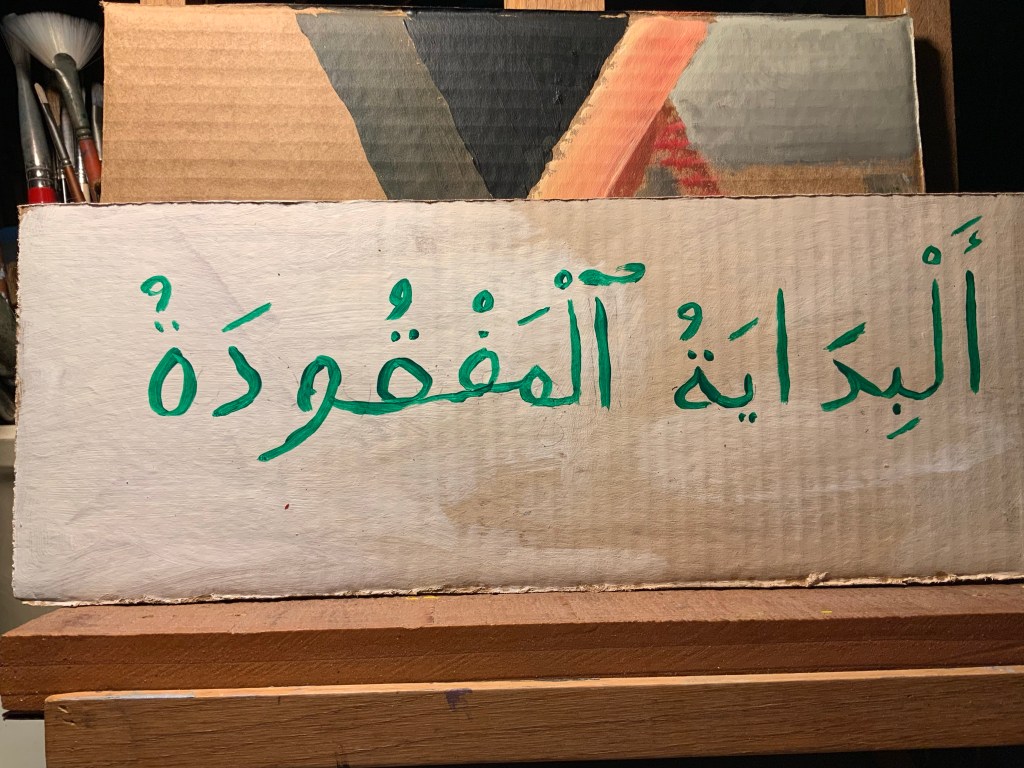
Part 2 of Gilgamesh’s Snake (1) is titled ‘al-bidāyaẗu-l-mafqūdaẗu: “the beginning the lost,” i.e., The Lost Beginning.
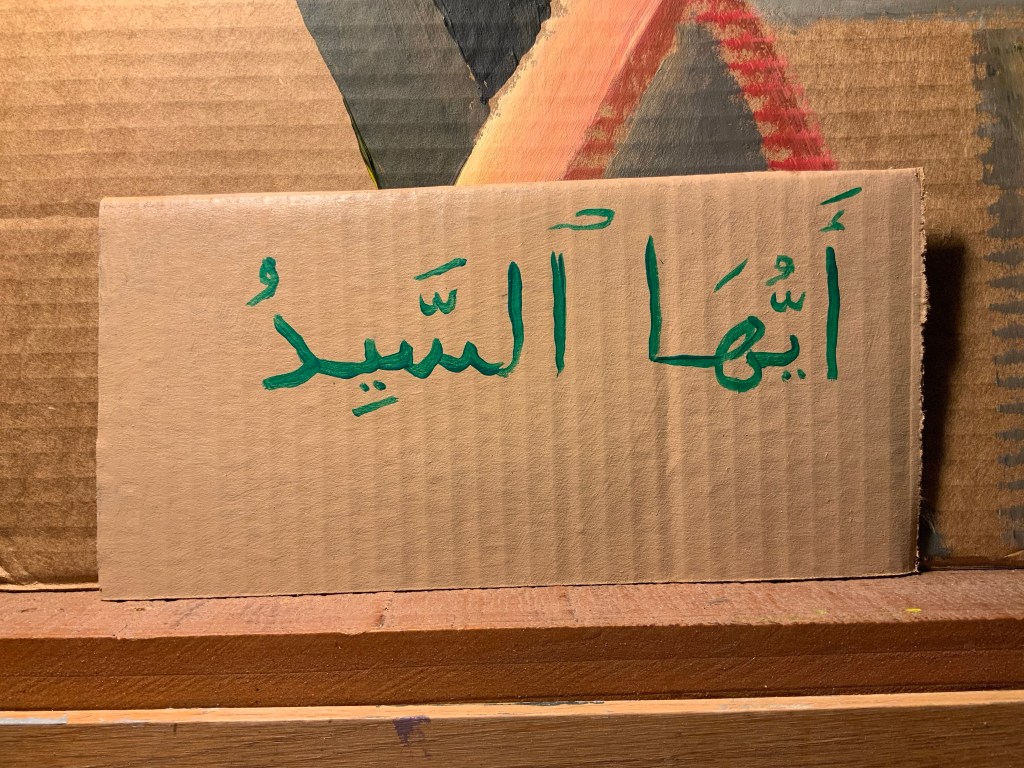
‘ayyuhā-s-sayyidu
Master!
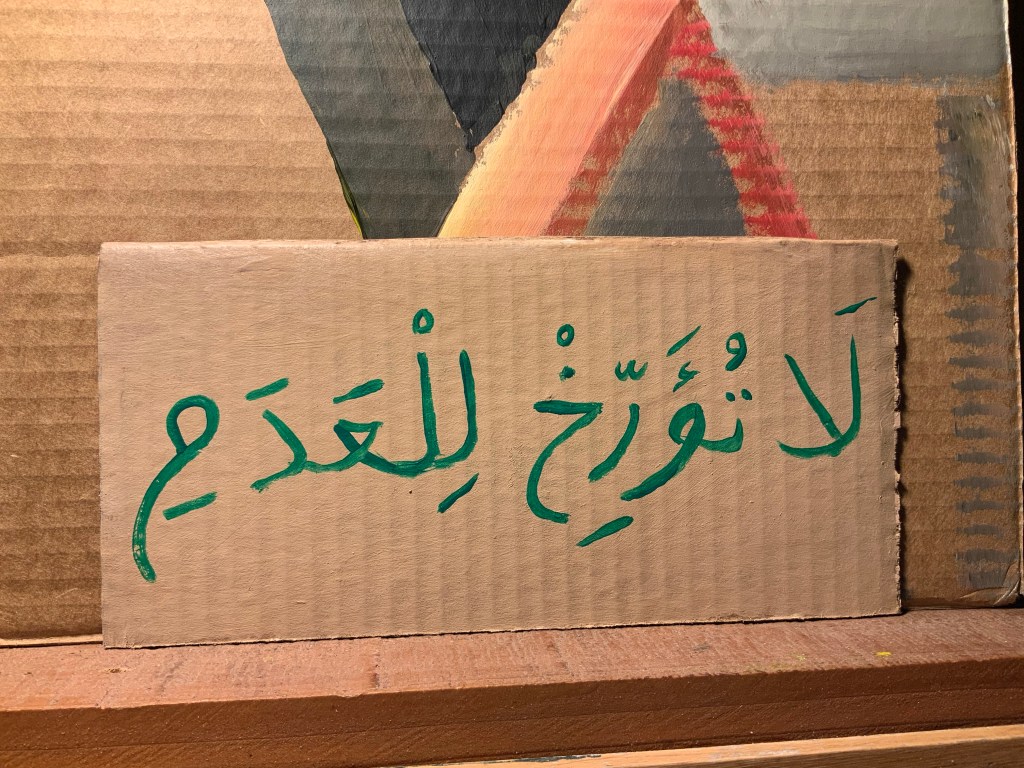
lā tū’arriẖ li-l-^adami
Don’t write histories for no reason.
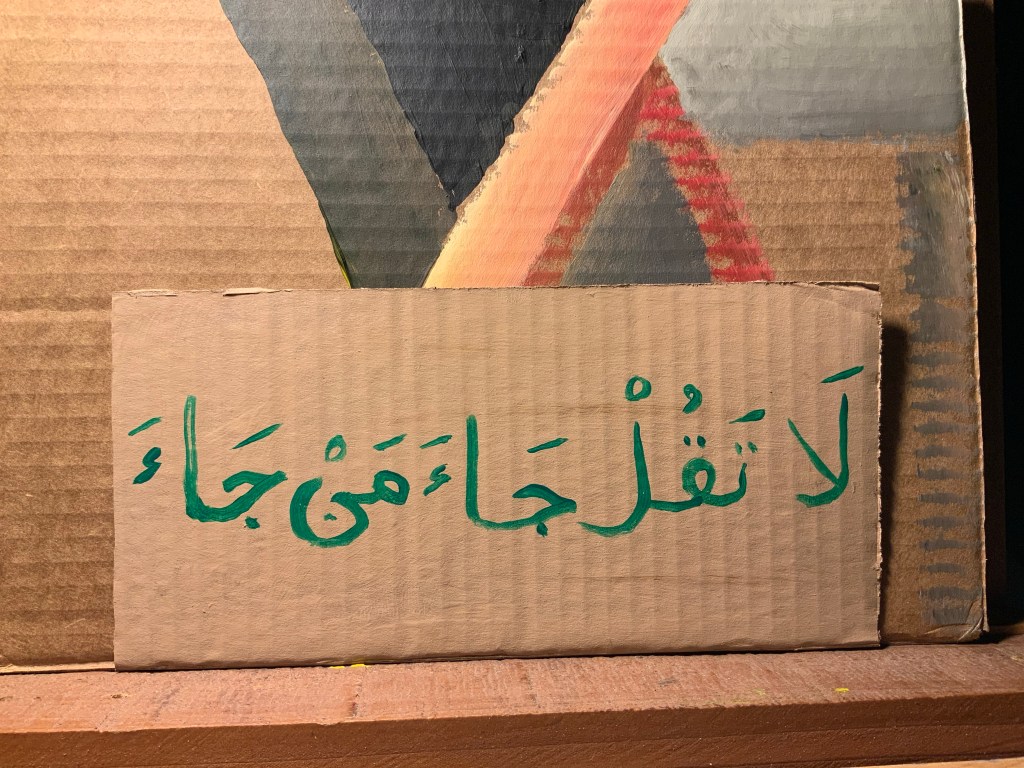
lā taqul jā’a man jā’a
Don’t talk about someone arriving
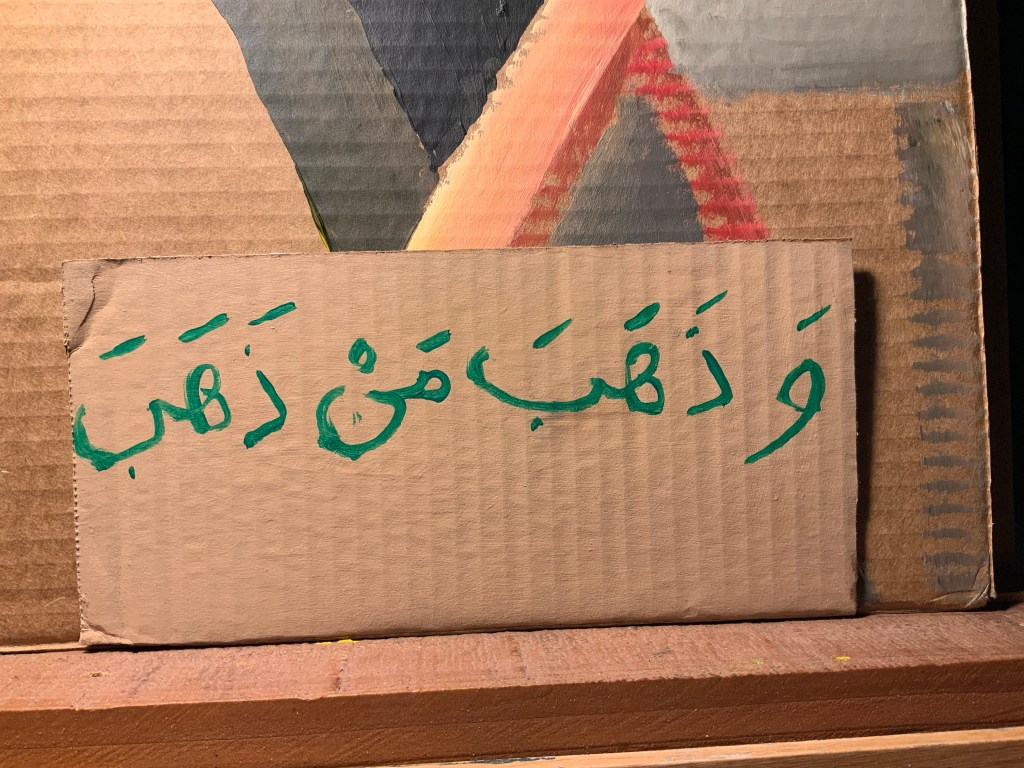
wa ḏahaba man ḏahaba
and someone else going away.

lā takšif ^ani-l-ẖulūdi
Don’t let anyone glimpse that white shadow

huwīyaẗa-ka-l-bāhitaẗa
called Eternity, which you cast.
Verses 5 and 6 say, “Don’t draw back from eternity / your pale essence.” Verb kašafa with preposition ^an means to draw back something like a curtain or veil, thus laying bare what it conceals, which in this case is “eternity” — ‘al-ẖulūd. The “curtain” sought by the speaker not to be drawn back is the apostrophized master’s “pale essence.” He’s a historian. In the Glenday-Iskander version (italicized), the historian’s pallor colors eternity, which is the shadow he casts. This gussies up an obscure conceit with razzmatazz, which may fit Borges’ notion that “a translator should seek not to copy a text but to transform and enrich it.” (2) But it’s also Transgressive. (3)
Postscript: I can’t stop fidgeting over that odd comma casting its shadow in verse 6.
Post-Postscript: I need a good calligraphy brush. The paintbrushes I improvise with splay and fudge the script hideously. I’m discovering that a brush is like string: you can pull, but not push it.
Notes
(1) Gilgamesh’s Snake and Other Poems, Ghareeb Iskander, Bilingual Edition, Translated from the Arabic by John Glenday and Ghareeb Iskander, Syracuse University Press, 2015. In text citations, the published translation is in italics beneath my literal rendering and transliteration.
(2) Jiayang Fan, “Han Kang and the Complexity of Translation,” The New Yorker, 1-8-18.
(3) My invented labels are Congruent (matches the source text fairly closely, with minimal liberties taken for readability); Omissive (suppresses elements of the source text without obvious justification); Expansive (adds interpretive structure or content not discernible in the source text but plausibly deriving from it); Inventive (carries the “expansive” element to a level not obviously supported by the source text); Transgressive (departs from the source text in a way that seems to betray the poem’s letter or spirit).
(c) 2022 JMN — EthicalDative. All rights reserved






 EthicalDative
Sensing the Presence of Vinegar: Food Poetry
(A squalid detail to put behind us: “vichyssoise” is misspelled in the review as “vichysoisse.” Slipshod, to be sure, but my esteem for Pete Wells’s writing remains intact. Even Homer nodded.)
Pete Wells said once that when he became restaurant critic for The New York Times he resolved not to write about food in a hackneyed way. Wells doesn’t seek umpteen ways to say a dish tastes good or lousy. That would be all about him and his feelings. He skirts foodie raptures as resolutely as poets shun sunsets.
— … Two mini-slabs of monkfish-liver terrine… are impossibly soft for something that has edges and corners.
— … Karasumi, mullet roe that is salted, pressed and aged into something that tastes like fish-egg ham.
What telegraphs the passion is disdain for low-hanging ecstasies in favor of down-and-dirty detail. Close naming of ingredients, process, presentation and ambience serves to instantiate food in a gustatory headspace shared with the reader, who stands to attention as if summoned by bugle before mysteries such as monkfish liver and cod semen.
— In late fall and into the winter, there may be shirako, sacs of cod milt in loose white coils over ponzu sauce.
— The rice will be just sticky enough to hold together for a few seconds on its way to your mouth. It will be just tart enough that you can sense the presence of vinegar without quite tasting it.
(Pete Wells, “Restaurant Review: Four Stars for Yoshino, Where the Omakase Stands Alone,” New York Times, 11-15-22)
(c) 2022 JMN — EthicalDative. All rights reserved