A friend I’ll nickname Stardust, avid prose reader, has remarked that relatively few people have a taste for poetry nowadays. I surmise it’s always been so, even in this or that era when <name-your-Great-Poet> flourished. The Great One would have been lionized by a coterie of fans in a populous land of nonreaders.
Poets are a few obsessives bent on strewing words just so, in a way the next person can’t, applecart-tipping and necessary. Their readers are a peculiar lot bent on stewing over those words. I like to think of doggerel, tangentially, as poetry’s running dog. Hail to thee, blithe mutt! Bird thou never wert.
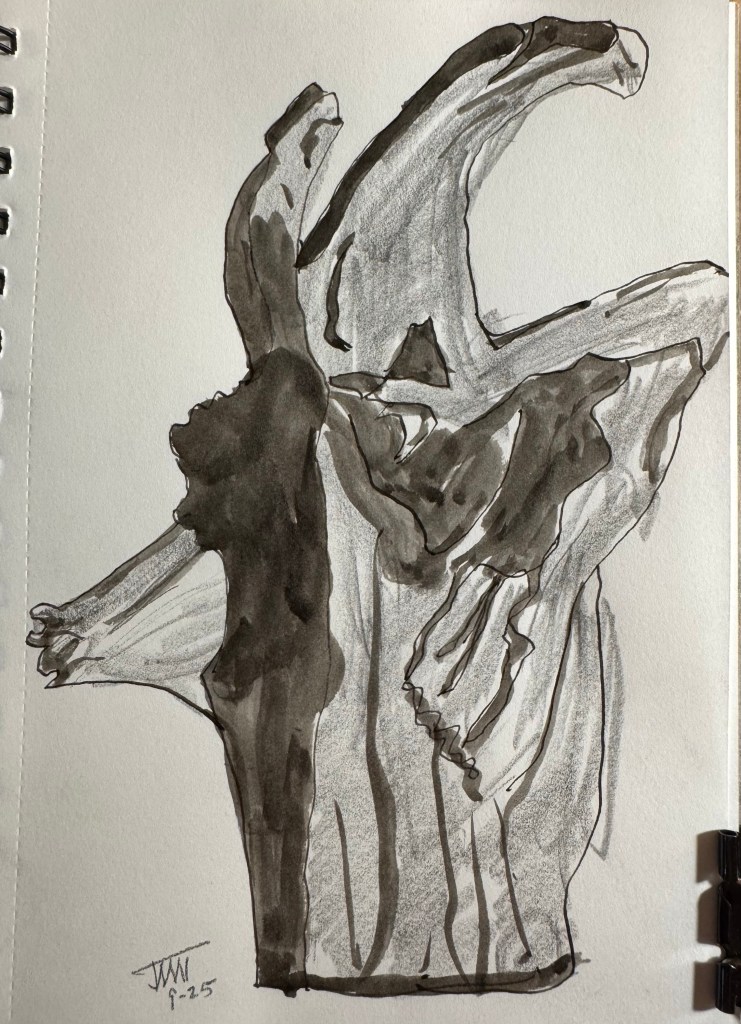
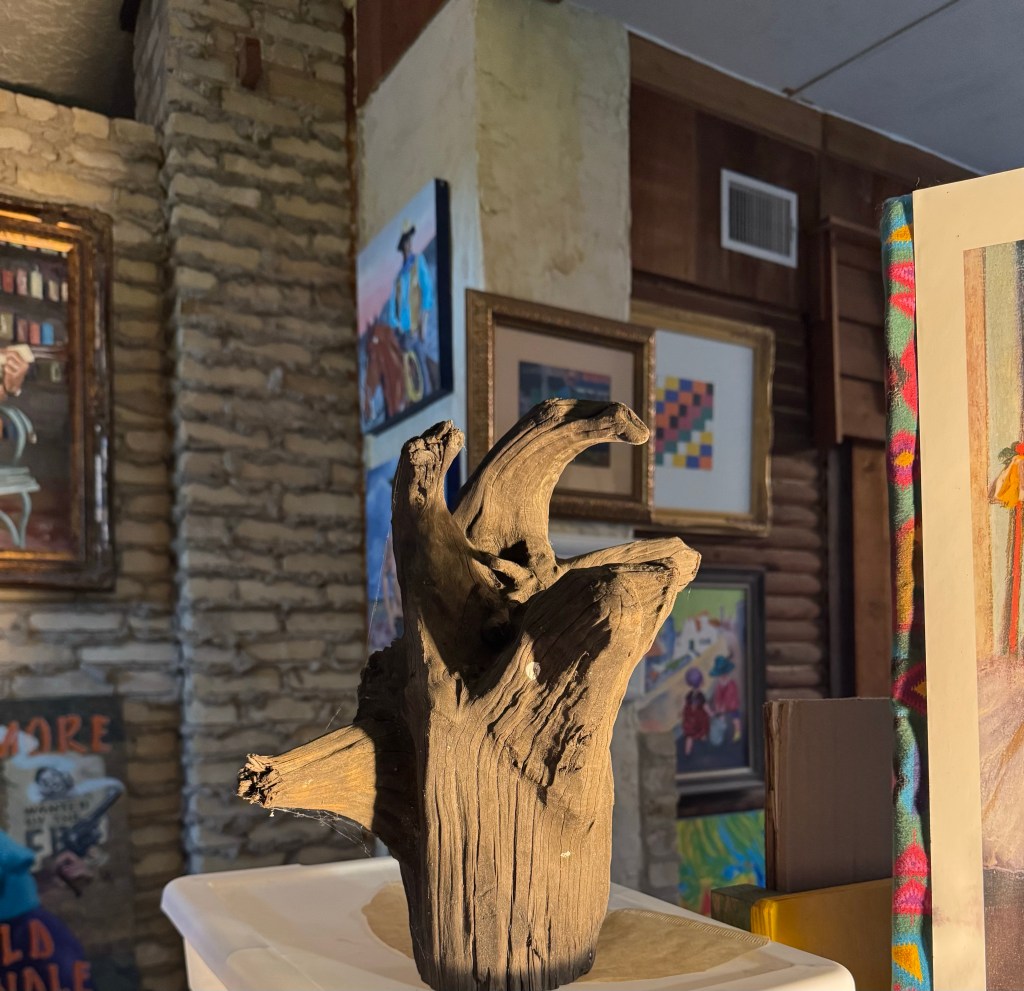
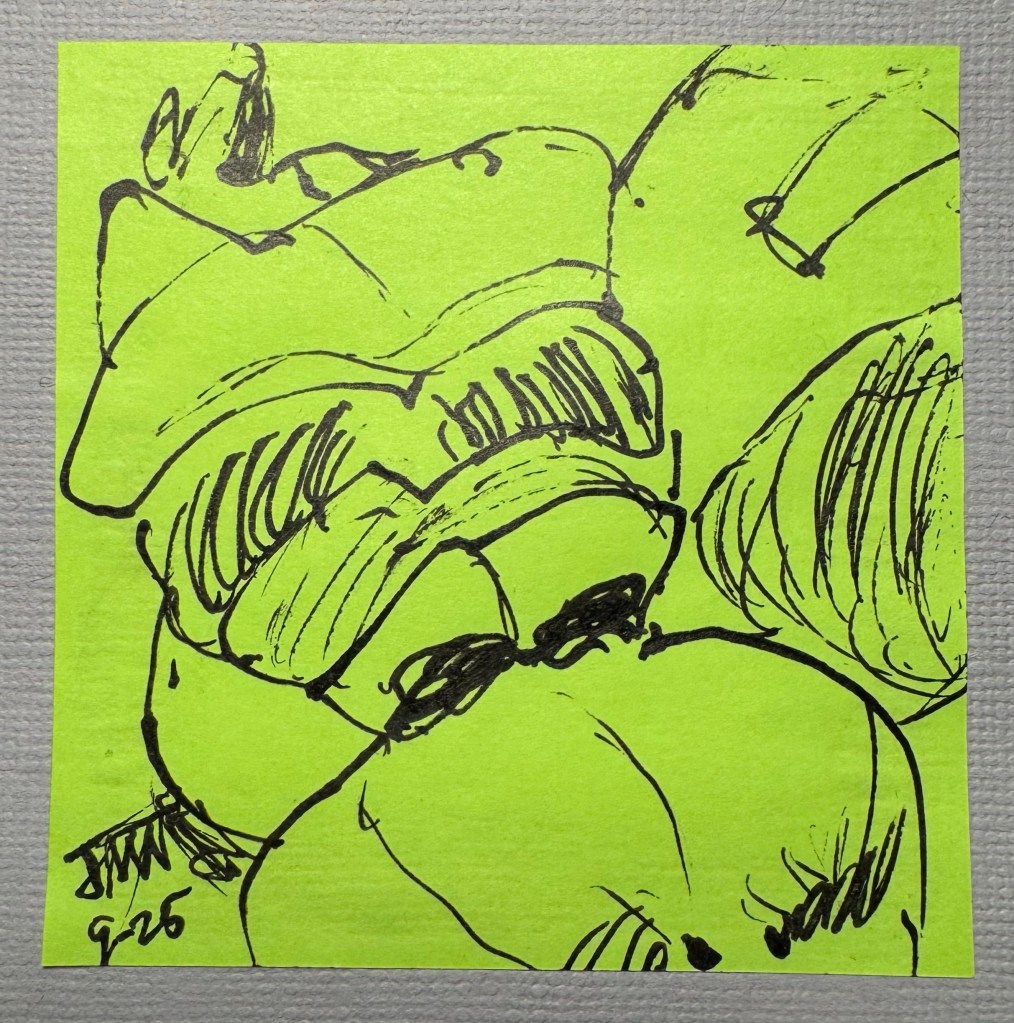
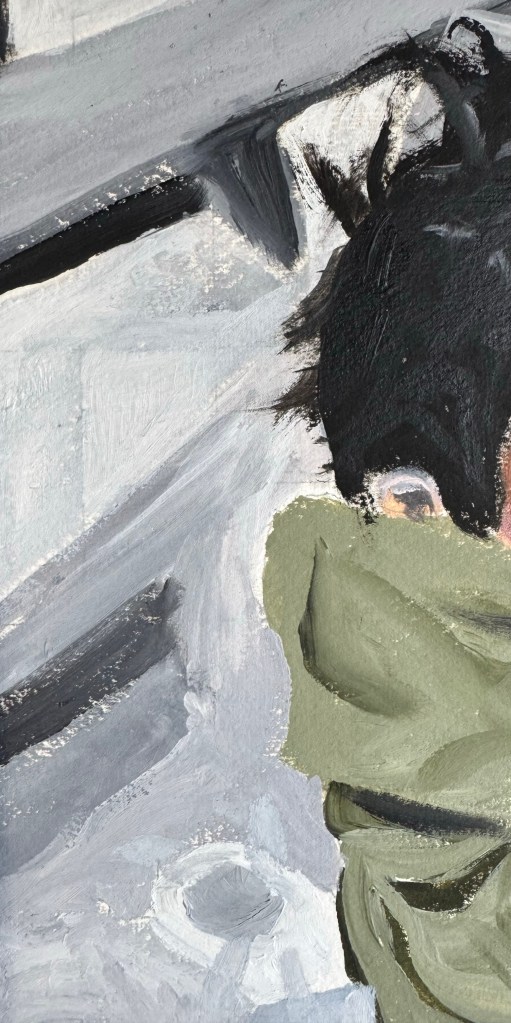
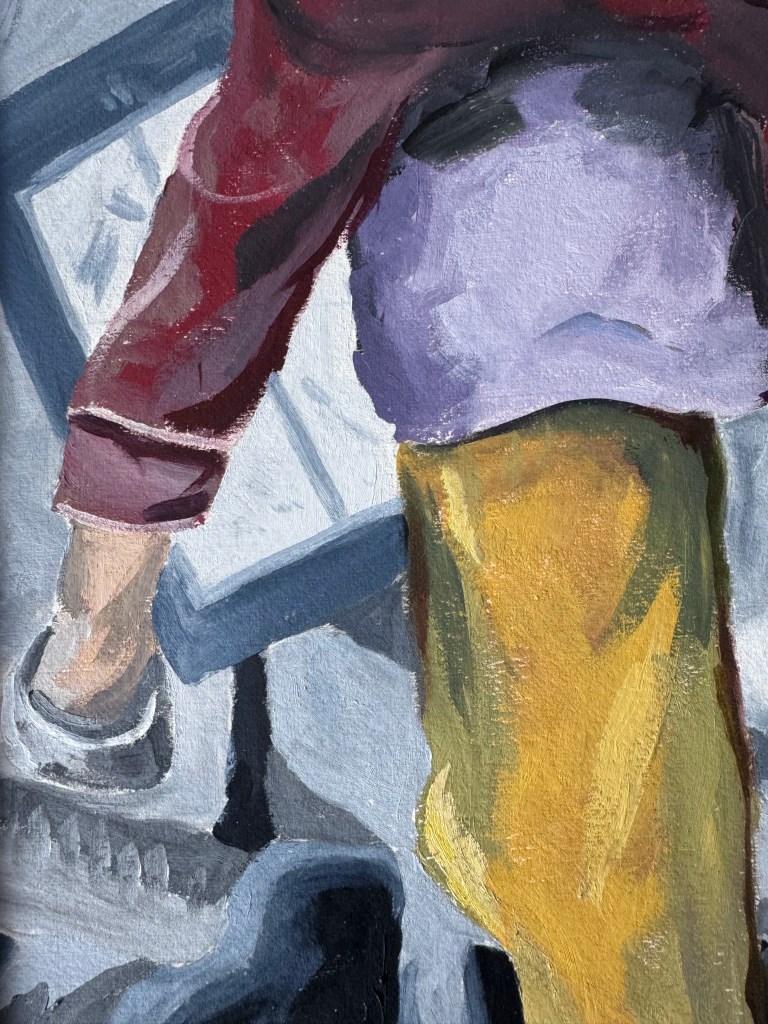
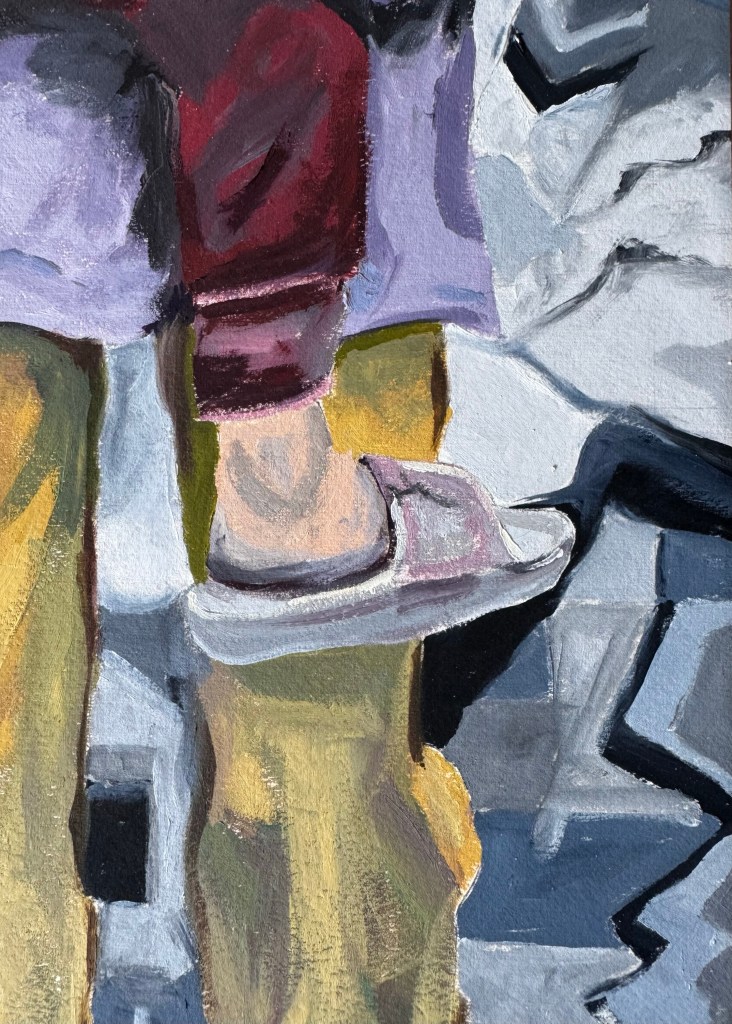
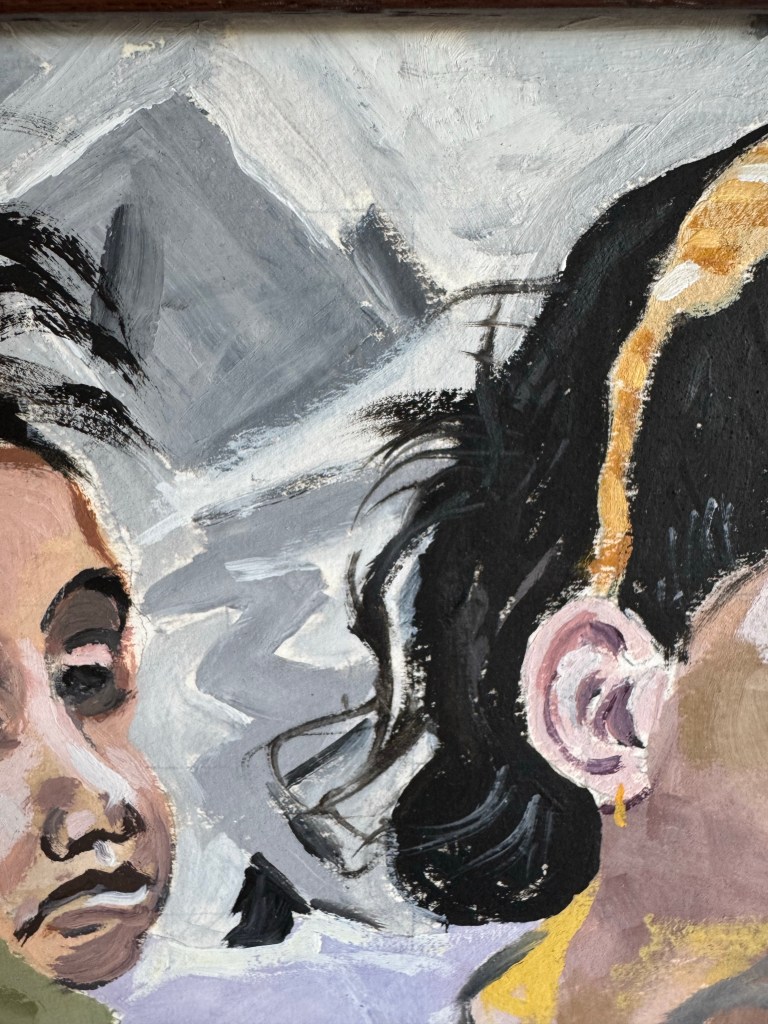
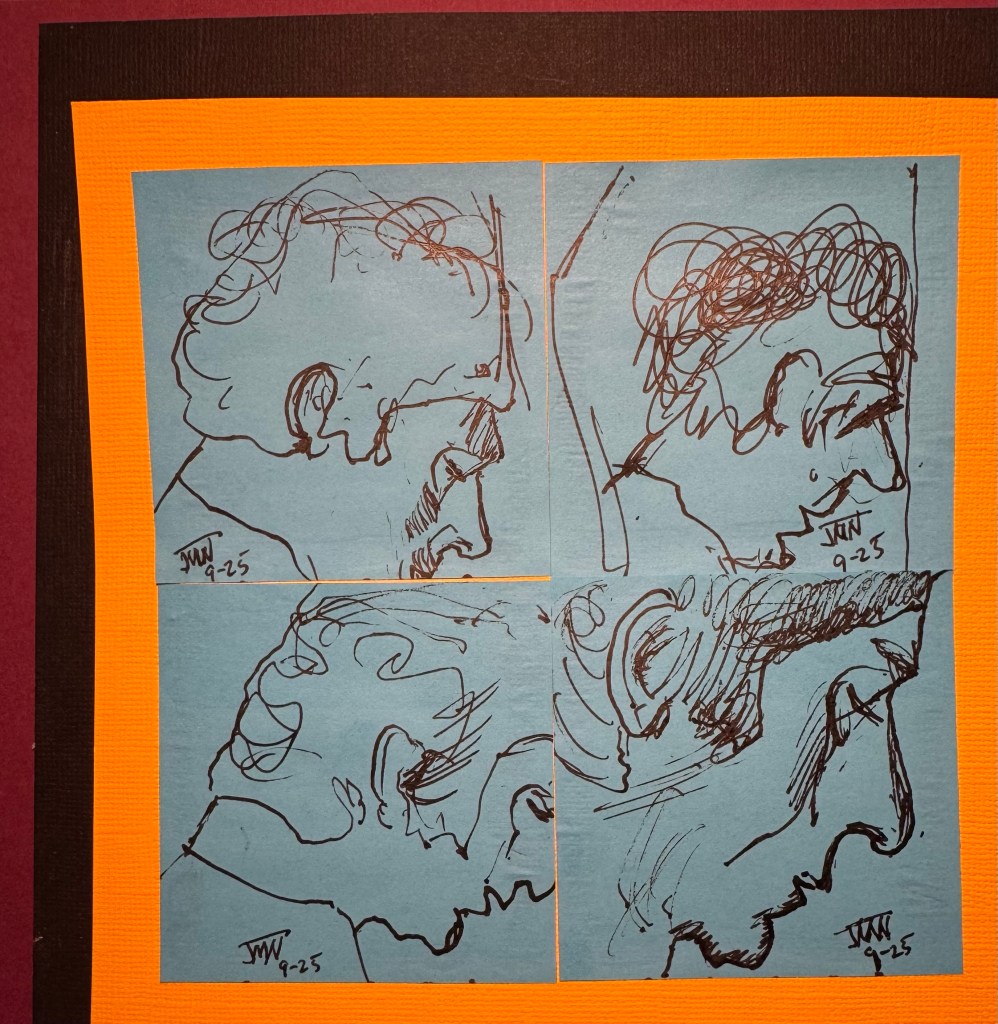
The pivot point in this spiel is that Stardust is a skilled artist who can reify in line, value and hue what a poet does in words:
I did not want / the moment to end / then stopped wanting / so I could / be, not yearn,… (Lia Purpura, from “Intersection”, Poetry, September 2025)
“Did not want… then stopped wanting… be, not yearn,” Impossible to say differently that’s better. Both Stardust and Lia Purpura can turn a flash of perception into a thing that lingers, and completes itself in the psyche of another human.
If Stardust is ever pierced by a poem-moment, and there’s no special need for that to happen from where I stand, there’s hundred’s of feet of fertile loam accrued in my friend’s delta of sensibility for it to root in. Stardust will have perceived the poem as lines, akin to a sketch that works unusually well.
*** “I hate being called poet/dramatist/translator/director. Poet covers it all for me… I want to do justice to my inwardness, my tenderness, my political rage.” (Tony Harrison) ***
*** … como una mosca espía… … like a fly on the wall… [“a spy fly”!] (From “Revuelo” by Azurea20) ***
*** … Maybe instead of building a ship somewhere in your body you just let yourself feel the pain and humiliation. No need to make it beautiful for some future reader. Just say how much you wanted to hurt someone like you got hurt. And then just watch that for a while. It’s okay to feel horribly ashamed. Best not to look away. (From “Karma Affirmation Cistern Don’t Be Afraid Keep Going Toward the Horror,” by Gabrielle Calvocoressi, Poetry, October 2025) ***
*** A month and continent away your father (a painter) steps to my side
as we admire a row of lavender & someone
en plein aire complains the scene is mis-composed
(a power-line cuts through…)
your father smiles, and gestures out — art
isn’t for capturing what’s there (From “Arles, Whidbey,” by Reed Turchi, Poetry, October 2025) ***
Depending on whether I’m going or returning, not long before or after my crossings of the mighty, tea-dark Brazos near the Arredondo bridge, I pass what appears to be a Christian church whose name has kerygma in it.
For a period measurable in years now, I’ve meant to look up what kerygma means. As I spin by on the farm-to-market road, I always reflect that it has a Greek sound to it. This sets off a well-worn rut of reflection induced by the boredom of a familiar route…
The old saw about something incomprehensible: “It’s Greek to me.” My southern grandfather’s time-stamped joke about one Black schoolboy’s query to another concerning homework: “Is ya didja Greek?” The only son he was that never graduated high school because he wouldn’t pass Latin, according to his mother. The father he was to my teenage mother, jibing her for dating a “jewboy,” son of the Tobolowskys, who owned the dry goods store.
At long last I’ve Googled kerygma, and its meaning is what you’d expect: a bunch of words in English. Something about preaching.
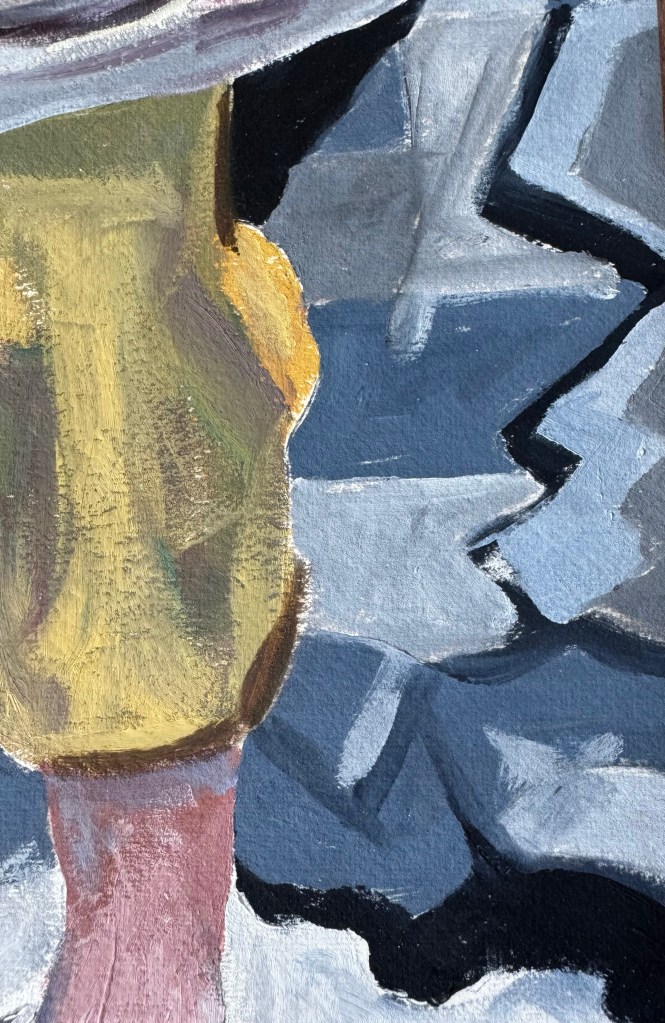
I always end up on ekphrastic, another Hellenism that writhes in and out of my retentive faculty like a slippery fish. It reminds me of a favorite painting of mine from among those I’ve done.
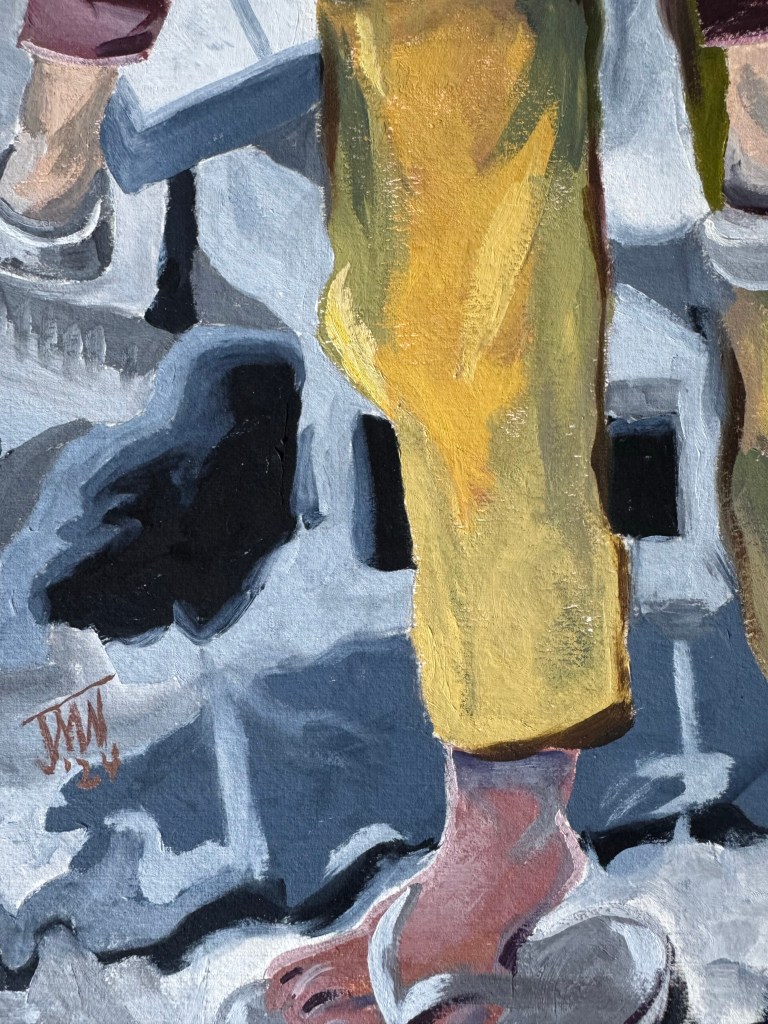
The painting is narrow and tall. A female figure — girl/woman — stands holding a stunned five-year-old boy — son/brother. They fill the picture space from head to toe.
With the boy balanced on her scrawny hip, she stares skyward with the bleakest of looks, searching for God, maybe, or else the next bomb. Their skin is ashen; the coloring of their clothing filthy, ferrous, feral: mauve, olive, rust, ochre.
Much as they are the putative subject, the true subject is the rubble of which they are the human pieces. Sturm und Drang; wrack and dreck; profit and loss.
I’ve never painted anything with more devotion than the abstract wreckage, technically a background, which envelopes the walking destined-to-be-killed. It’s an inglorious, ghastly gallimaufry of improvised shapes in gamuts of grisly grays.
Rubble — inky, icky, inevitable — enduring creation of man, background of so-called civilization.
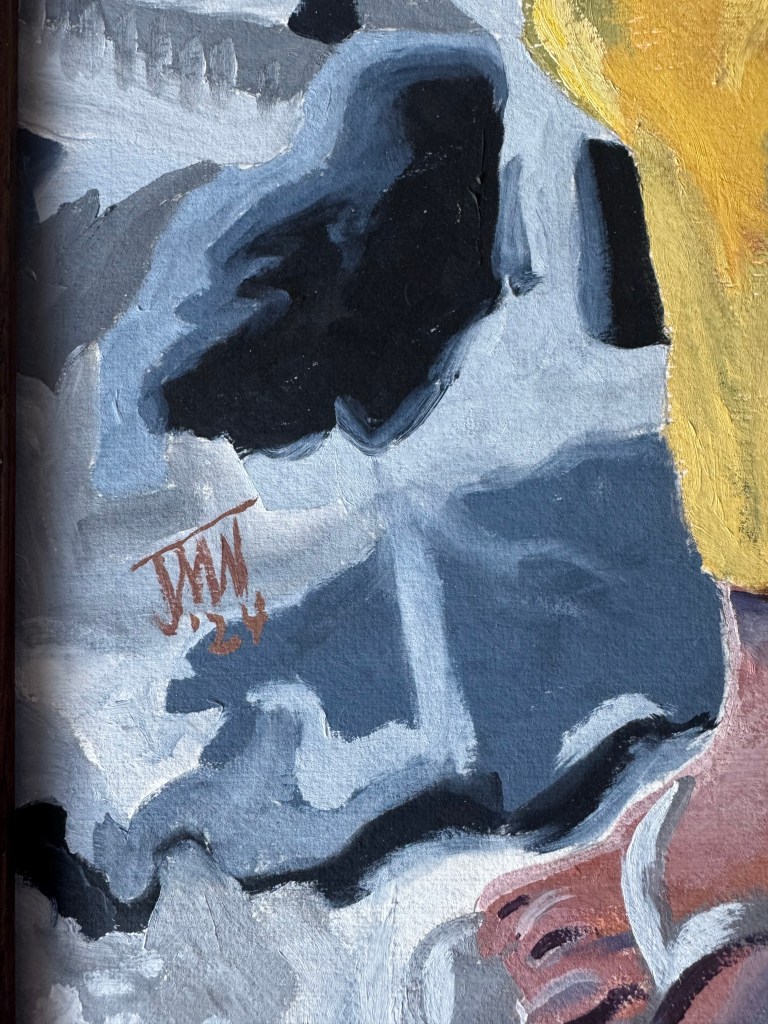
Detail, “Rubble,” oil on watercolor paper, 14×30 in. (JMN 2024)
Often as not a poem gives me a right old drubbing while stealing my lunch money, cackling in cold delight all the while. Instead of picking up my Big Chief tablet, shrugging and slinking back to class, I squeal like a ninny for it to give me a wedgie and Dutch Rub to boot.
Of all the species of eight creeping things
I burst my pink peppercorn of DNA and became a bird, like you. […]
Like me!
I adopt the guise of a messenger returning from conference with a potentate. I’m tasked with carrying report to my liege lord, the imperious brain. The trick is this: the potentate and my suzerain speak different dialects. Nominally, I straddle the void between them, a Scheherazade translator, fending off the executioner with whatever I can pretend to have heard.
What if Rick of Casablanca had said this: “Of all the gin joints in all the eight towns in all the world, she walks into mine.” Tell me there’s not a jolly problem.
There’s the affair of the peppercorn, the pink one. Everyone knows about deoxyribonucleic acid (DNA), the double helix and all that (nervous chuckle, bead of sweat on my brow). A bursting of this hide-and-seek spice symbol causes the speaker to become a bird, who tells this to another bird. That much is clear.
Moving on.
I found your flanks wattle, primaries & tail feather. […]
Among other things, I love the periods in this poem. They let me collect myself.
I think Bird of Paradise, because it sounds fable-Babelish, but it’s a plant. Better a Phoenix, mythical bird regenerated from fire. (Does the Phoenix have a wattle? Park that for now, your majesty. It’s of little moment for our purposes… heh-heh, sweat bead drops.)
Birds do hop, waddle and fly, not creep. That’s why “Bird” opens with a tone of disbelief, like Rick’s.
This “finding” that goes on (“I found your flanks…” etc.) is like the biblical “knowing,” a naughty euphemism. It could evoke a mating ritual — yes, two sexy, one-of-a-kind (!) Phoenixes. Myth makes its own weather, sire, like forest fires. Let’s not obsess on hermeneutics. Ask instead what twin firebird hankypanky could engender.
All our lesser holes-in-the-corner
opened like mantles —the sun’s orange rind flew out of the terrifying world. (“Bird.” by Sean Singer, Poetry, September 2025)
Apocalypse is what!
In the associative spasm of a million infernos, Earth’s molten core, breaching its mantle, spurts ejecta into Sun’s dissipating corona — its rind. The egg of a future beyond conceiving is fertilized in a hail Mary of cosmic ecstasy. It’s a hellish curtain call for all terrestrial life. What’s not to be terrified by, of, for, about, your highness?
(The prepositions did their work. My lord and master has succumbed to slumber. I’ll live another day.)
Sean Singer’s nettlesome lyric tells the story it tells in the words it uses. Tell me it doesn’t. I see those words at each pass. What I’ve made of them is addled whimsy, of course, but not snide, and not mockery. The poem doesn’t need me; I need it. Reading poetry teaches me: Don’t lose your head. Be bold. Read it the high way, the low way, any way but loose. Just read it, let it look for, if not find, you; otherwise, your orange rind can’t fly out.
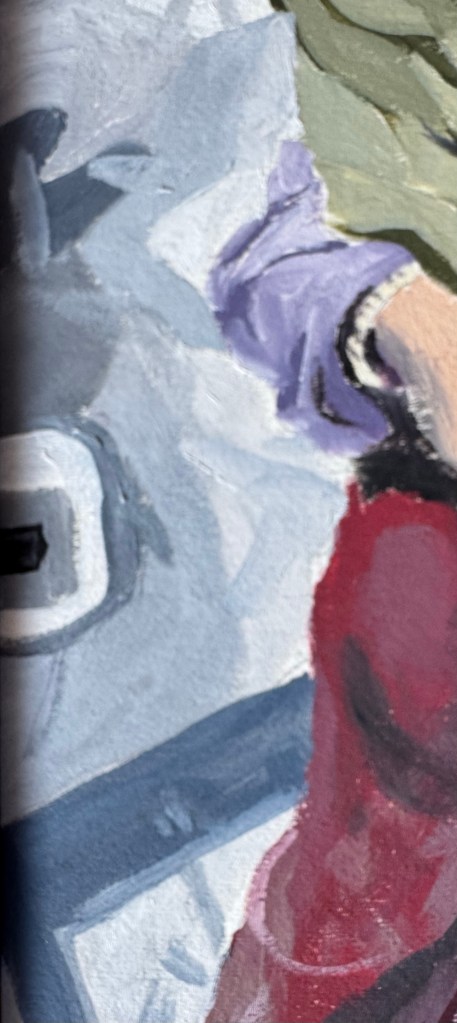
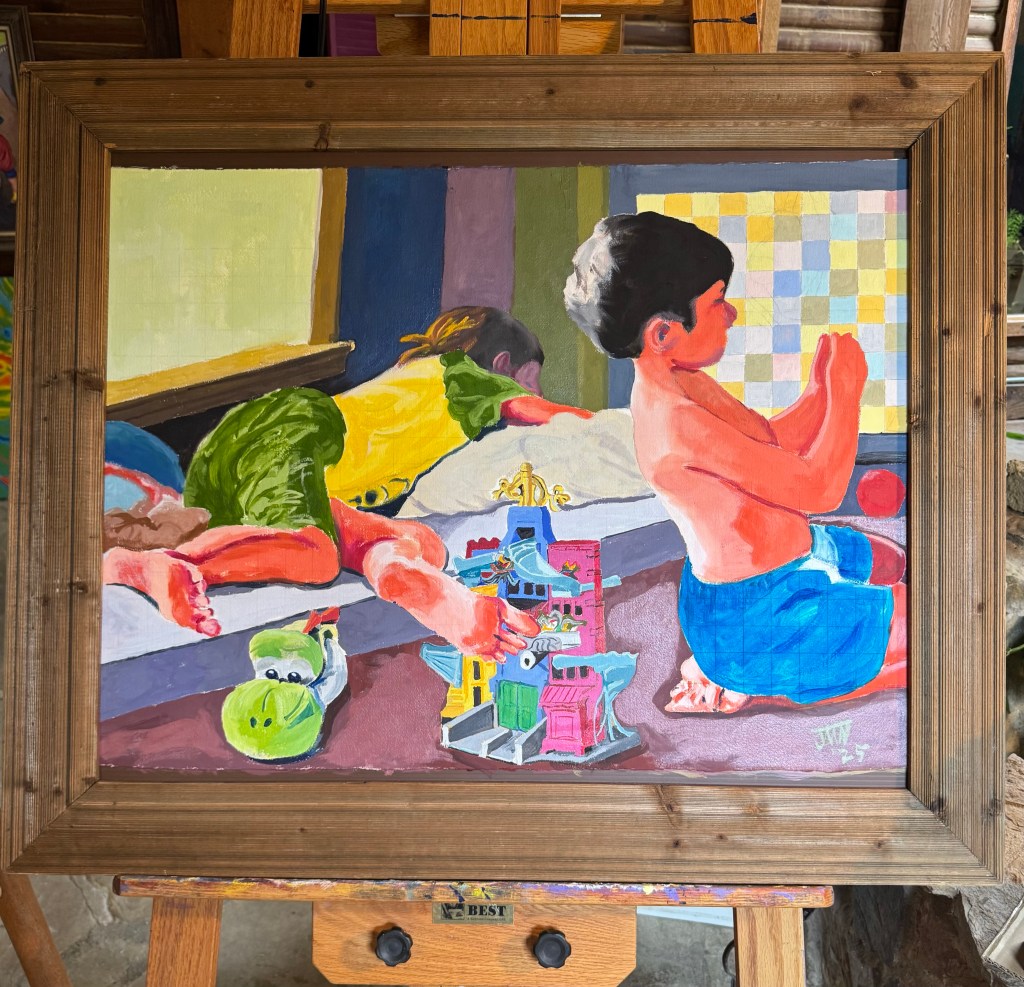
“Time Out,” oil on watercolor paper, 24×30 in. (JMN 2025).
Afterthought foregrounded: This will go down as a wildly utopian, presumptuous, naive, impractical proposition. Imagine a world in which the devout were schooled from an early age to read the foundational scriptures of their respective creeds in the original languages rather than translations. Talk about a conversation of adepts. Would there be fewer arguments over religion? Not likely. But they’d be better ones.
I make my way through the Quran’s Arabic à grands coups de dictionnaire. Why resort to the dictionary when there are translations available? Because translations can diverge considerably, besides often being overly interpretive for the literal-minded language student who wants to hear the plain text talk. I do lookup to pinpoint unvarnished word meanings. It’s an exhilarating sojourn on multiple levels. Here’s an instance from today’s stint of reading (September 24, 2025).
On that Day you shall see the guilty ones secured in chains; — A. Maududi (Tafhim commentary) Et le jour (viendra) où tu verras les criminels enchaînés les uns aux autres (en couples semblables). — Montada Islamic Foundation https://quran.com/14/49
The above are two translations I monitor as I go. They assist me in construing the Arabic. I also consult the Spanish translation of Julio Cortés, who was my teacher. Here’s his version:
49 Ese día verás a los culpables encadenados juntos,
The pivotal word is muqarrab(īna). It’s the past participle in masculine, accusative plural of a Form II verb having causal force with a range of meanings tightly or loosely connected to making or letting someone or something get close. It can include the taking of someone as associate or companion; also, the sheathing, or putting into its scabbard, of a sword. How does this sheathing relate to the “base” meaning, you may wonder. Good question having no immediate answer. Relationships across a semantic range can be untraceable. As with all languages, eons of usage have caused metaphorical, practical, maybe even accidental, drift. This driftiness undoubtedly accounts for some of the variations observable in translations of texts captured from oral transmission in ancient times.
Muqarrab(īna) modifies a nominal present participle, mujrim(īna), “criminals,” describing their condition of being fī-l-‘aṣfād, “in the bonds.” Wehr lists equivalents of ṣafad (pl. ‘aṣfād) as bond,tie or fetter. Why not also chain, shackle, manacle? Who knows? A bilingual dictionary can’t be a thesaurus, though Wehr often comes close. The above translations happen to agree on “chains.”
For muqarrab(īna), the French and Spanish versions key vaguely on its “companion” aspect: “chained together” in Spanish; “chained one to another (in similar couples)” in French. The English reduces it to “secured,” which isn’t exactly accounted for in Wehr’s listing. Or is it? Perhaps “secured” is akin to “sheathed,” though less literal. The putting away of a weapon brings it in companionable proximity to its owner’s waist while neutralizing it. I rather like “sheathed in fetters” for muqarrab(īna) fī-l-‘aṣfād(i). The sinners are rendered harmless in their chains, like a blade in its scabbard. Or, to modernize the simile, like a gun in its holster.
I’d love to know the thing least knowable, which is what exactly any given expression brings to the mind of a native Arabic speaker not tasked with phrasing it in any other tongue. The fantasy analogy that occurs to me is that of a psychic MRI which would show on a screen the image present in the speaker’s mind arising from reading or thinking the expression.
Intelligence is being burned at an alarming rate. Fact incineration technologies birthed in Silicon Gulch have accelerated the depletion of natural reserves.
In the advanced world, gas derived from fact-burning fuels everything from data centers and crypto mining to the private jet fleets of hard-working billionaires.
But there’s hope. Facts scraped from organic motherlodes and combusted like there’s no tomorrow may be replaceable by alternative ones generated from executive wind.
Cheese cut in myriad C-suites currently clogs olfactory assets throughout the global U.S. — from the Gulf of America to Tierra del Rubio; from Guam to Greenland; from Saint Petersburg to Florida.
The buzz in Davos is that capturing and exploiting that abundant resource could be the next sure thing.
Men of stratospheric net worth, look to the future! The rips you let on golf cart cushions alone could drive a zillion rotors powering as many alternative realities in perpetuity.
“I personally learned my own craft of writing poetry through translating poetry… I think one way to deepen the appreciation of poetry is to approach it through translation.”
The poems of Azurea20 besides poignant and memorable are irresistibly translatable. For the student of Spanish like me who may read this, I think poems can be excellent language teachers. Poets are consummate grammarians, and their best texts are pristine, compact, brimful of authentic language, and not wedded to pedestrian denotation. Some are even worth committing to memory!
On the flip side, for the reader of poetry and bumptious doggerelist in me, Arthur Sze’s words (above) resonate like a gong.
Here’s my devotedly literal homage in English to Azurea20’s poem (the parenthetical ellipses are the poem’s):
Señora de las Cosas Errantes: Lady of Errant Things: Por los que habitan los For those that inhabit the márgenes oscuros edges dark y profundos del bosque, and deep of the forest, por los que transgreden for those that transgress las normas de los desfiles, the norms of the parades, los puntos suspensivos, the ellipses, las comas y las tildes que the commas and tildes that rivalizan en altura. compete in height. Por los silencios For the silences que protegen su grito en la hache muda, that protect their cry in the mute “h,” por las mayúsculas del día for the capital letters of the day no permitas que mi cansada piel olvide don’t let my tired skin forget el llanto de los árboles the sobbing of the trees. (…) Guárdame de los días Shield me from the days que solo traen ruido, that bring only noise, sin luz que los ilumine with neither light that brightens them ni agua que los bendiga. nor water that blesses them. Los días en los que la lluvia Days on which the rain cae sin pedir permiso. falls without asking permission. No permitas que el amor Do not permit love colonice ni calcine mi paisaje, to colonize nor calcify my landscape, como el yermo de un destierro. like the wasteland of an exile. (…) Ragálame [Regálame] el Sur. Gift me the South. El sur de Camarón, de Lorca… The south of Camarón, of Lorca… que la alegría y la caricia let joy and the caress de la noche entren por mi ventana. of nighttime enter through my window. Una mirada bicolor, A two-tone glance, un dios que no esté loco, a god that’s not insane, una palabra para a word for la compasión y la denuncia. compassion and denunciation. (…) Tráeme la libertad del pájaro Bring me the freedom of the bird madrugador, that rises early, el canto de los juegos del trigo, the song of the games of wheat, el baile de las amapolas… the dance of poppies… el diálogo de los silencios antiguos, the dialogue of ancient silences, el punto donde confluyen todos los acentos. the point where all the accents converge. (…) Protégeme de los dioses Protect me from gods que interrumpen el sueño that interrupt the sleep de los cien milagros, of a hundred miracles, del azúcar amargo, de from bitter sugar, from las nieves de agosto the snows of August del hilo inútil que impide from the useless thread keeping coser la piedra partida en dos. rock split in two from being sewn. (…) Líbrame de las ciudades desflecadas, Deliver me from frayed cities, de los polígonos heridos, from wounded polygons, de los caminos enredados from roads tangled en su congelación de estambre que, in their congealment of woolen yarn which alimentan crímenes, volcanes de violencia, nourish crimes, volcanos of violence, llagas de desolación y miedo. lacerations of desolation and fear. (…) Permíteme un espacio donde Permit me a space wherein colgar mi voz, resonar junto to hang my voice, to resonate along with el eco de todos y seguir estremecida the echo of everyone and continue shaken por las Heridas del mundo. by the Wounds of the world. (…) Y no olvides mi deseo de un perrito faldero And don’t forget my yearning for a lapdog una muñeca que no a doll that does not la rompa el llanto, una cuerda break from weeping, a long larga para anudar momentos string with which to tie up moments con la que fui with the one I was y una lupa que pueda and a magnifying glass that can mirar sin extrañeza a la que soy. examine without amazement the one I am. (…) Señora de las Cosas Errantes Lady of Errant Things por todo lo que nombro for all that I name y lo que callo and that I keep silent concédeme ser aquella que grant me this: to be that one who aceptará su muerte will accept her death como aceptó su vida, as she accepted her life, sin pedir clemencia, sin alargar la espera. without seeking clemency, without prolonging the wait.
“We’re planning a way to allow wide swaths of the world to elect representatives to a new governance board… Because if I weren’t in on this I’d be, like, ‘Why do these fuckers get to decide what happens to me?’”
(Sam Altman, CEO of OpenAI, speaking in 2016, quoted by Jill Lepore)
“No such world-governance board was ever established. There has been no A.I. constitutional convention. These, er, fellows, are still deciding what happens to the rest of us.” (Jill Lepore, “How We the People Lost Control of Our Lives, and How We Can Get It Back,” New York Times, 9-17-25)
Quick aside re Sam’s remark: No good news comes from a statement containing the word “swaths.” “Just sayin’,” as Sam would say.
An opinion is a choice. I choose to deem Sam Altman less smart than he thinks. Cunning yes. A consecrated shill, yes. That’s what CEOs do. Less power, not more, to him, and God bless.
AI, for all the fakery it enables, is still artificial. What it fakes best is intelligence. Artificial anything is still enacted artifice, concocted, confected, set in motion not by divine puff but by sweating, swearing, fallible humans. “Convincing” doesn’t cut it. The Turing test always seemed to me slightly beside the point.
My opinion that AI will always be an elaborate fake will wither on the vine. Perhaps it will go down as wrong, which is different. Nevertheless, holding it here and now is fostering in the head I inhabit the birth of an inkling of what religion is about.
Religion could have civic value were it enacted (“Practiced”? “Re-instantiated”? What’s the word?) widely, personally, privately, worthily, in the spirit of what is worthy of worship. Social blessedness could accrue from subscribing to transcendence as against devilish cleverness. In a religious world the killing would stop, full stop. AI would receive a true name such as “advanced computation.” Empathy would not be demonized. Those three things alone would imbue holiness with intelligence and vice versa — a redemptive, liberating, superhuman prise de conscience.
If that leap of good faith needed a name, it could be christened an advent, a new dispensation, something like Actual General Intelligence, AGI, to be venerated through the judicious study of languages, mathematics, science, philosophy, literature, scriptures, art, and traditions, in tandem with skill development for sustainable building, transport and crop growing.
I had jotted the above on a Thursday morning before opening my Poetry magazine to catch up on some reading. Lo verily, there I encountered the poem by Samatar Elmi which I cite in its entirety below.* It skewers uncannily something I was imperfectly foreshadowing: the golden calving of C++ Babelism hoist Godward on its own lighted gasses.
*On second thought, I decided to link to the poem.
“Our Founder,” by Samatar Elmi, Poetry, September 2025.
“Explaining things is a dry way of communicating,” Islam said. “I’m in my best element when I’m actually singing my heart out.”
(Yusuf Islam, formerly Cat Stevens)
I reproach myself by saying it’s a ludicrous form of callousness to feel personally aggrieved when famous people of the era I live in and whom I admire kill themselves. I mean feeling upset to the extent that I find myself unable (unwilling?) to view or read any work by or about such persons after their death. I didn’t know them personally, they weren’t loved ones, significant others, or the like. They didn’t sin against any God of mine. But I’m pissed that they coldheartedly took themselves out, that they were the architects of their own loss. And mine! Two instances are Robin Williams and Anthony Bourdain.
Cat Stevens didn’t kill himself, but he disappeared from music into Yusuf Islam. Certain of his songs had been high points in my development. They had melodic, rhythmic, lyrical staying power. Epic simplicity, like thunder. His retreat from that art stung me.
Books aren’t songs, but they can be a good vehicle for explaining things. Islam’s memoir, Cat on the Road to Findout,” is out in October. He published another book in 2014, Why I Still Carry a Guitar, described as “his direct explanation to the Muslim community”:
“There were some threats coming from the jurisprudence sections of the Muslim community — ‘It’s dangerous stuff to be out there, boasting of your talents and showing yourself off,’” he said, sighing. “But my art was something much deeper than that.”
I will read his memoir in due time because he’s not dead. Because I want to know more about his spiritual life. Because he’s alive. And he’s singing.
(Grayson Haver Currin, “Yusuf Islam Wants to Explain Himself,” New York Times, 9-15-25)





 EthicalDative
A Poem Is a Sketch
A friend I’ll nickname Stardust, avid prose reader, has remarked that relatively few people have a taste for poetry nowadays. I surmise it’s always been so, even in this or that era when <name-your-Great-Poet> flourished. The Great One would have been lionized by a coterie of fans in a populous land of nonreaders.
Poets are a few obsessives bent on strewing words just so, in a way the next person can’t, applecart-tipping and necessary. Their readers are a peculiar lot bent on stewing over those words. I like to think of doggerel, tangentially, as poetry’s running dog. Hail to thee, blithe mutt! Bird thou never wert.
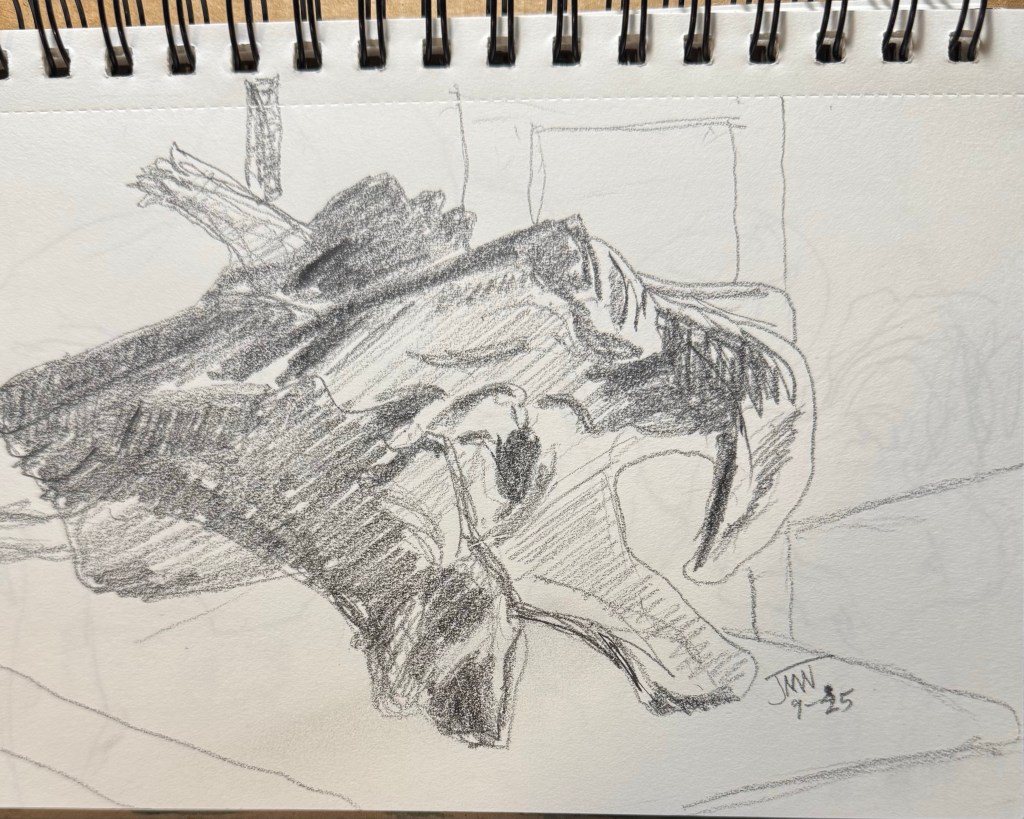
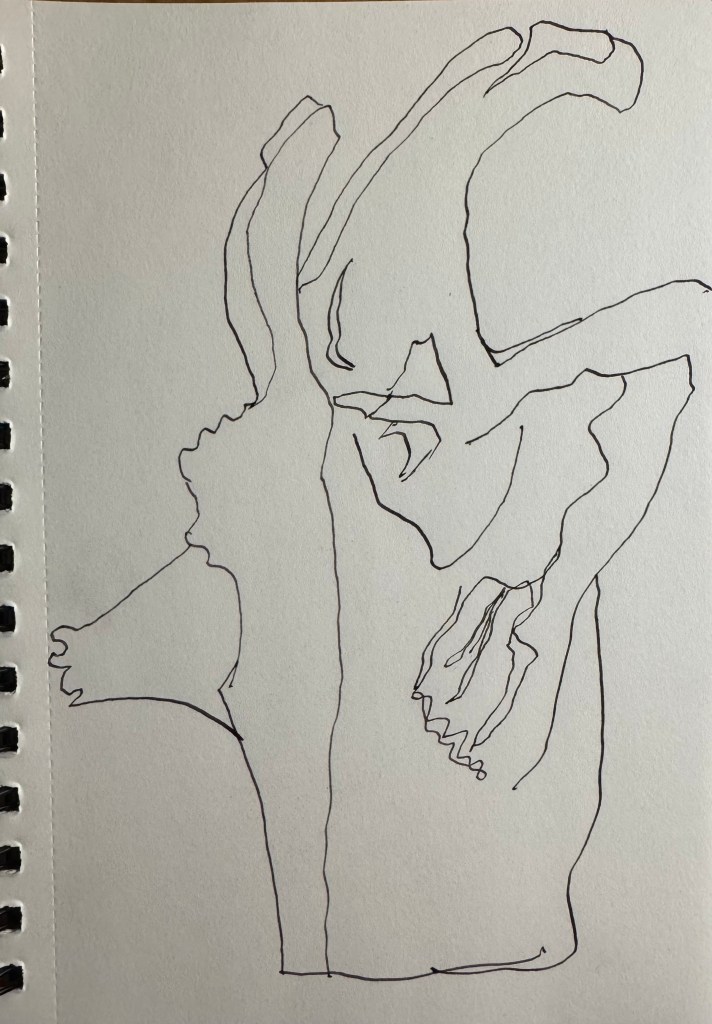
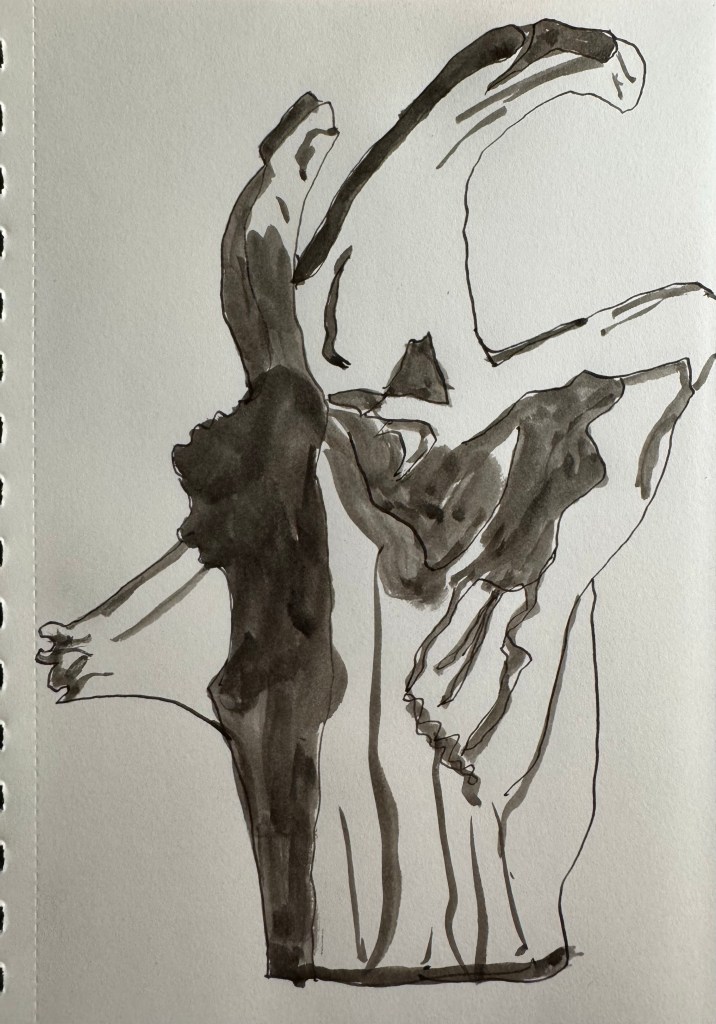
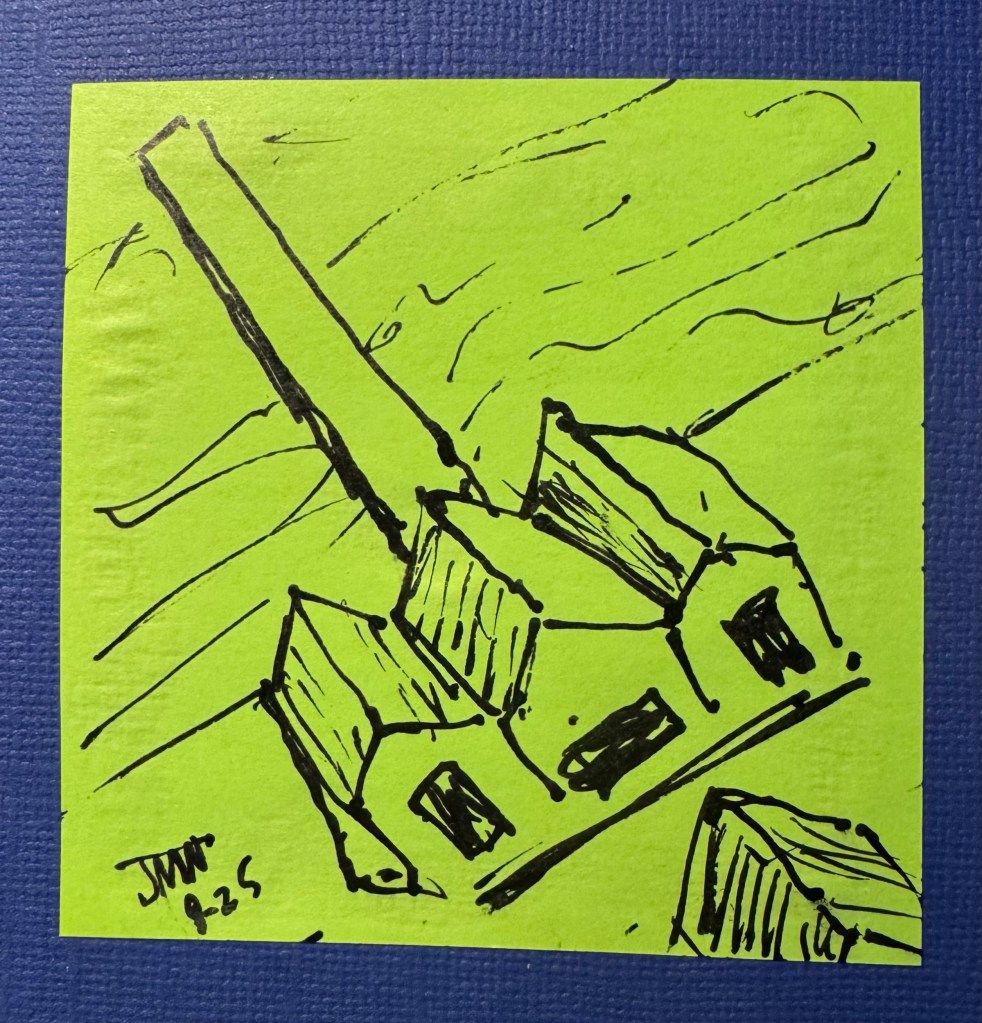
The pivot point in this spiel is that Stardust is a skilled artist who can reify in line, value and hue what a poet does in words:
I did not want / the moment to end / then stopped wanting / so I could / be, not yearn,…
(Lia Purpura, from “Intersection”, Poetry, September 2025)
“Did not want… then stopped wanting… be, not yearn,” Impossible to say differently that’s better. Both Stardust and Lia Purpura can turn a flash of perception into a thing that lingers, and completes itself in the psyche of another human.
If Stardust is ever pierced by a poem-moment, and there’s no special need for that to happen from where I stand, there’s hundred’s of feet of fertile loam accrued in my friend’s delta of sensibility for it to root in. Stardust will have perceived the poem as lines, akin to a sketch that works unusually well.
(c) 2025 JMN — EthicalDative. All rights reserved