I’m going into my 9th month of shielding in the Untied States looking forward to a beautiful South Texas winter. I take comfort from the life of the mind — reading, painting, music. I’m grateful for my roof, patio, pets, and groceries, and for nights of peaceful sleep.
Would that every creature of every God had at least as much.
To friends, and to persons I haven’t met, whether you take SARS-CoV-2 seriously, like me, or consider it in some other perspective, I love you and wish us all health and long life.
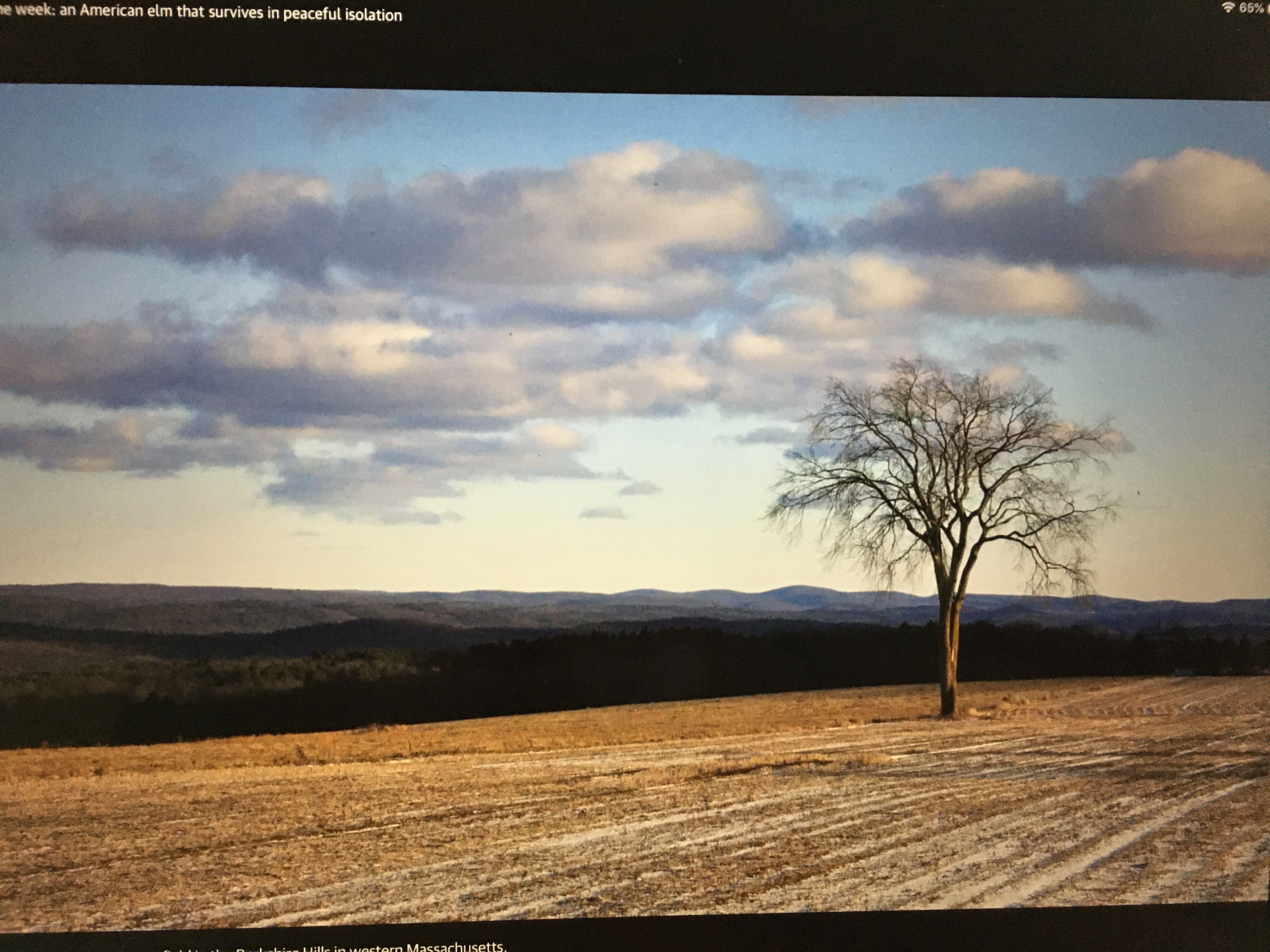
Retired doctor Jeff Kaufman often visits an American elm that escaped the devastation of Dutch elm disease because of its isolation. The 150-year-old tree stands near the Berkshire Hills of western Massachusetts, 95 miles from Egremont, the nearest urban area.
… Kaufman is thankful that the elm has survived to be appreciated. “Anyone can see it, anyone can walk up to it. American elms aren’t the most colourful, but this one doesn’t need to be bright to be special. Its joy lies in the fact that it’s hiding in plain sight.”
(Alex Mistlin, “Tree of the week: An American elm that survives all the more safely in its isolation,” theguardian.com, 11-2-20)
Apothegm How does a country get to see the back of a leader who has only affront? (JMN)
Iambo-Pentametricization of Codified Peroration “So we have many exciting things that we will be announcing over the next eight weeks, I would say things that nobody has even contemplated, thought possi– ble, and things that we’re gonna get done and we have gotten done and we’ve started in most cases. We’re taking on so many aspects of things that, uh, but you’ll see lev– els of detail and you’ll see levels of thought that a lot of people believed ve– ry strongly we didn’t have in this coun– try. We’re going to get things done that they’ve wanted to see done for a long, long time.” — Trump, on second term plans [Quoted at Doonesbury, versified here]
The Party of Trunk I’m no friend of conspiracy theory, but I like to believe that the mar-a-lagian operatives’ first step in decoding the secret message for the elephanatic cabal is to reduce the peroration to iambic pentameter.
A closely guarded algorithm processes the emergent stress pattern, extracting the day’s truthiness to be bawled by the Vulpine network. The huge tone and tenor of the vacuity-decoy tossed to the lamestream media is strongly kim-jong-unian, if not putinesque.
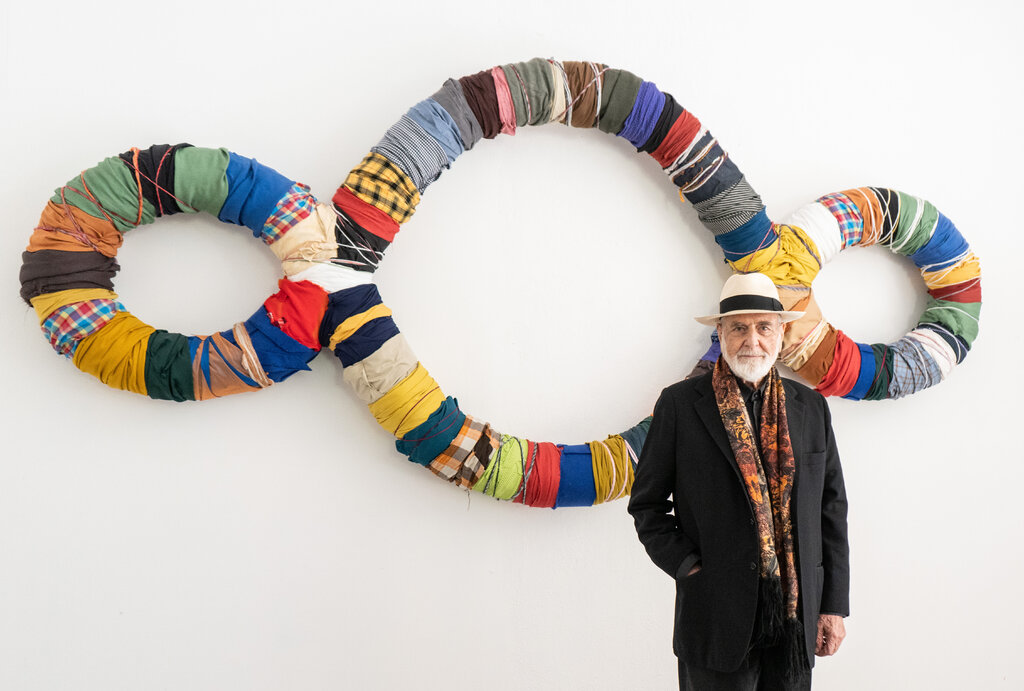
Michelangelo Pistoletto, 87, the Arte Povera master, recovered from Covid-19 and designed a retrospective at the Lévy Gorvy gallery in New York. Credit… Marta Giaccone for The New York Times.
This article introduces me to Arte Povera (poor or plain art), a movement whose heyday ended in the 70s, known for it use of humble materials such as rags and newspaper. A major exponent, Michelangelo Pistoletto, has said, “Art is an engine of connection.”
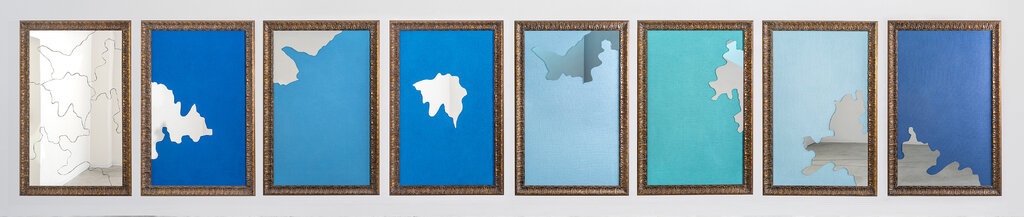
I connect with his map figures cropped across a gamut of blues. The sequence feels like it opens a window of possibility.
The artist’s “Color and Light,” from 2016, is at the Lévy Gorvy gallery. Credit… Michelangelo Pistoletto and Lévy Gorvy.
In his natty scarf and rakish borsalino, I find the durable Mr. Pistoletto to be something of an art work himself.
Michelangelo Pistoletto inside the Cittadellarte-Fondazione Pistoletto, in Biella, Italy, with “Terzo Paradiso (Third Paradise),” 2003-2019, a wrapped fabric work. Credit… Marta Giaccone for The New York Times.
Kids are we of One High God or other. There are no atheists around a campfire. Praise the spook that hankers for a crown.
An unborn baby drowned with its mother, Tipped from a rescue boat into the flood. Scream a prayer to the God-stinking mud.
Cosmic altar ego, slaughtered meat-hiss, With such a fairy’s tail who needs a clown? Toys are thee. As for my house and me, We need a better God than this.
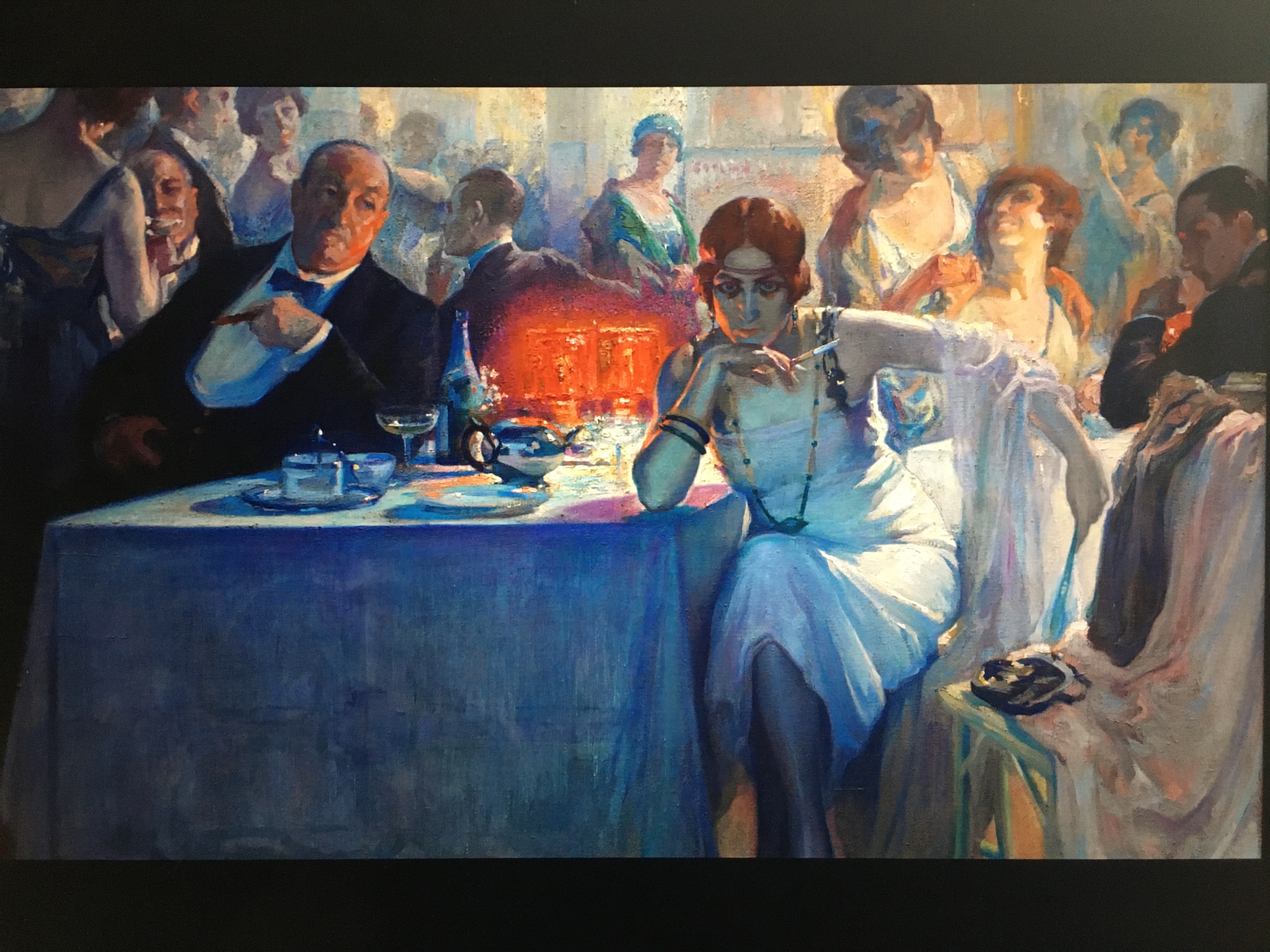
Phalaena by Carlos Verger Fioretti (1872-1929) from the Prado’s Uninvited Guests exhibition. Photograph: Carlos Verger Fioretti/Museo Nacional del Prado.
Carlos G. Navarro, curator of “Uninvited Guests,” the Prado’s first post-lockdown exhibition, says it’s “partly an act of self-criticism” for the museum’s complicity in neglect of 19th-century female artists.
Of 130 works displayed, 60 are by women. One wonders why not more.
Pride by Baldomero Gili y Roig (1873-1926). Photograph: Baldomero Gili y Roig/Museo Nacional del Prado.
The Guardian illustrates its article with two whole paintings by men and detail of one woman’s painting.
One wonders why not a whole woman’s painting. Or even two?
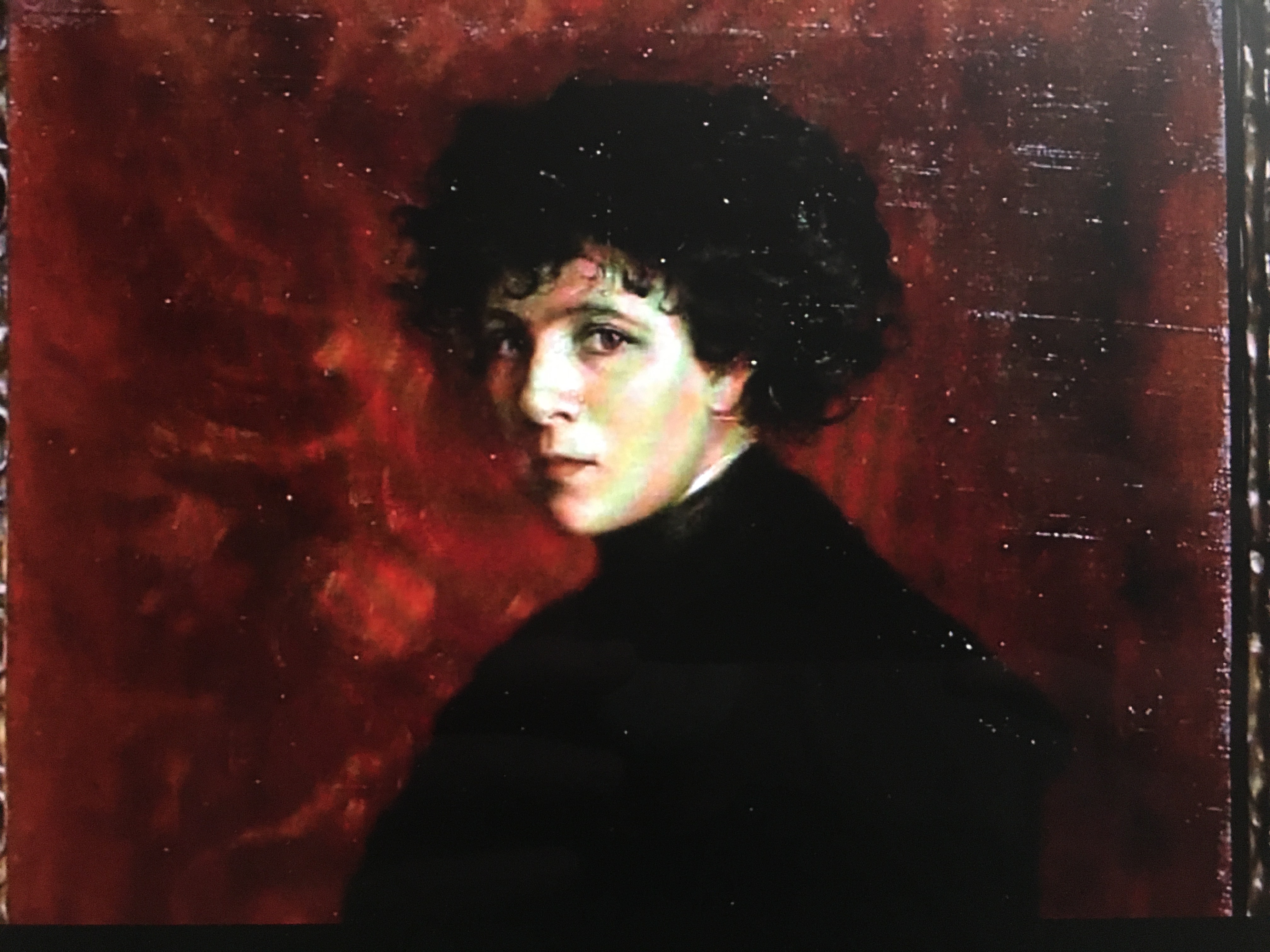
Detail from self-portrait by Maria Roesset (1882-1921). Photograph: EFE News Agency/Alamy.
“I’d like there to be a debate about… how we represent the profile of 19th-century female artists in the museum,” he said…. What do we do with the pictures of the girls, or the ones of the slaves? Our stores are full of these kinds of images so what should we do with them?”
One wonders if an answer to the question is to take more of them out of storage and display them.
Navarro says that the 19th-century state “reduced [female artists] to decorative elements like still-life painters and flower painters.”
Yikes. One wonders at the reductive view of certain genres peeping out.
Ultimately, one wonders if the greater respect to be paid to woman-art by contrite museums is to free it from factitious gender silos and treat it simply as art.
(Sam Jones, “Prado’s first post-lockdown show reignites debate over misogyny,” theguardian.com, 10-18-20)
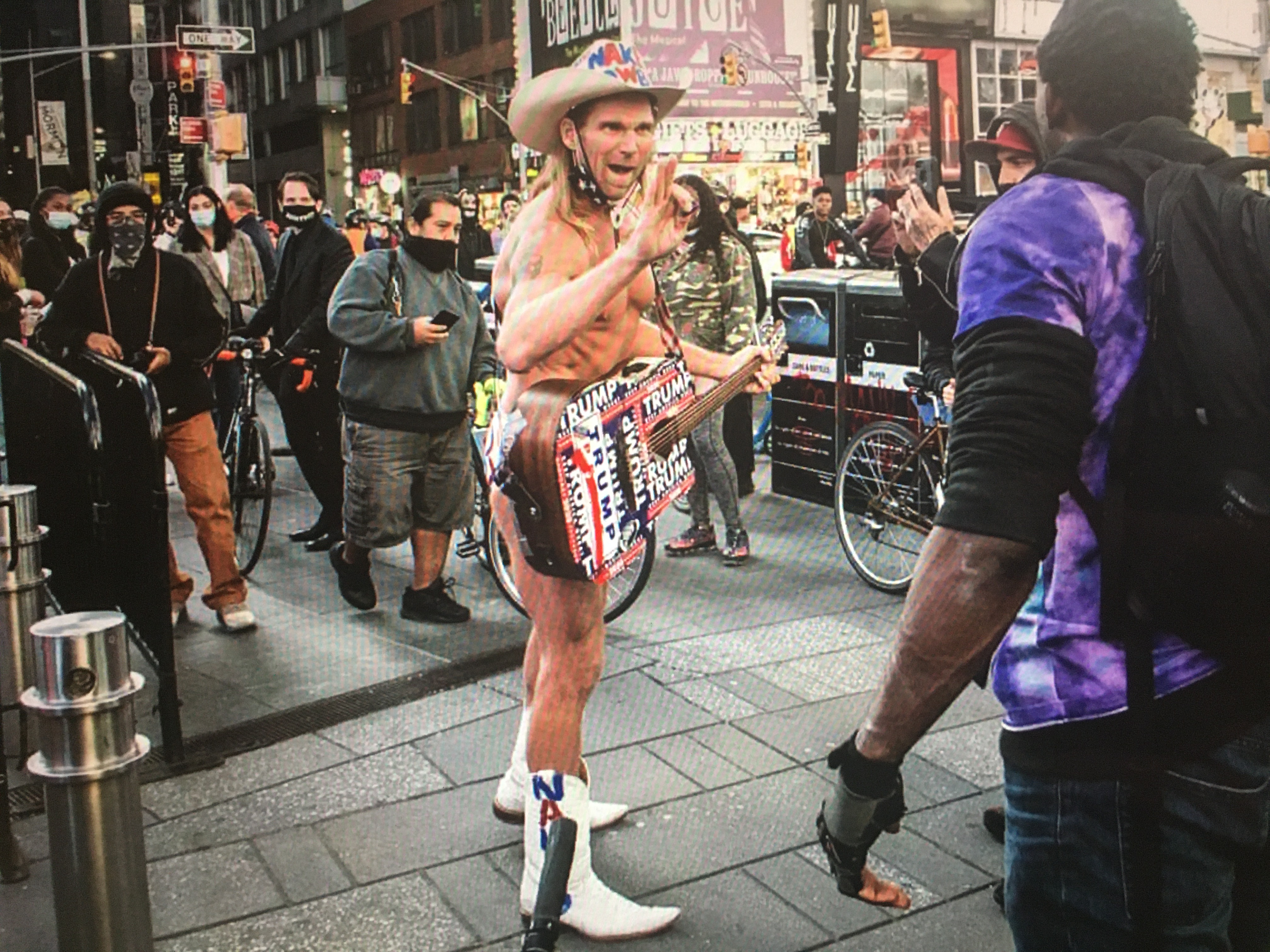
New York, US. Protesters confronting The Naked Cowboy during the Black Lives Matter protest in New York City. Photograph: Billy Tompkins/ZUMA Wire/REX/Shutterstock.
The Guardian reports a crisis fermenting in South Korea: cabbage for making kimchi has run short. Its link to the intrepid cowpoke fleshing street-level USA will not be obvious, but an old snatch from Finnegans Wake helps connect the dots:
“Tee the tootal of the fluid hang the twoddle of the fuddled, O!”
“I feel so powerful. I’ll walk into that audience. I’ll walk in there, I’ll kiss everyone in that audience. I’ll kiss the guys and the beautiful women and… everybody. I’ll just give you a big fat kiss.” — At October 2020 rally
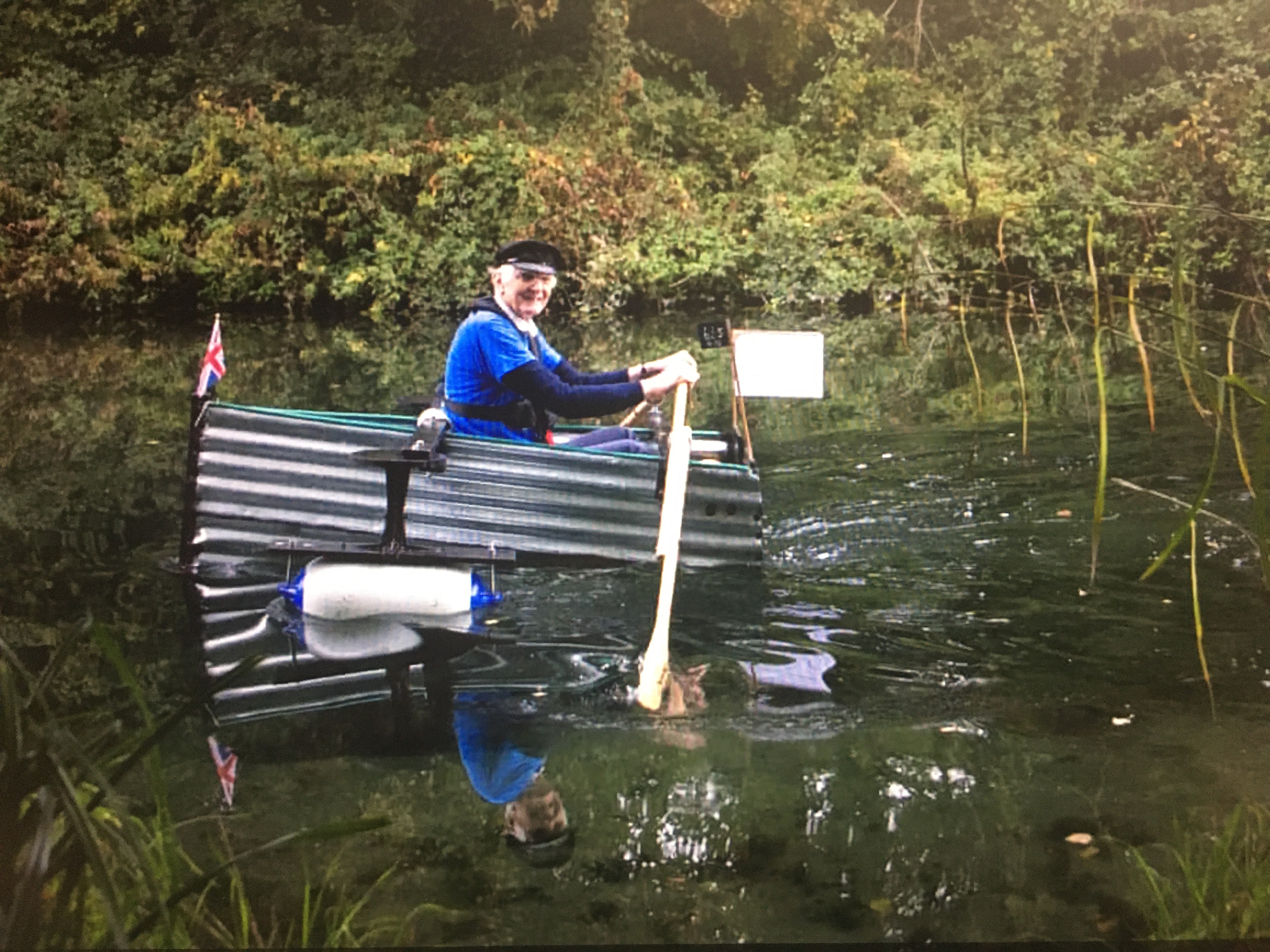
East Sussex, UK. Michael Stanley, 80, who is also known as ‘Major Mick’, rows along the Chichester canal in his homemade rowing boat, named the Tintanic. Stanley plans to row for 100 miles — rowing three miles at a time — to raise money for St Wilfrid’s Hospice in Bosham. Photograph: Andrew Matthews/PA.
I have a fictitious acquaintance with the Chichester locale via Sir Alistair Chichester of Chichesterton-upon-Hogg.






 EthicalDative
Hello, World
I’m going into my 9th month of shielding in the Untied States looking forward to a beautiful South Texas winter. I take comfort from the life of the mind — reading, painting, music. I’m grateful for my roof, patio, pets, and groceries, and for nights of peaceful sleep.
Would that every creature of every God had at least as much.
To friends, and to persons I haven’t met, whether you take SARS-CoV-2 seriously, like me, or consider it in some other perspective, I love you and wish us all health and long life.
PS: Yes, I wrote “Untied.”
(c) 2020 JMN