Michelangelo Pistoletto, 87, the Arte Povera master, recovered from Covid-19 and designed a retrospective at the Lévy Gorvy gallery in New York. Credit… Marta Giaccone for The New York Times.
This article introduces me to Arte Povera (poor or plain art), a movement whose heyday ended in the 70s, known for it use of humble materials such as rags and newspaper. A major exponent, Michelangelo Pistoletto, has said, “Art is an engine of connection.”
I connect with his map figures cropped across a gamut of blues. The sequence feels like it opens a window of possibility.
The artist’s “Color and Light,” from 2016, is at the Lévy Gorvy gallery. Credit… Michelangelo Pistoletto and Lévy Gorvy.
In his natty scarf and rakish borsalino, I find the durable Mr. Pistoletto to be something of an art work himself.
Michelangelo Pistoletto inside the Cittadellarte-Fondazione Pistoletto, in Biella, Italy, with “Terzo Paradiso (Third Paradise),” 2003-2019, a wrapped fabric work. Credit… Marta Giaccone for The New York Times.
Kids are we of One High God or other. There are no atheists around a campfire. Praise the spook that hankers for a crown.
An unborn baby drowned with its mother, Tipped from a rescue boat into the flood. Scream a prayer to the God-stinking mud.
Cosmic altar ego, slaughtered meat-hiss, With such a fairy’s tail who needs a clown? Toys are thee. As for my house and me, We need a better God than this.
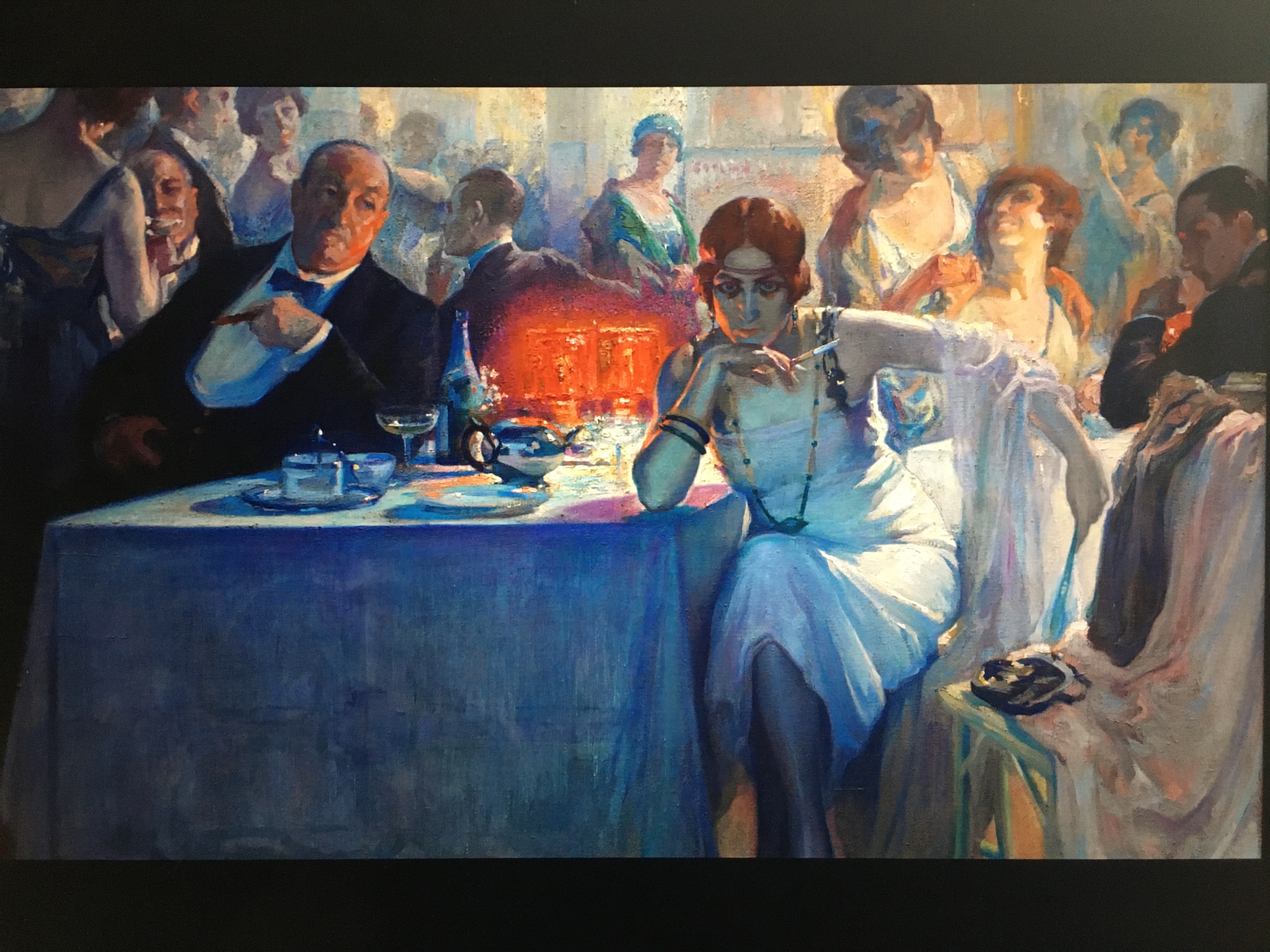
Phalaena by Carlos Verger Fioretti (1872-1929) from the Prado’s Uninvited Guests exhibition. Photograph: Carlos Verger Fioretti/Museo Nacional del Prado.
Carlos G. Navarro, curator of “Uninvited Guests,” the Prado’s first post-lockdown exhibition, says it’s “partly an act of self-criticism” for the museum’s complicity in neglect of 19th-century female artists.
Of 130 works displayed, 60 are by women. One wonders why not more.
Pride by Baldomero Gili y Roig (1873-1926). Photograph: Baldomero Gili y Roig/Museo Nacional del Prado.
The Guardian illustrates its article with two whole paintings by men and detail of one woman’s painting.
One wonders why not a whole woman’s painting. Or even two?
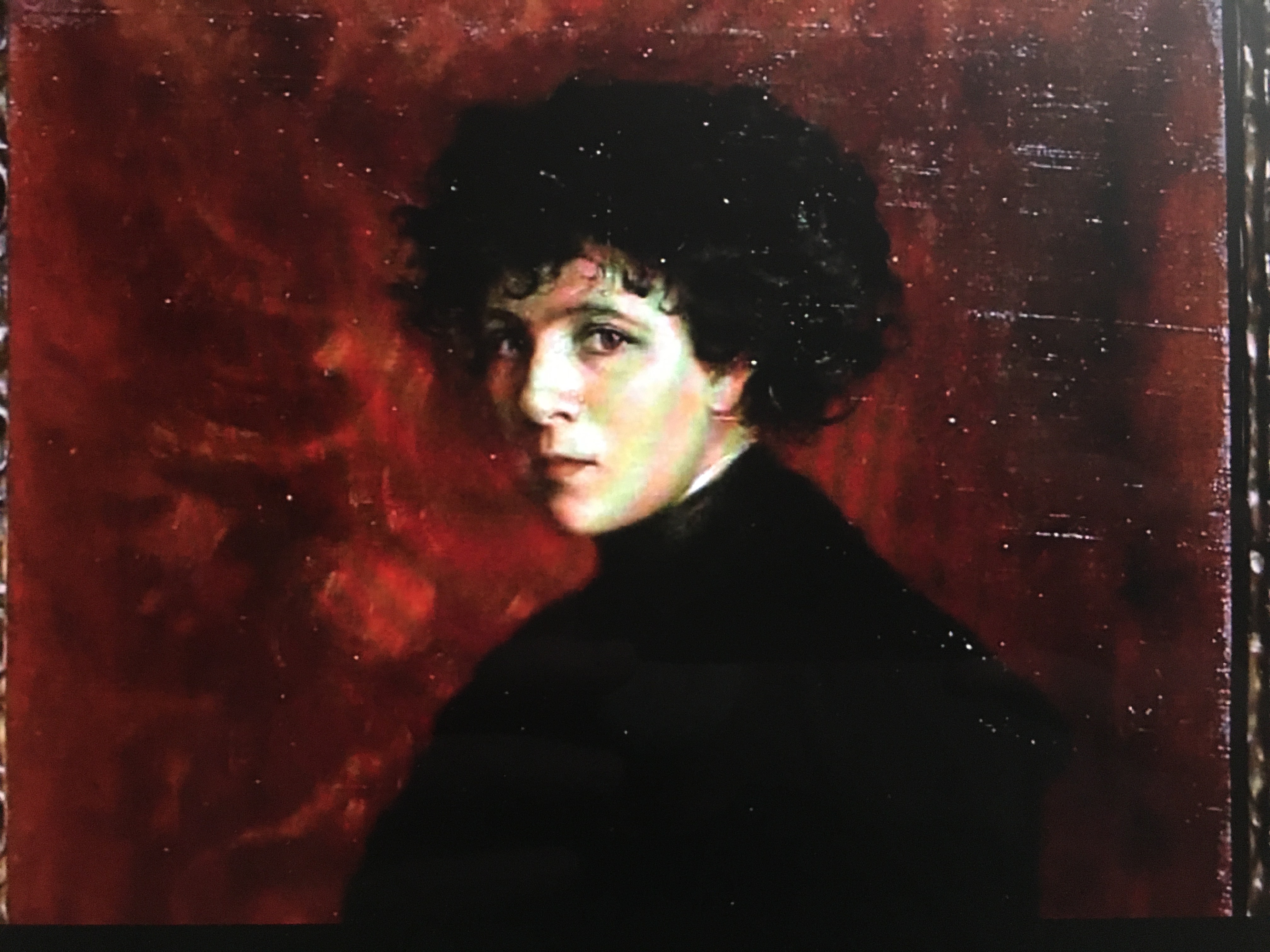
Detail from self-portrait by Maria Roesset (1882-1921). Photograph: EFE News Agency/Alamy.
“I’d like there to be a debate about… how we represent the profile of 19th-century female artists in the museum,” he said…. What do we do with the pictures of the girls, or the ones of the slaves? Our stores are full of these kinds of images so what should we do with them?”
One wonders if an answer to the question is to take more of them out of storage and display them.
Navarro says that the 19th-century state “reduced [female artists] to decorative elements like still-life painters and flower painters.”
Yikes. One wonders at the reductive view of certain genres peeping out.
Ultimately, one wonders if the greater respect to be paid to woman-art by contrite museums is to free it from factitious gender silos and treat it simply as art.
(Sam Jones, “Prado’s first post-lockdown show reignites debate over misogyny,” theguardian.com, 10-18-20)
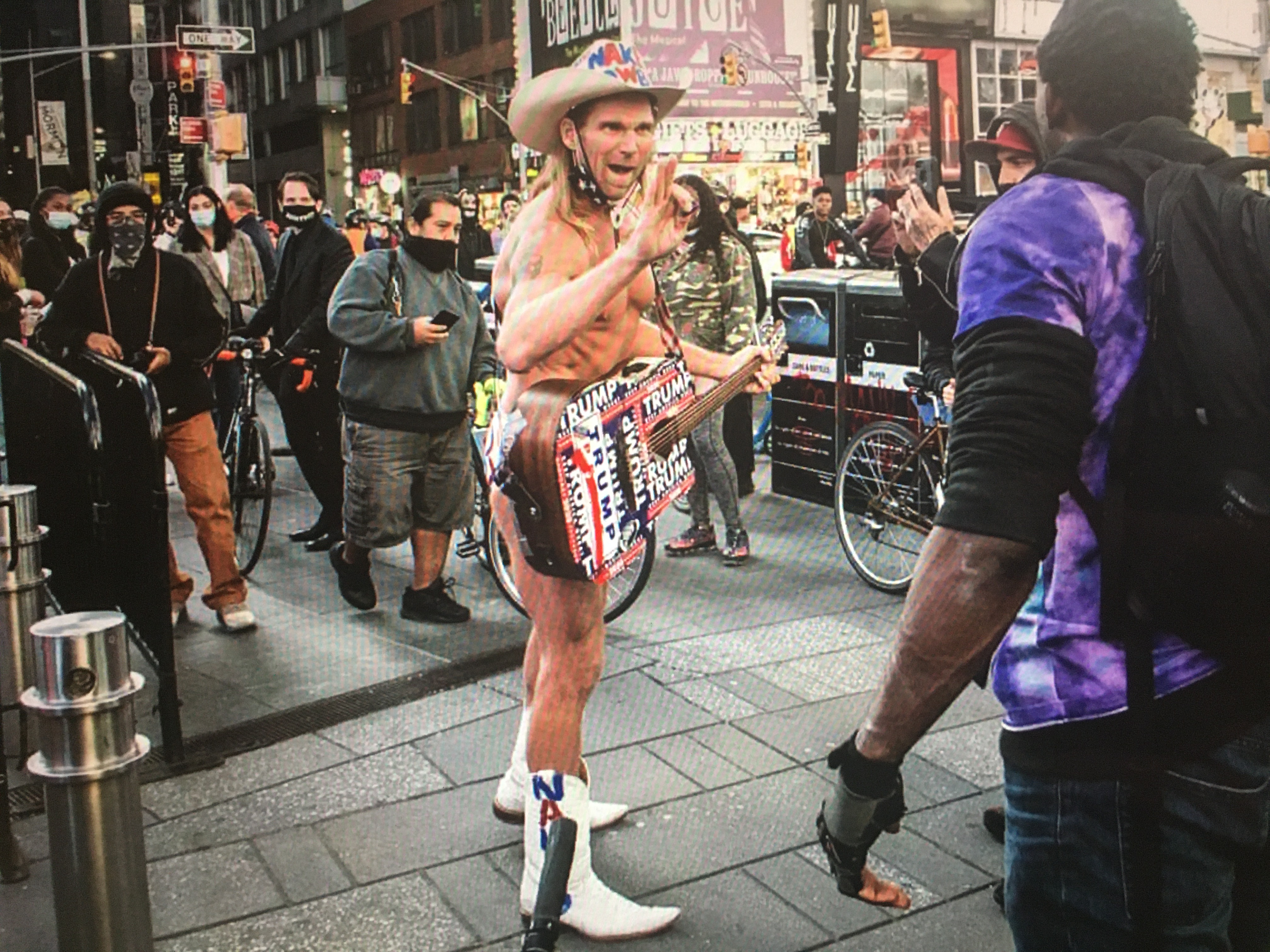
New York, US. Protesters confronting The Naked Cowboy during the Black Lives Matter protest in New York City. Photograph: Billy Tompkins/ZUMA Wire/REX/Shutterstock.
The Guardian reports a crisis fermenting in South Korea: cabbage for making kimchi has run short. Its link to the intrepid cowpoke fleshing street-level USA will not be obvious, but an old snatch from Finnegans Wake helps connect the dots:
“Tee the tootal of the fluid hang the twoddle of the fuddled, O!”
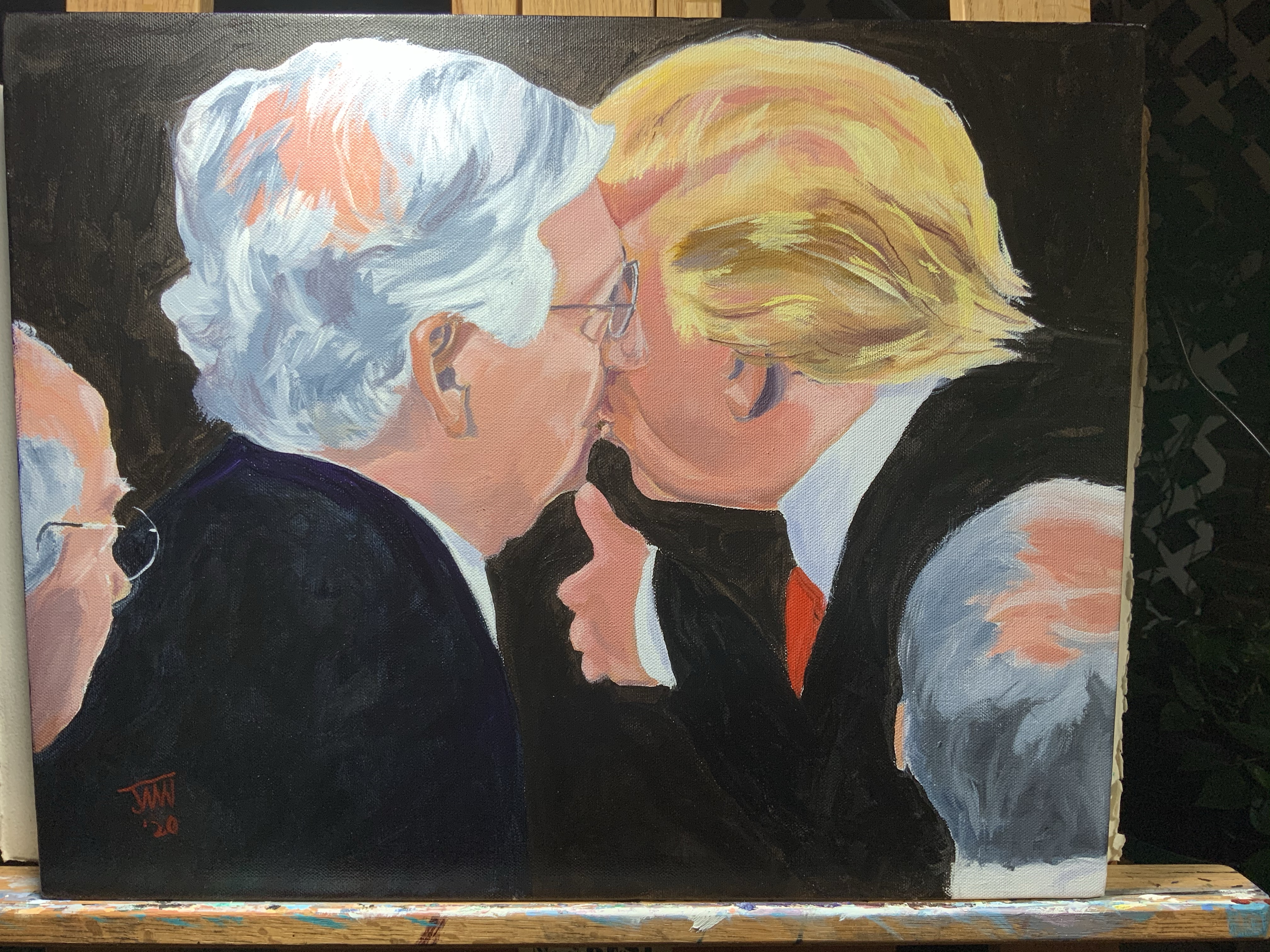
“I feel so powerful. I’ll walk into that audience. I’ll walk in there, I’ll kiss everyone in that audience. I’ll kiss the guys and the beautiful women and… everybody. I’ll just give you a big fat kiss.” — At October 2020 rally
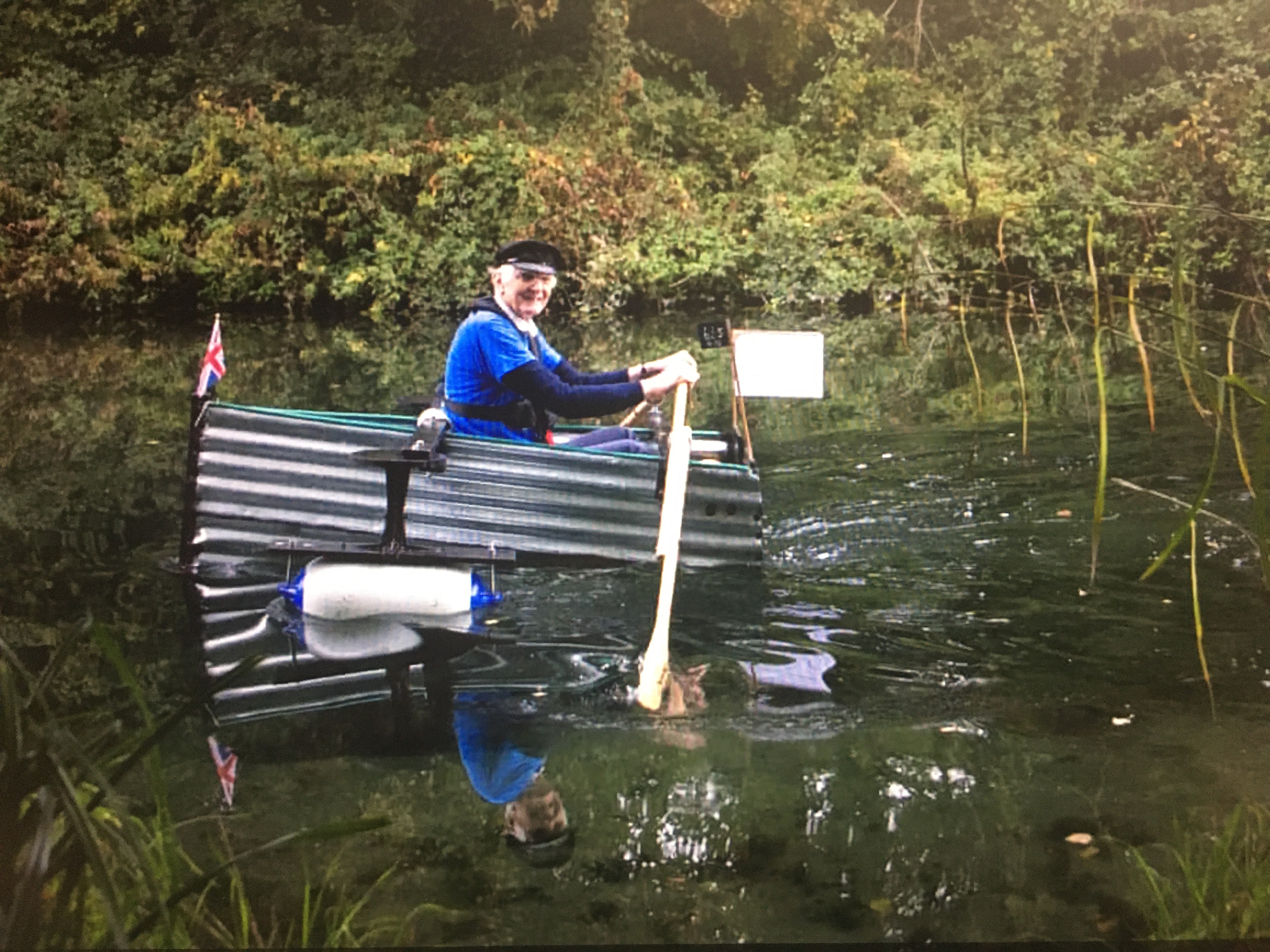
East Sussex, UK. Michael Stanley, 80, who is also known as ‘Major Mick’, rows along the Chichester canal in his homemade rowing boat, named the Tintanic. Stanley plans to row for 100 miles — rowing three miles at a time — to raise money for St Wilfrid’s Hospice in Bosham. Photograph: Andrew Matthews/PA.
I have a fictitious acquaintance with the Chichester locale via Sir Alistair Chichester of Chichesterton-upon-Hogg.
Melbourne, Australia. People have a picnic in a park after the state government announced the partial lifting of restrictions as the city battles a second wave of Covid-19. Photograph: William West/AFP/Getty Images.
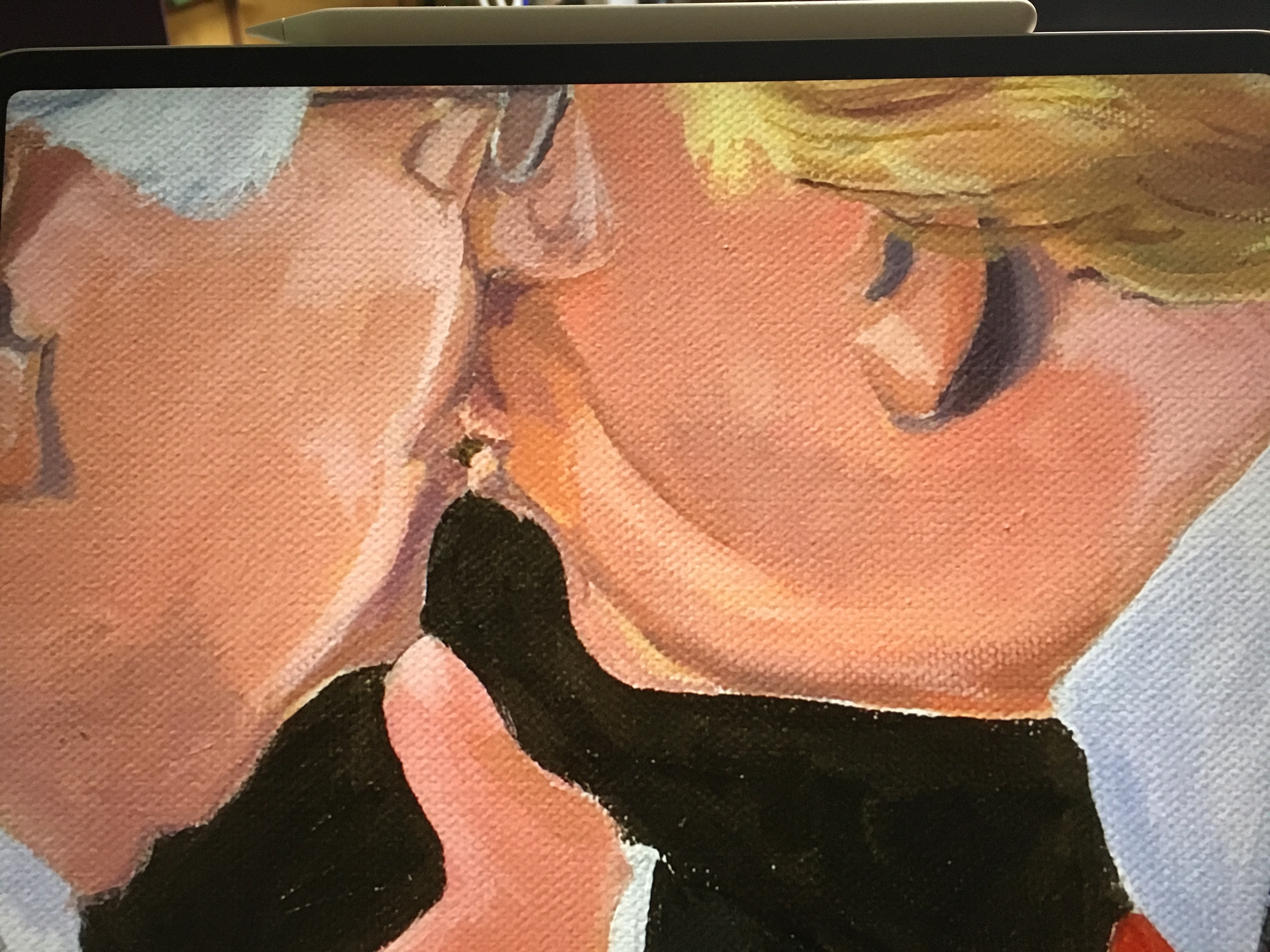
“Male Pattern,” oil on canvas, 16 x 20 in. (JMN 2020)
Art Spiegelman’s comment below, encountered on the fly as if on zoom wings, has helped me realize that this latest painting is just wrong: grotesque in subject, torpid in execution, and the end of a line. Fury and disgust can be better spent.
Early on I realised I didn’t want to become a Trump caricaturist – that it was just playing into his narcissism, ultimately. I just backed off and I’m now trying to see what the hell’s been happening to us. It makes me recant something I rather cockily said back in 2001, which was when I found myself unable to move from September 11 to September 12. About three months later, my brains poured back in my head and I said: ‘I guess disaster is my muse.’” He recants: “Now disaster is just a fucking disaster.”
(Sam Leith, “Graphic artist Art Spiegelman on Maus, politics and ‘drawing badly’,” the guardian.com, 10-17-20)
Hilma af Klint inspires a certain perfervid evangelism which is diluted in this article by careless editing.
The article cites a beautiful film by Halina Dyrschka about the visionary artist’s astonishing work.
The beguiled film maker contracted[sic] MoMA to find out why Af Klint had been “erased from art history.” The answer she received was even more beguiling than the question posed:
“They weren’t so sure Hilma af Klint’s art worked as abstract art. After all, she hadn’t exhibited in her lifetime so how could one tell?”
Science historian Ernst Peter Ficsher[sic] is quoted saying “… our world has become blurred stupid dulled[sic] unless somewhere out there there’s a Hilma af Klint painting it all so in a hundred years we will see what we’ve missed…”
The article celebrates Af Klint’s having eventually “got what she deserved” more than a century after she “arguably invented abstract [sic] and painted some of the most beguiling if neglected canvases in art history…”
It concludes thus:
Hilma af Klint’s paintings, just maybe, gives [sic] us the opportunity to escape the everyday and marvel anew.
(Stuart Jeffries, ‘They called her a crazy witch’: did medium Hilma af Klint invent abstract art?” theguardian.com, 10-6-20)






 EthicalDative
Michelangelo Pistoletto
This article introduces me to Arte Povera (poor or plain art), a movement whose heyday ended in the 70s, known for it use of humble materials such as rags and newspaper. A major exponent, Michelangelo Pistoletto, has said, “Art is an engine of connection.”
I connect with his map figures cropped across a gamut of blues. The sequence feels like it opens a window of possibility.
In his natty scarf and rakish borsalino, I find the durable Mr. Pistoletto to be something of an art work himself.
(Ted Loos, “Michelangelo Pistoletto Endures. Even Covid Couldn’t Stop Him,” NYTimes, 10-28-20)
(c) 2020 JMN