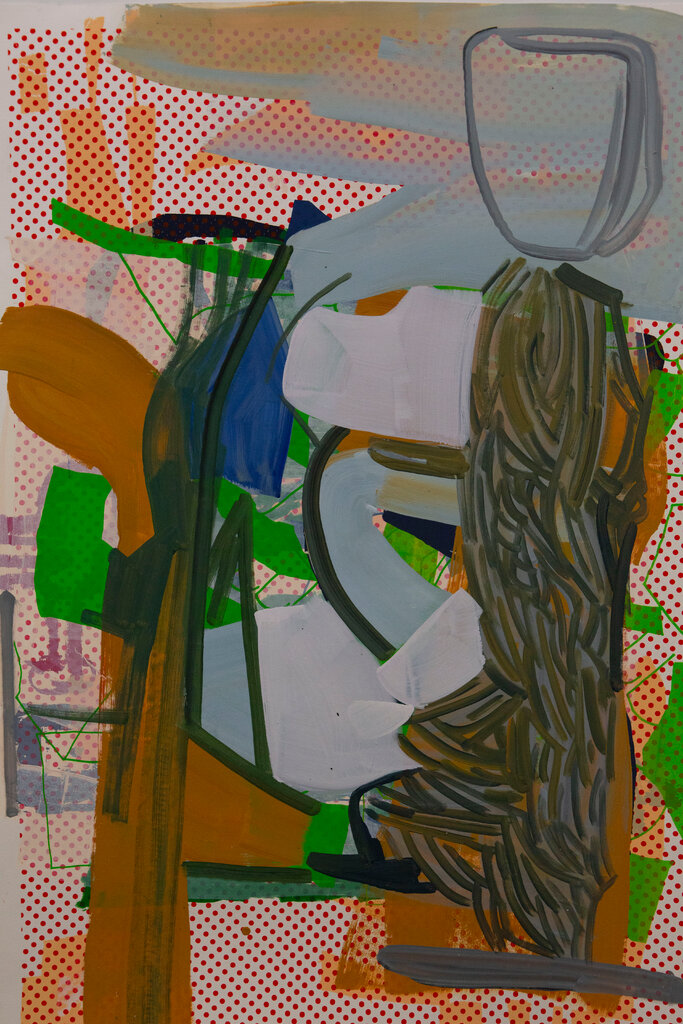
Ms. Sillman’s “XL12,” from 2020. Silk-screened passages of polka dots, mesh with calligraphic swoops. Things seems to be on the edge of tottering over; looming is the operative word. Credit… Calla Kessler for The New York Times.
… [Amy Sillman] has helped lead the charge over the last decade for a reinvigorated mode of abstraction, alongside colleagues like Laura Owens, Julie Mehretu, Joanne Greenbaum or Jacqueline Humphries. These painters, mostly women, have reclaimed the potency of active brushwork and visible gestures, which for so long had felt played out. Their work is smart as hell, but not afraid to laugh at itself. Conversant with digital media… yet committed to the facticity of paint.
Amy Sillman, in Manhattan. A willingness to fail brought her to this moment but young artists are “scared not to succeed,” she said. “The political and social and economic environment that they find themselves in is so unconducive to failure. To any kind of experimentation.” Credit… Calla Kessler for The New York Times.
… Ms. Sillman is in a thin crowd (with, let’s say, Andrea Fraser, Hito Steyerl, Matias Faldbakken, David Salle) of artists who can really write. The evidence is in “Faux Pas,” a just-published collection — her fourth — of her writings that display the same good humor and intelligence of her best paintings.
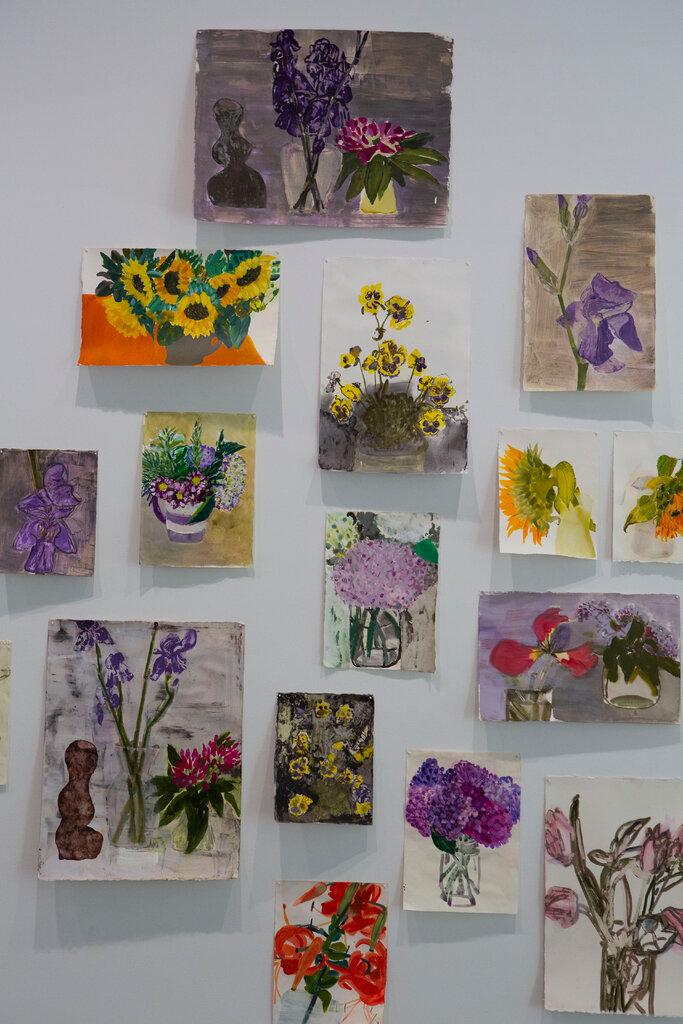
These floral still lifes, all untitled, from 2020, were painted at her Long Island retreat during lockdown. “We were all thinking we were going to die,” she said, “and spring was just carrying on.” Credit… Calla Kessler for The New York Times.
“It was the first time I cried at a museum,” she says, remembering the irises at the Van Gogh Museum in Amsterdam. “Because he was so tortured. The flowers were flowers of misery. Tears of dejection and tears of joy…”
(Jason Farago, “Amy Sillman’s Breakthrough Moment is Here,” NYTimes, 10-8-20)
“Dabbled Eggs,” oil on canvas, 11×15 in. (JMN 2020)
A novelist’s prose can crowd poetry turf with an ineffability that thwarts paraphrase. Of his mother a protagonist says:
“Ten minutes she will spend in the kitchen working with her swift cat-efficiency, then out and away with the children, surging to and fro in their light inconstant play, her eyes fading in a fond infected look.”
And a little later:
“Outside is the special close blackness of night over water. Bugs dive into the tight new screen and bounce off with a guitar thrum. The children stand in close, feeling the mystery of the swamp and the secrecy of our cone of light.”
The passages are from “The Moviegoer” by Walker Percy.
What strikes me is how ostensible prose can somehow say more than the sum of its words, somewhat like a difficult lyric poem can: The question What does it mean? gives way to the question Could what it says be conveyed exactly in any other way? The reader’s quest is to reach “no” for the answer.
Whenever I feel bad, I go to the library and read controversial periodicals. Though I do not know whether I am a liberal or a conservative, I am nevertheless enlivened by the hatred that one bears for the other. In … Continue reading →
This article describes Philip Guston (1913-1980) as an “artist’s artist” whose “deceptively simple subjects and emphatic brush strokes” influenced many painters of our era.
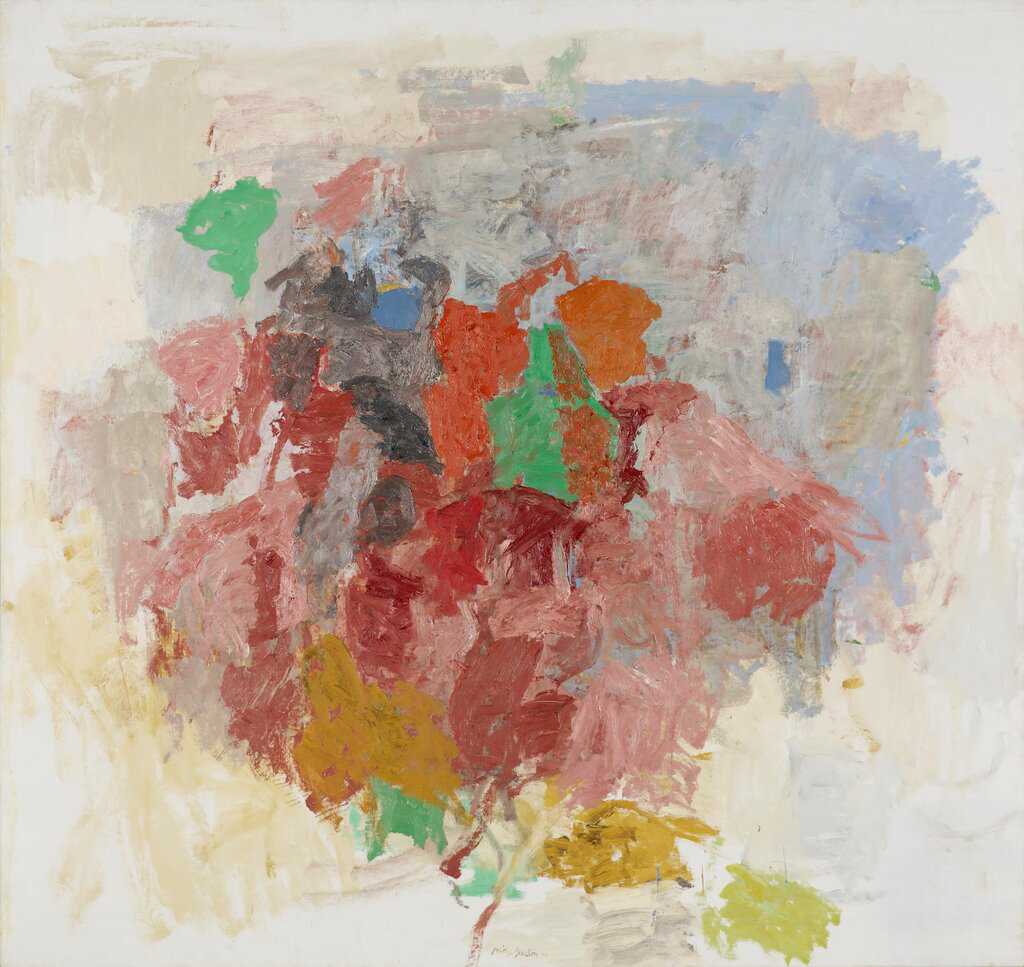
In Philip Guston’s paintings of the 1950s, like “Voyage” (1956), urgent brush strokes dominate the work. He was fighting battles with his own mental health as well as the long arm of Western art history. Credit… Estate of Philip Guston and Hauser & Wirth.
… Part of the reason he is embraced by artists in the current moment is that he stood up to the bullies in the art world who wanted art to be a certain way — notably writers like Clement Greenberg… who thought that serious, modern painting should be abstract…
“I got sick and tired of all that Purity!” he said in a 1977 interview, referring to abstraction. “Wanted to tell Stories!”
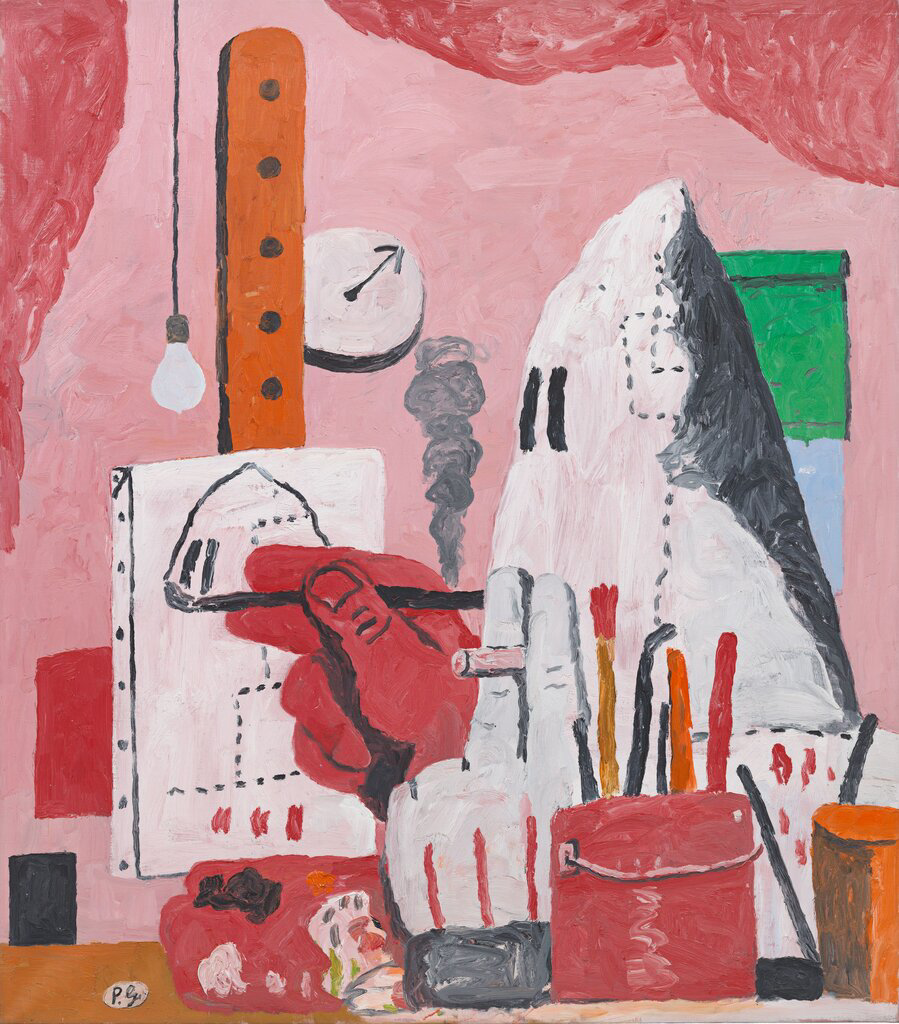
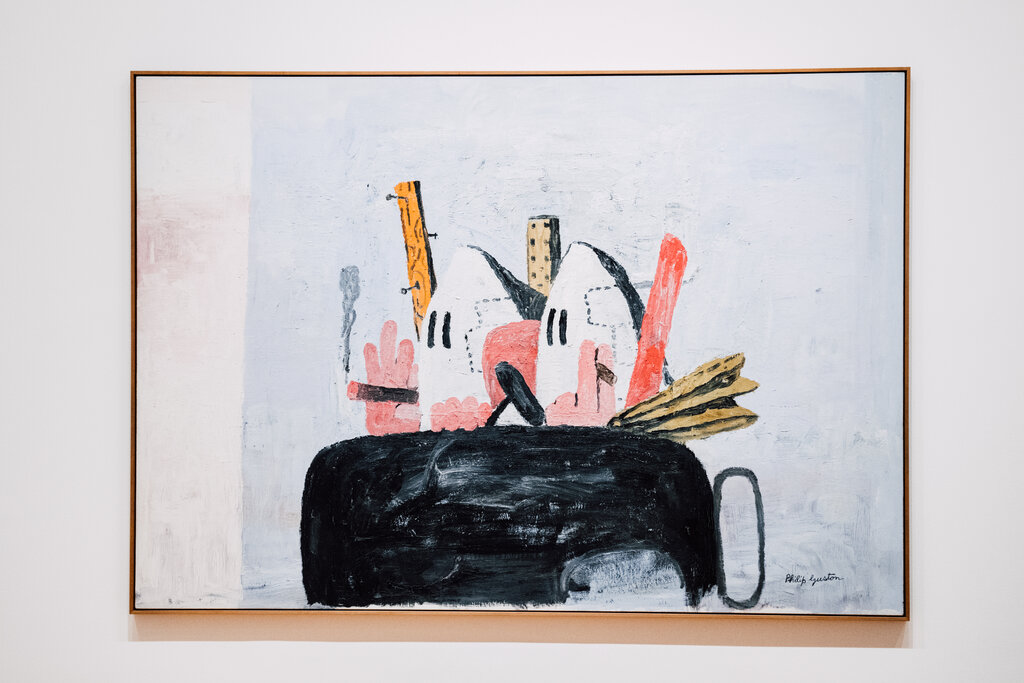
In Guston’s “The Studio” (1969), with hooded figures, the artist turns the brush on himself, suggesting the racism ingrained in all of us. Credit… The Estate of Philip Guston and Hauser & Wirth.
Along with the return of figures and the hoods — now drawn in a crude, cartoonish fashion that shocked even his peers in the early ’70s — Guston continued to paint ordinary objects: shoes, cans, clocks and bricks that asserted both the materiality and everydayness of painting. The critic Harold Rosenberg called his later work “a liberation from detachment” — which is to say, it was unafraid to address messy politics, the body, failure, or the changes an artist goes through in his lifetime.
It seems worth noting that what shocked Guston’s peers in the ‘70s wasn’t what he drew, but how he drew it.
(Martha Schwendener, “Why Philip Guston Can Still Provoke Such Furor, and Passion,” NYTimes, 10-4-20)
“Everyone agrees Tuesday’s debate was a train wreck. A major contributing factor was the moderator Chris Wallace repeatedly interrupting to try to help Joe Biden.”
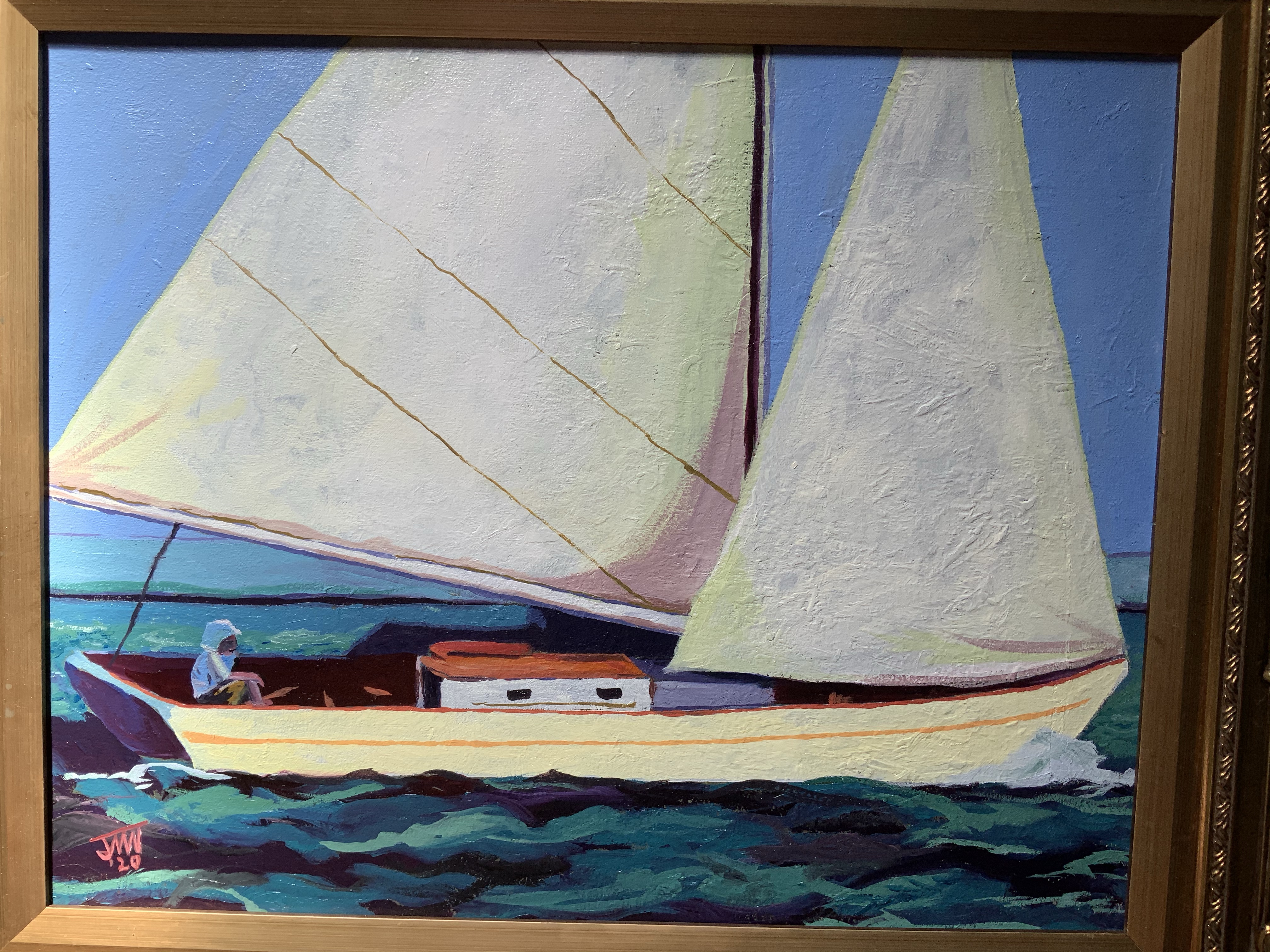
“Sloop Padre,” oil on canvas, 16 x 20 in. (JMN 2020)
Painting is a way of providing a balm, to artist and viewer alike, in a calamitous era. “We live in almost Old Testament times, with plagues and insane kings,” says [André] Gregory. “It’s crucial that we look at those things critically but also try to feel hope and joy. The grief isn’t the whole story.”
A new study of Edward Hopper says that “Old Ice Pond at Nyack,” circa 1897, was the teenage artist’s copy of an earlier painting by Bruce Crane. Credit… Heirs of Josephine N. Hopper / Licensed by Artists Rights Society (ARS), NY.
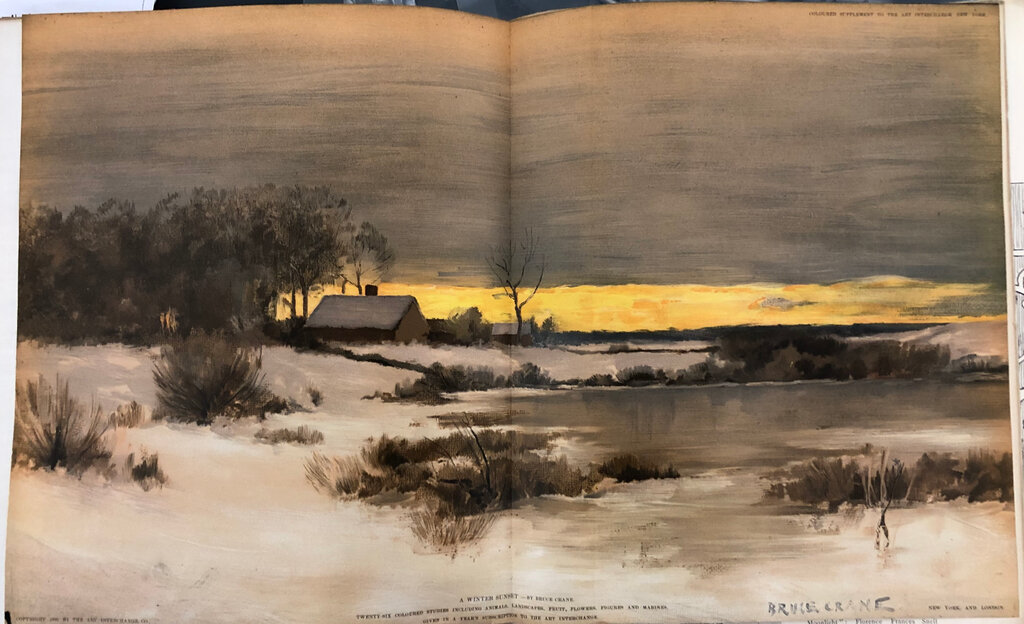
It’s interesting to see instances of a teenage Edward Hopper’s copying of other artists, the more so as it touches on the reputation he cultivated “as an artist whose innate genius allowed him to emerge on the scene without a debt to others.”
Louis Shadwick found that Bruce Crane’s “A Winter Sunset,” circa 1880s, in The Art Interchange magazine, was an almost perfect match for Hopper’s later teenage work, right down to the horizontal streak of light. Credit… Bruce Crane.
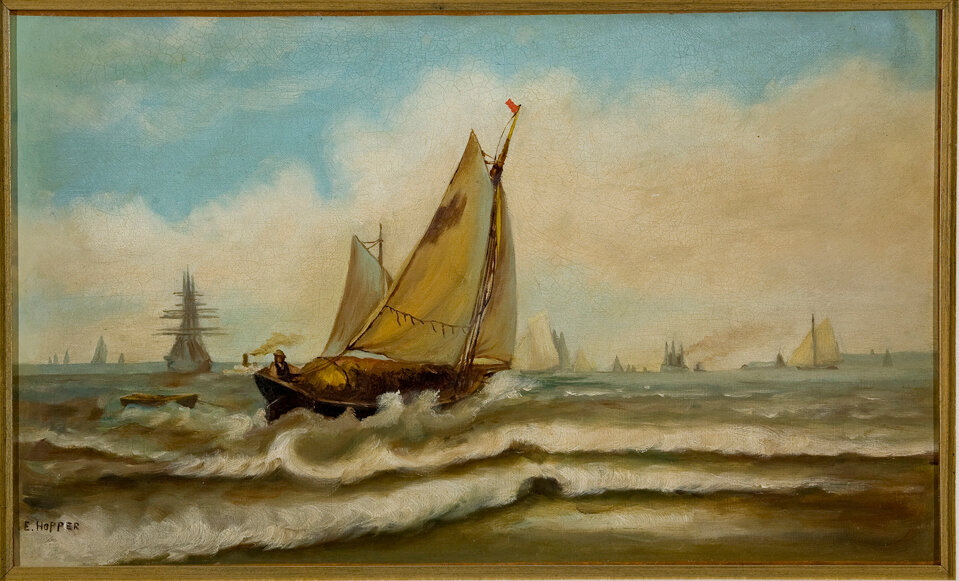
Edward Hopper, “Ships,” circa 1898. A similar image appeared in the Art Interchange in 1886. A Hopper expert points out that 19th century artists almost always got their start by copying. Credit… Heirs of Josephine N. Hopper/Licensed by Artists Rights Society (ARS), NY.
Edward Moran, “A Marine,” c.1880s, was the source for Edward Hopper’s “Ships.” Credit… Edward Moran.
I’m not a critic or scholar, but I share their intrigue that, in his mature work, Hopper “allowed himself” to be awkward in a studied way.
Critics and scholars have always been intrigued by an awkwardness that Hopper allowed himself in many of his classic paintings…
… seas that look more painted than liquid in his famous “Ground Swell”…
Edward Hopper, “Ground Swell” (1939), Corcoran Collection (Museum Purchase, William A. Clark Fund).
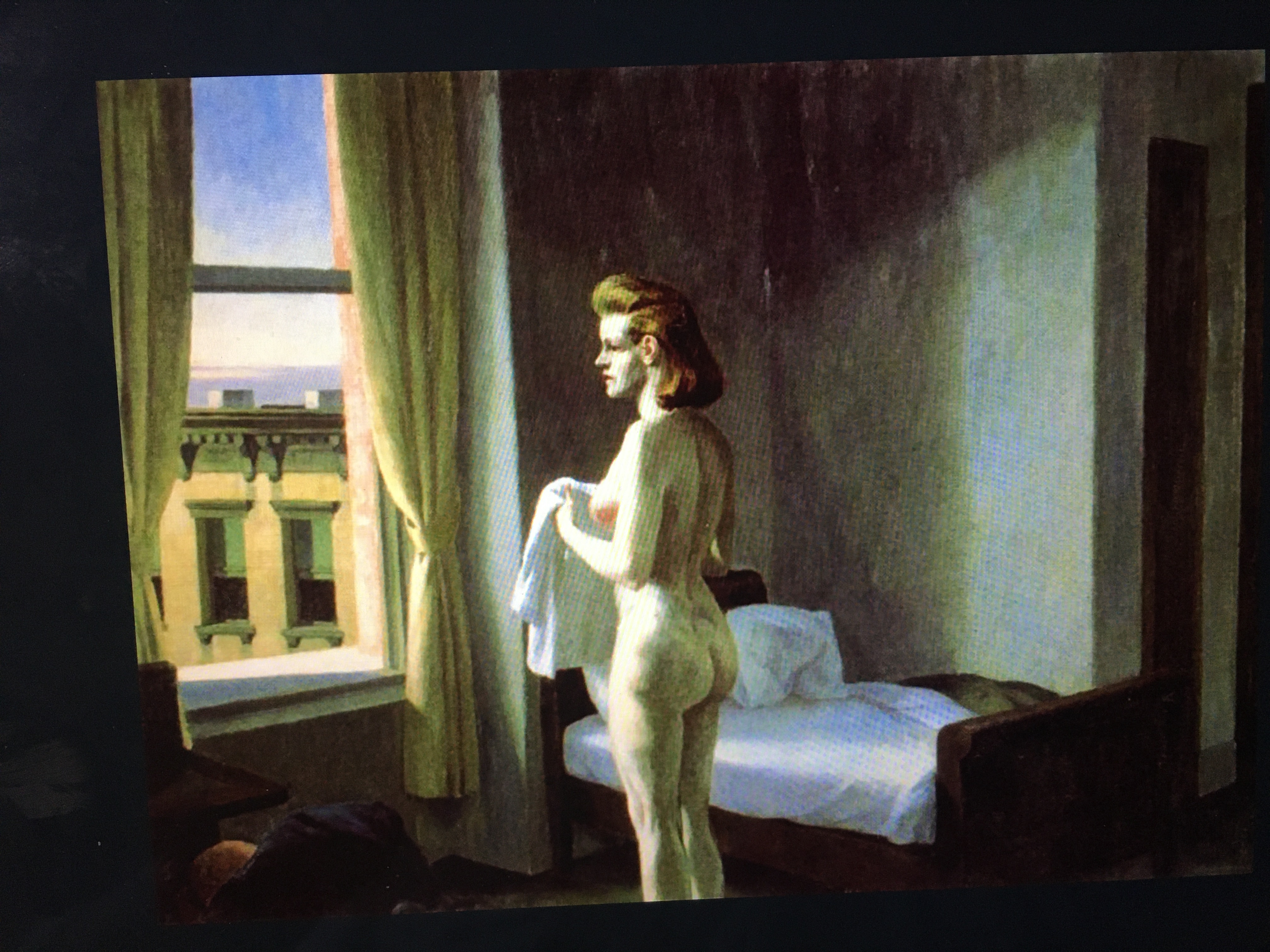
… the awkward anatomy of his female nude in “Morning in a City”…
Edward Hopper, “Morning in a City” (1944), wikiart.org.
… or the stony faces of the diners in “Nighthawks.”
Edward Hopper, “Nighthawks (1942), Art Institute Chicago, Friends of American Art Collection.
A third point of interest for me in this article is Hopper’s perceived affinity with illustration.
In rendering his pioneering views of everyday life in average America… Hopper chose an everyday style that brings him closer to the modest commercial illustration of his era than to the certified old masters.
Gopnik caps his treatment of the Hopper copy revelation with something I marvel at in creative art critics: propositions that soar, like poetry, above interpretation.
Now that we know that Hopper was never a painting prodigy, we can think of his later paintings as deliberately revisiting the limitations of his adolescence, and finding virtue and power there… It’s as though, to be truly in and of their time and place, and fully “American,” paintings of a city’s simple shopfronts, or of plain women in plain rooms, had to be rendered in a plain manner worthy of their subjects, or as unworthy as them.
(Blake Gopnik, “Early Works by Edward Hopper Found to Be Copies of Other Artists,” NYTimes, 9-28-20)
I had a photograph of a forest. A Sherwood of a forest — florescent, bosky, a thing you can’t make up. And I made up a Mickey fantasia of a forest — florid, tumescent, burnt down with color and intricate … Continue reading →
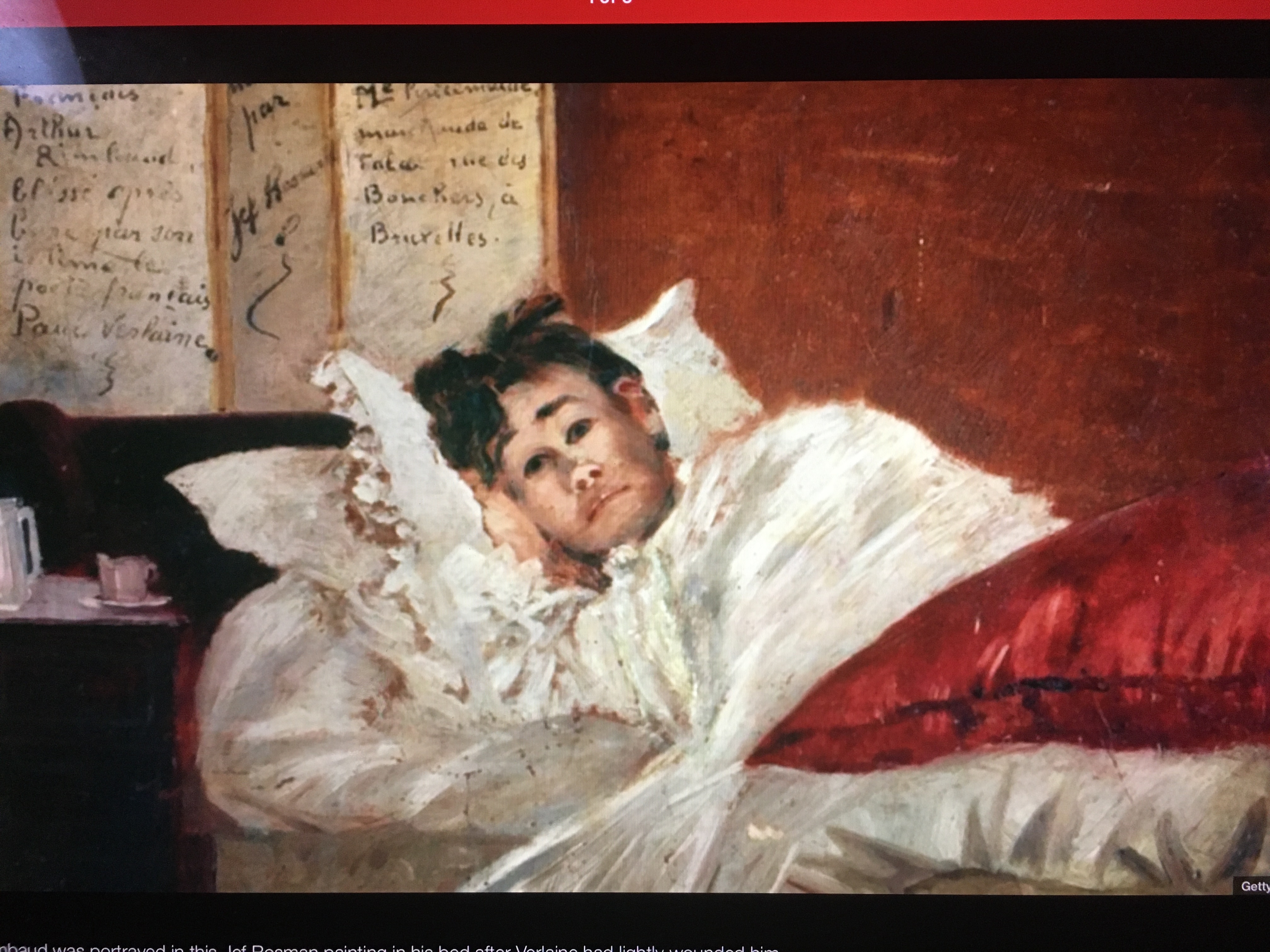
BBC. [Enid Starkie, in her book “Arthur Rimbaud” (1961), says this 1873 portrait of Rimbaud by the minor Belgian painter Jef Rosman, discovered by chance in 1947, is one of only two known likenesses of Rimbaud. The other is in the picture titled “Le Coin de Table” by Henri Fantin Latour (1872).]
Rimbaud is seated second from left. Fantin Latour’s painting exemplifies Van Gogh’s remark on how stilted so many portraits of writers are: men staring into space with papers in front of them.
The seventy-five persons interred in the French Pantheon include Voltaire, Rousseau, Dumas, Hugo and Malraux. None is there for poetry. (Victor Hugo was honored for his political attainments.) There is now a movement afoot to transfer the remains of Arthur Rimbaud and Paul Verlaine from their “unworthy” resting places to the Pantheon.
”Rimbaud and Verlaine: France agonises over digging up gay poets”: The BBC journalist’s vulgar title is misleading.
BBC. Over 120 years after Rimbaud’s death, letters are still sent to this letter box in the cemetery where he is buried.
Gayness is not the bone of contention. The controversy in France is about whether two revered poets who had a gay affair would even want their carcasses re-planted in a “patriotic Valhalla.” Opponents contend that to “pantheonize” Rimbaud and Verlaine would be a co-opting of the two artists by the society they disdained, making a mockery of what they actually stood for.
Everything about their lives, everything about their work shows them turning their back on society,” writer Étienne de Montety said in French newspaper Le Figaro. “They were passionate for liberty, to the point of making transgression an art form.”
Vive la France! The nation refreshes foremost for exalting poets as national treasures, but also for its ability to argue over which honorable distinction these particular two should symbolize: rebelliousness, or diversity of sexual orientation.
(Hugh Schofield, “Rimbaud and Verlaine: France agonises over digging up gay poets,” BBC News, Paris, 9-25-20)
A Philip Guston retrospective has been postponed until 2024. The delay was rooted in concerns about works that show hooded Klansmen. Credit… The Estate of Philip Guston.
This week, the directors of [the National Gallery of Art in Washington, Museum of Fine Arts, Houston, Tate Modern in London, and Museum of Fine Arts, Boston] released a joint statement saying that they were “postponing the exhibition until a time at which we think that the powerful message of social and racial justice that is at the center of Philip Guston’s work can be more clearly interpreted.”
A Philip Guston retrospective has been postponed until 2024. The delay may have been rooted in concerns that trenchant works like “Edge of Town” (1969), which was shown at the Museum of Modern Art, show hooded Klansmen. Credit… Vincent Tullo for The New York Times.
We feel it is necessary to reframe our programming and, in this case, step back, and bring in additional perspectives and voices to shape how we present Guston’s work to our public,” the directors said… “That process will take time.”
(Julia Jacobs and Jason Farago, “Delay of Philip Guston Retrospective Divides the Art World,” NYTimes, 9-25-20) (Julia Jacobs, “Philip Guston Blockbuster Show Postponed by Four Museums,” NYTimes, 9-24-20)
I’m afraid the museums may be oversteering in the laudable cause of acknowledging and helping overcome societal injustices. Philip Guston (born in 1913) painted a different time and place. Should we shun looking at it, including its ugly side, now? Must viewing be mistaken for endorsing? These aren’t necessarily binary questions; however, the directors’ statement that it “will take time” to shape how they present Guston’s work to “their public” rings a bit high-handed.









 EthicalDative
‘A Fond Infected Look’
A novelist’s prose can crowd poetry turf with an ineffability that thwarts paraphrase. Of his mother a protagonist says:
“Ten minutes she will spend in the kitchen working with her swift cat-efficiency, then out and away with the children, surging to and fro in their light inconstant play, her eyes fading in a fond infected look.”
And a little later:
“Outside is the special close blackness of night over water. Bugs dive into the tight new screen and bounce off with a guitar thrum. The children stand in close, feeling the mystery of the swamp and the secrecy of our cone of light.”
The passages are from “The Moviegoer” by Walker Percy.
What strikes me is how ostensible prose can somehow say more than the sum of its words, somewhat like a difficult lyric poem can: The question What does it mean? gives way to the question Could what it says be conveyed exactly in any other way? The reader’s quest is to reach “no” for the answer.
(c) 2020 JMN