

The poem is “A Future History” by Suzi L. Garcia (Poetry, March 2020).
It’s a short prose poem. For my own purposes I want to paraphrase it to suggest what I think it’s “about.” I’m not at all sure this is a legitimate shenanigan to pull on a poem; it will have to rest as a suspect one for the moment.
A muster of peacocks show off their tails, but instead of feathers, knives. And smoke where their voices should be. I breathe gray until it fills my throat, choking on tulle. On the loudspeaker, a mutation of a voiceover, a headache of endearment to remind me where I came from, smokestack cities in jungle greens. Petals are pinned in place on flowers by careful tailors, muted peals ringing in my ears. A headdress of gold and pink weighs me down, an obscene affection from country and kind…
The speaker is an honoree in a parade or festival. The event has ethnic overtones; the announcer’s affected voice and cloying words evoke the speaker’s immigrant origins in a tropical country. An elaborate costume is prepared for her, flowers pinned on (we remember the peacock “smoke” likened to tulle). Bells ring in the distance. A church? Is she a bride? A gaudy crown oppresses her; she takes it as a hackneyed insignia of her culture, a gesture of embrace that’s repulsive to her.
I have never been novel, but in the days of impending volcanos, I walk throwback, the doyenne of novices. An enemy feints indifference and keeps their distance, places me on a fool’s throne. They underestimate me — I am the same bitch in a new wig, a mutineer in a tight dress. I dig my nails into the peel of a granadilla, peel back and bite.
Here’s conjecture:
The speaker finds herself placed in a radically unfamiliar situation — parade queen? bride? — that takes her away from the real world of threatening realities and makes her feel like a relic of the past; it’s a foolish ceremony for which she is quite unprepared. A vanquished competitor for the honor she is receiving, resentful, hangs around, obviously supposing that the speaker is thrilled at being chosen for the empty accolade. The speaker, however, professes herself aggressively unimpressed by the status sought to be conferred on her, antipathetic to it. She signals her contempt for the proceeding and spirit of rebellion by savaging a piece of passion fruit with nails and teeth, perhaps glaring impudently at her adversary in the process.
I consider the first part of my paraphrase plausible but unlikely; the second part farfetched and likely even risible. The exercise itself feels like treading on hollow ground. Is this how you treat a poem? Does it matter whether or not a poem lends itself to paraphrase?
I want to keep thinking about this poem in a following post so this one will not go overlong. There are other questions about how poetry works clamoring for me to ask myself.
(c) 2020 JMN





 EthicalDative
Vectors
On Sunday, [Texas governor] Abbott said that as many as 5,000 people a day were being diagnosed with the virus…
… Vice-president [Pence] also urged Texans to wear masks “wherever it’s indicated”, saying “we know from experience, it will slow the spread of the coronavirus”.
In the Texas state capital of Austin, a requirement to wear face coverings in some circumstances in order to help mitigate the spread of the virus led to demonstrations on the city’s streets by people objecting to the measure.
(“Coronavirus: Swift and dangerous turn in Texas, says governor,” http://www.bbc.co.uk, 6-29-20)
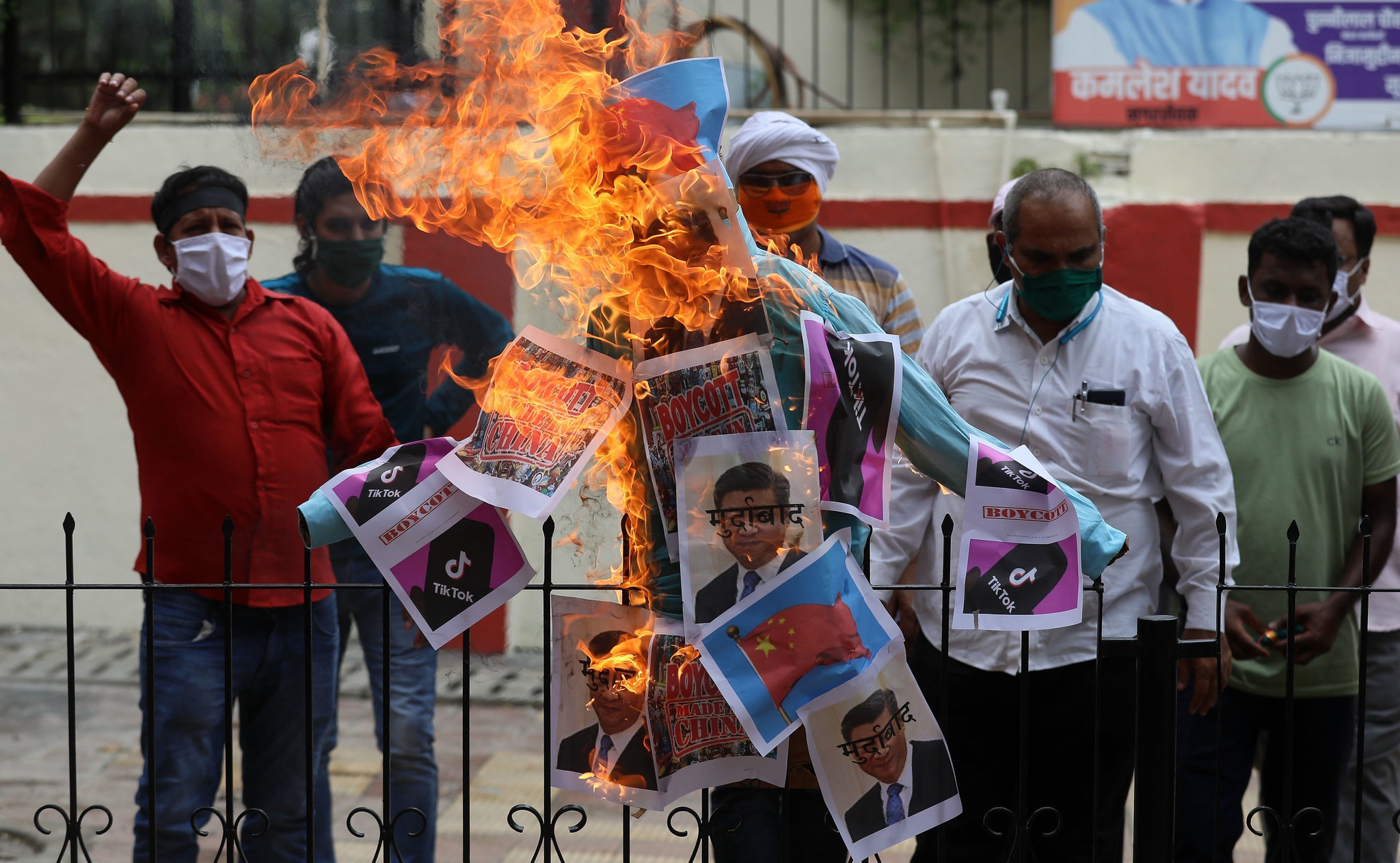
It doesn’t take many kisses blown to the virus, as the sturdy citizens in the photo are doing, for the virus to like-and-follow us.
(c) 2020 JMN