Impacted

Attorney General Paxton Statement on the Odessa Shooting

AUSTIN – Attorney General Ken Paxton gave this statement after receiving news of the horrific shooting in Odessa, Texas:

“I am horrified to see such a senseless act terrorize the fine people of the Permian Basin. Thank you to the courageous local and state first responders who worked quickly today to stop this evil attack. I have asked my law enforcement division and my crime victims services team to assist in any way necessary. Please join Angela and me as we pray for comfort for those who have been impacted by this violent act.”

This bulletin landed in my inbox at 6:24 PM on 31 August 2019, as news was still breaking of a mass shooting in Midland and Odessa — 5 fatalities, 21 wounded and counting. Today, on 1 September, the fatality count has risen to 7.  Also today in Texas new laws further easing restrictions on guns go into effect.

(c) 2019 JMN

Posted in Commentary | Tagged , , | Leave a comment

Arabist

arabist0

Tools.

WARNING
A long and wonkish post. Probably not your cup of tea.

BACKGROUND
I strove for years to read Arabic. I’ve largely lost what knack I attained. A recent brush with the language brought back how daunting it can be. For my own amusement I revisit my flustered campaign to be an “Arabist.”

TRANSLITERATION
I will use my eccentric transliteration for Arabic words, not the official one, which demands exotic characters from the International Phonetic Alphabet.

ROOTS
To look up an Arabic word in the dictionary you must analyze what its “root” consonants are. Typically there are three; sometimes two; rarely four. You look up the root to get at the word.

VOWELS
Arabic has three short unwritten vowels: ‘a’, ‘i’, ‘u’. Their lengthened forms ARE written. I represent them thus: ‘aa’, ‘ii’, ‘uu’.

WEAK CONSONANTS
The long vowels double as “weak” consonants. “Alif” looks like a capital sans-serif ‘i’. Crowned with a diacritic called “hamza” it’s a glottal stop (I use an apostrophe for it) voiced with any one of the three vowels. Think “asp-eek-oof.”

For weak consonant’Y’ think “yap-yeast-youth.”

For weak consonant ‘W’ think “wacky-weevil-woo.”

FIRST WORD
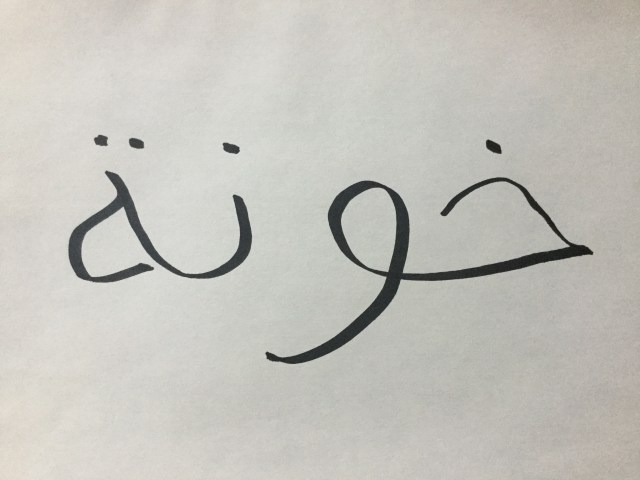
Here’s the first word of the mystery sentence we’ll attack:

arabist1

KH-w-n-(t)

Discard the ‘(t)’. It’s a feminine noun ending. The ‘w’ is suspect, could be a lengthened vowel. Let’s hope it’s a root consonant and look up KH-w-n in our dictionary. We find there is such a root, which revolves around the semantic range of treachery. Now we must scan the derivations from this root to find the word that appears in our text. We come upon this sequence:

arabist2

KHaa’in(un)

This is the present participle of the first derived verb form (there are 10 common derived verb forms). My Hans Wehr dictionary lists the following meanings: disloyal, faithless, false, unreliable, traitorous, treacherous, perfidious; traitor. Now, this doesn’t look exactly like our word, you are thinking, and you’re correct. Note, however, that our present participle has two “broken” (non-regular) plurals:

arabist3

KHuwwaan (first broken plural of KHaa’in)
arabist1

Khawana(t) (second broken plural of KHaa’in)

And in the second broken plural we see it. That could be our word! We’ll peg with the meaning traitors so as to keep it in our head. Without more context we can’t be sure of anything yet. It’s rare in Arabic for there to be a single morphological analysis on which to hang one’s hat. But we’re ready to continue our sleuthing on the second word!

(c) 2019 JMN
Posted in Anthology | Tagged , , | 4 Comments

“Reach Out from Within”

helen1

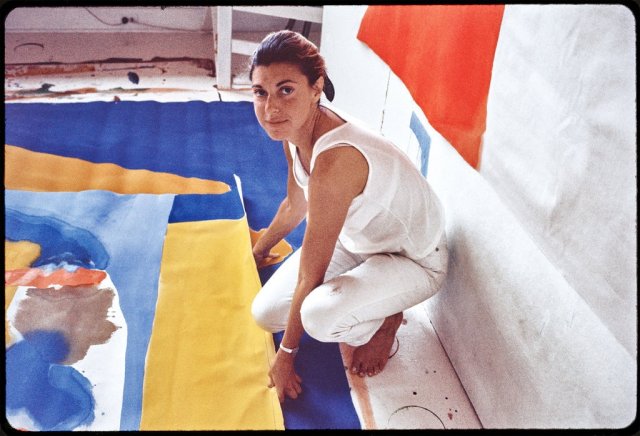
Helen Frankenthaler in her studio “in the woods” in Provincetown, 1968. Working on the floor, she poured thinned paint directly onto raw, unprimed canvas, a technique that established the Color Field movement. Credit Helen Frankenthaler Foundation, Inc./Artists Rights Society (ARS), New York; J. Paul Getty Trust; via Alexander Liberman Photography Archive; Getty Research Institute.

Karen Rosenberg writes that this exhibition of Helen Frankenthaler’s work at the Parrish Art Museum in Water Mill, NY,

“presents Provincetown [Massachusetts] as more of a psychic space, one of negotiation and self-discovery, with new family responsibilities but not too much structure — a “desired void,” as Frankenthaler wrote in a 1962 letter to [fellow artist Grace] Hartigan. “I hope to reach out from within and grow rather than give up and stop.”
(Karen Rosenberg, “‘Abstract Climates’: Helen Frankenthaler’s Ode to Provincetown,” NYTimes, 8-29-19)

A “desired void”! Frankenthaler had a way with words as well as paint.

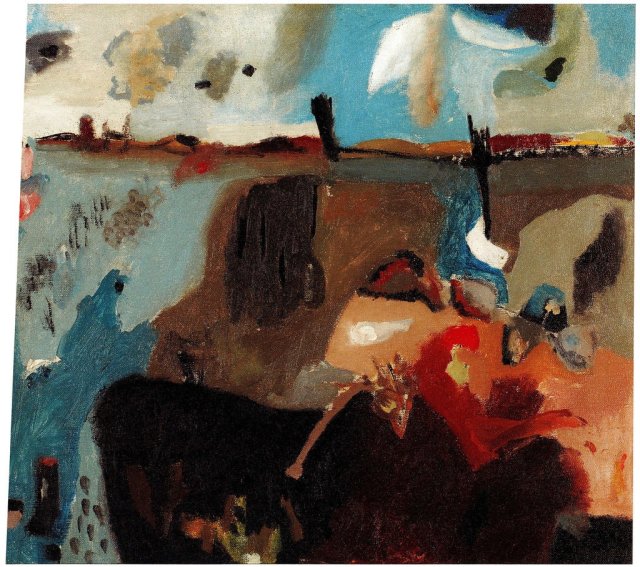
Clement Greenberg suggested in 1950 that she study abstract painting in Provincetown with Hans Hofmann. I’m intrigued by the distance she travels from her small oil titled “Provincetown Bay” (1950) …

helen2

Frankenthaler’s “Provincetown Bay,” from 1950. Credit Helen Frankenthaler Foundation, Inc./Artists Rights Society (ARS), New York; via Portland Museum of Art.

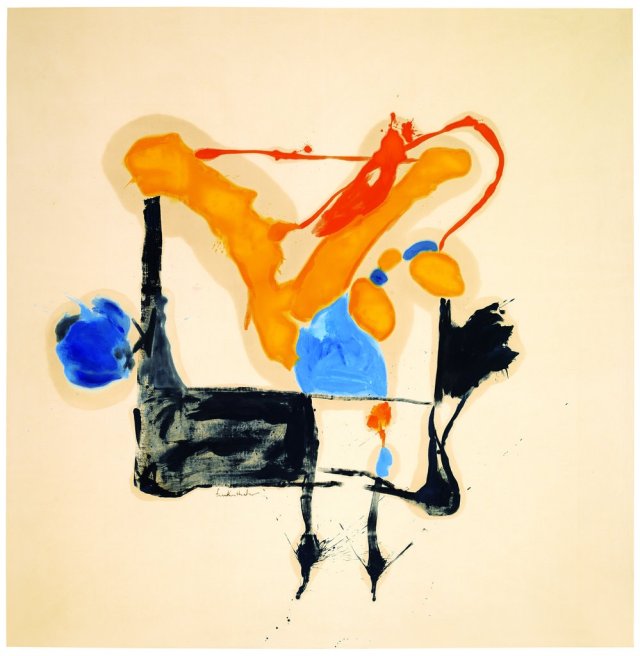
to paintings such as “Orange Breaking Through” (1961).

helen3

Frankenthaler’s “Orange Breaking Through,” from 1961. Credit Helen Frankenthaler Foundation, Inc./Artists Rights Society (ARS), New York; Collection of Audrey and David Mirvish.

Paraphrasing Rosenberg, cautious, muted gray-greens and a distinct horizon line give way to simple black outlines disturbed by unwieldy splotches of tangerine and crimson. It’s an exhilarating reach.

(c) 2019 JMN

Posted in Anthology, Commentary | Tagged , , , , | Leave a comment

The People’s Receiver

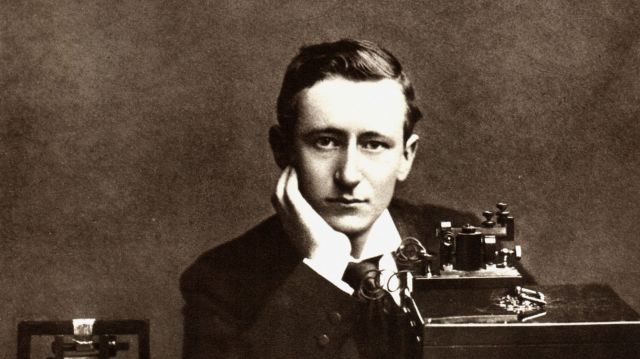
marconi posing

Guglielmo Marconi Posing. Mental Floss.

Bret Stephens has commented on how the relatively new technology of radio was received enthusiastically in 1930s Germany. Effort was made to produce and distribute a cheap radio — the Volksempfänger, or people’s receiver — “that could bring the Führer’s voice and message into every home.” (“World War II and the Ingredients of Slaughter,” NYTimes, 8-30-19)

I think of the Volksempfänger as the Volkswagen of radios, hearkening back to a Beetle — the people’s car — that drew hard service during my student days.

It’s fun to muse speculatively on the arc from radio to Twitter. In the annals of mass communication, television may go down as an intervening blip, a mere enhancement of radio leap-frogged by Jack Dorsey’s Marconi-level hop.

Dorsey called his invention “Twttr.” He emitted the first tweet in 2006: “just setting up my twttr.” On 15 July 2006, TechCrunch reviewed the new Twttr service:

Odeo released a new service today called Twttr, which is a sort of “group send” SMS application… People are using it to send messages like “Cleaning my apartment” and “Hungry.” (“Who Invented Twitter?” ThoughtCo)

And here we are, cleaning our apartments. Thank you, @Jack.

(c) 2019 JMN

Posted in Commentary | Tagged , , , , , , , | Leave a comment

The Few, the Proud, the Readers

mattis

Jim Mattis in March 2018. He resigned as defense secretary in December. Credit Mark Peterson/Redux.

“If you haven’t read hundreds of books, you are functionally illiterate, and you will be incompetent, because your personal experiences alone aren’t broad enough to sustain you.”

(Marine General Jim Mattis, from his new book “Call Sign Chaos,” written with Bing West)

(Quoted by David Brooks, “Jim Mattis and the Formation of Character,” NYTimes, 8-29-19)

The command to Read! coming from a leatherneck of General Mattis’s standing carries a certain weight.

(c) 2019 JMN

Posted in Quotations | Tagged , | Leave a comment

Rees-Mogging the Confecters

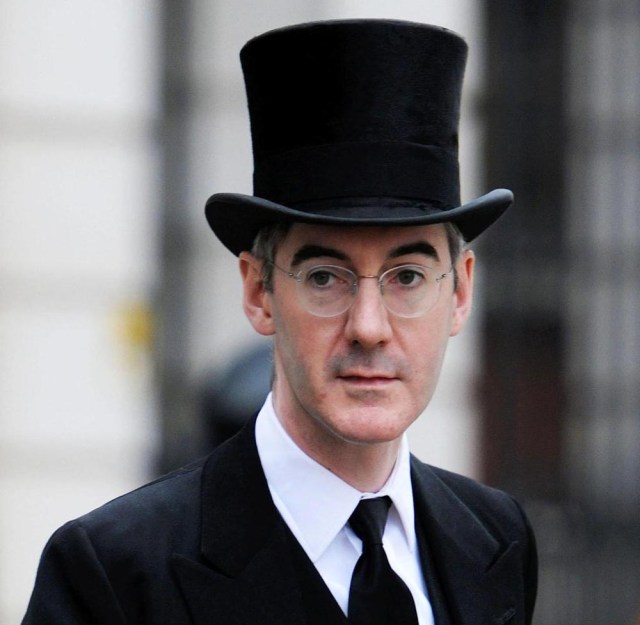
rees-mogg_topHat

“The candyfloss of outrage that we’ve had over the past 24 hours — which is almost entirely confected — is from people who never wanted to leave the European Union,” Mr. Rees-Mogg said in an interview with BBC radio.

(Stephen Castle, “Boris Johnson’s Parliament Suspension Prompts Fury and Resignations,” NYTimes, 8-29- 19)

And the gentleman administers a proper drubbing to the blighters.

(c) 2019 JMN

Posted in Commentary | Tagged , | 1 Comment

“Mornington Crescent!”

morning crescent

Alamy.

I learn from Martha Gill that there’s a long-running game on British radio whose object is to be the first to reach the “Mornington Crescent” tube station on the northern line. Players cite routes over London’s transport system knowing and loving that it’s an elaborate charade.

… The game is entirely made up. There are no real rules; at any point a player could “win” “Mornington Crescent” simply by saying the words. They never would of course. It is simply not done.

As with the game, writes Gill, the rules of British politics are unwritten. “[Its] smooth workings are held together by convention, good manners and a sense of… fair play…” But the main political players “have suddenly realized that they can win much faster by ignoring the rules altogether: ‘Mornington Crescent!’ they chorus, immediately, and the game is over.”

And so, after all, what never would be done, and simply is not, is done.

(Martha Gill, “Did Boris Johnson Just Break Parliament?” NYTimes, 8-28-19)

(c) 2019 JMN

Posted in Commentary | Tagged , , | 1 Comment

The World We Mustn’t Live In

Two thoughts slam me at once. They can’t be correlated, but mustn’t they?

The first thought is that we live in a tired, busy world; a world of busy tiredness; a world of tired busyness. Such is our world: tired and busy, busy and tired.

The second thought is that an electric guitar amplified with bristling feedback is ideally suited to provide the silences between voicings of a well-fingered acoustic guitar.

One thought leads to the other and back, mustn’t it?

(c) 2019 JMN

Posted in Commentary | Tagged , , , , , | Leave a comment

Feminine He Ain’t

serra1

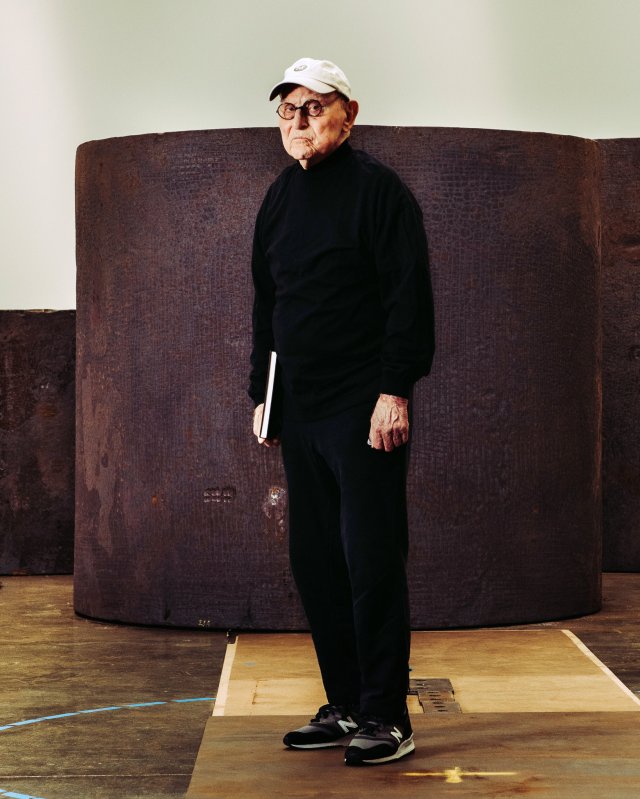
Mr. Serra always carries his sketchbook with him, in case he has a new idea for a sculpture. Credit George Etheredge for The New York Times.

This article describes Richard Serra as “the best-known living sculptor in America.” His medium is steel, in which he enshrines “abstract forms as maximalist feats of mass and scale.”

At the Museum of Modern Art… a room-sized assembly of eight, 40-ton forged-steel blocks that together weigh more than a Boeing 777, will occupy its own gallery….

Serra’s responses to the interviewer ring true of a spikey octogenarian who may not be in close touch with his female side!

Richard Serra… counts pounds. “This is my heaviest show ever,” he said with a hint of pride… Does he see his sculpture as distinctly masculine? “It’s not feminine,” he replies… Does he see any tenderness in his work? “I don’t think in those terms,” he replied. “It sounds like you are talking about steak…” I asked Mr. Serra if he ever has the urge to use a color besides black [in his drawings]. “A pink painting,” he replied with a straight face. “I am working on it. It is in my closet.” A five-beat pause. “Or green and purple. For a week, I considered chartreuse seriously.”

serra2

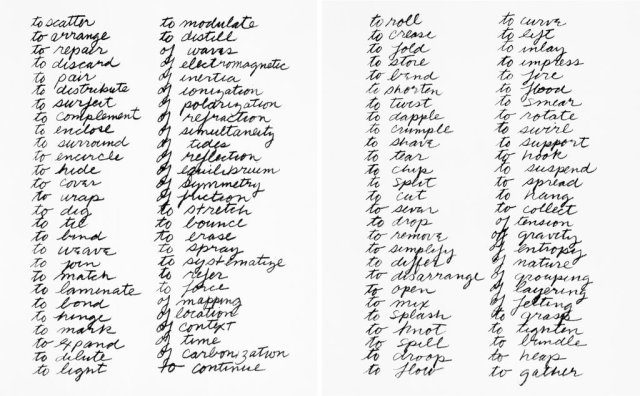
Mr. Serra’s “Verb List” is the closest he came to producing a manifesto and helped define what is known as Process art. Credit The Museum of Modern Art.

I gratefully let Mr. Serra have the last word. I couldn’t answer the question better than he.

How would he describe the sea? “It’s like the desert with water,” he says….

(Deborah Solomon, “Richard Serra Is Carrying the Weight of the World,” NYTimes, 8-28-19)

(c) 2019 JMN

Posted in Commentary | Tagged , , , | Leave a comment

Retire “Toxic.” “Hegemonic” is Here

andrew luck

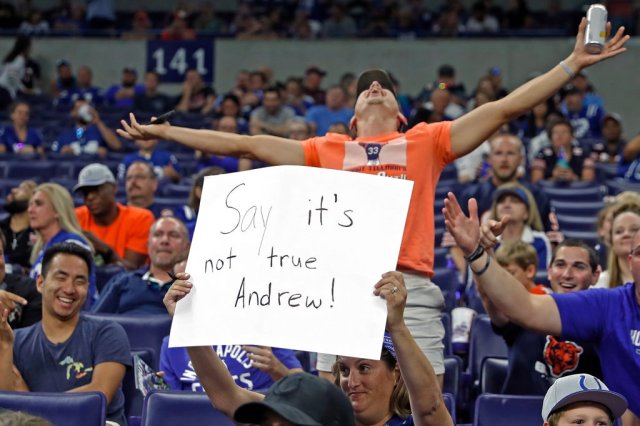
Fans in Indianapolis reacting after news broke that the Colts quarterback Andrew Luck was leaving the N.F.L. Credit Brian Spurlock/USA Today Sports, via Reuters.

Scholars call it “hegemonic masculinity,” a fancy phrase defining the traditional male ideal as being stoic, tough and aggressive. The body is an instrument of violence in this rationalization…The football helmet… is not just a form of protection but… a mask that… encourages [players] to unleash violence on their faceless opponents…

With injuries already sustained, Andrew Luck has guaranteed himself a post-football life of pain. I admire him for defying the scorn of hegemons and fans by choosing to spare his body further insult.

ESPN has… pulled its “Jacked Up” recurring segment that spliced together neck-snapping, spleen-splitting hits… [and a montage ] in which the two teams’ helmets collide in an explosion of kinetic lightning.

(Michael Serazio, “Why Andrew Luck’s Retirement Was So Shocking,” NYTimes, 8-27-19)

And I salute ESPN for dialing back “its packaging of pain as pleasure.” It may be that American football can yet save itself from going the way of boxing as mass entertainment.

(c) 2019 JMN

Posted in Commentary | Tagged , | Leave a comment