
The Arabic phrase under examination is this (with my transliteration):
وَأَصْلِحُوا۟ ذَاتَ بَيْنِكُمْ ۖ
wa-‘aṣliḥū ḏāt(a) bain(i)-kum
In the languages I can navigate, here are various translations. All but “Cortés” are from here:
English
settle your affairs (Dr. Mustafa Khattab, The Clear Quran)
and set your relations right (T. Usmani)
and make things right between you (M.A.S. Abdel Haleem)
and set things right between you (A. Maududi (Tafhim commentary))
and adjust the matter of your difference (M. Pickthall)
and keep straight the relations between yourselves (A. Yusuf Ali)
and adjust all matters of difference among you (Al-Hilali & Khan)
and amend that which is between you (Saheeh International)
Spanish
¡Manteneos en paz! (Cortés)
solucionad vuestros conflictos (Sheikh Isa Garcia [sic])
y arreglen las diferencias entre ustedes (Noor International Center)
y arreglad las diferencias entre vosotros (Montada Islamic Foundation)
French
Mettez un terme à vos différends (Rashid Maash)
arrangez-vous à l’amiable dans vos rapports (Montada Islamic Foundation)
Maintenez la concorde entre vous (Muhammad Hamidullah)
For the casual reader keen on registering a quick “like”:
“Work things out between yourselves.” Or: “Stop your squabbling.” The translations agree more or less that this is the message. It’s a wonderful admonition for constructive disagreement converging on concerted, positive action. Democrats traditionally never learn the lesson. Politically, they’re a flotilla of sloops tacking to shifting winds as the Republican dreadnaught steams past them into elected office. But I’ve other fish to fry.
For the committed reader in for the long haul:
What do the words wa-‘aṣliḥū ḏāt(a) bain(i)-kum actually say? As a reader of poetry and translator, I tread the contentious knife edge of a notional distinction between what words “say” and what they “mean.” I dwell continually on the saying side, where intimate grammatical relationships unfold, wagering that therein may lie less obvious, more revelatory meaning.
To grasp the passage fully, I thought I had to better understand how ḏū (pronounced THOO with the voiced “th” of “that”) works. It’s a species of particle that acts as a noun, declined for case, number and gender, but which is always paired with a following word in genitive case to create a descriptive compound. Wehr lists the meanings of ḏū as: possessor, owner, holder or master of, endowed or provided with, embodying or comprising something. Example: ḏū māl(in) (possessor of goods = wealthy)…
But wait! The feminine form of ḏū is ḏāt, also subject of a lengthy Wehr entry. Clearly, ḏāt (pronounced THAHT) has staked out its own lexical terrain. The meanings listed include: being, essence, nature; self; person, personality; the same, the selfsame; -self. Lo and behold, the first example of a ḏāt construction that Wehr cites is the one we’re examining: ḏāt al-bain. Meanings listed for the phrase are: disagreement, dissension, disunion, discord, enmity; friendship [!]. So the phrase means what the translations have captured in various wordings: Put paid to your discord. Case closed? Nope.
The words wa-‘aṣliḥū ḏāt(a) bain(i)-kum don’t actually say what any of the above translations register. The phrase’s approximate grammatical description is conjunction+imperative verb+direct object+genitive noun+possessive pronoun. What its words might say is: Put in order the essence of your difference. Or perhaps: Repair the nature of your separation.
In many respects we’re in the realm of idiom, a cousin of metaphor. The languages I know are riddled with idiomatic expressions whose purport is other than the literal sense of their wording. “To get a leg up” on someone is to gain advantage over him — nothing to do (now) with wrestling.
I want to keep chasing what the words say, not mean, because it leads to my title.
What induced me to dive into the ḏū lagoon was partly a misreading: I mistook the noun bain (separation, interval, difference) for the preposition baina (between, among). It made me think I was seeing a novel pairing of ḏū, which is usually annexed to a substantive. This is plumb loco! I said to myself. As it happened, the loco one was me.
I can’t conclude without sharing what I learned from Lane. The Lexicon’s article on ḏū contains the following statement and examples: … In these instances… that which is contained is made to be as though it were the possessor (ṣāḥib) of that which contains. (I think of this as akin to quantum matter existing in multiple states.) Examples:
waḍa^at(i)-l-mar’aẗ(u) ḏā baṭn(i)-hā. The words say: “The woman dropped the possessor of her belly.” Lane’s translation: The woman brought forth [her child].
‘alqat(i)-d-dujājaẗ(u) ḏā baṭn(i)-hā. The words say: “The hen dropped the possessor of her belly.” Lane’s translation: The hen laid her egg, or eggs.
‘alqā-r-rajul(u) ḏā baṭn(i)-hi. The words say: “The man dropped the possessor of his belly.” Lane’s translation: The man ejected his excrement, or ordure.
In each case, that which is contained — child, egg, excrement — is conceived as being possessor (owner, holder, etc.) of what contains it (belly).
Committed reader, you’ve weathered a grueling dilation. Thank you, and happy trails until we meet again.
(c) 2025 JMN — EthicalDative. All rights reserved













 EthicalDative
‘the living can / be silenced the dead cannot’
The writer who wrote the line in my title is ire’ne lara silva. Here it is in context:
… they will make us all into virgin
madonnas protecting mexicanidad
but our red
red blood spilt on the ground does not know
how to be silent we did what we had to do to
survive then and later in this life in the afterlife
or the life before the stories are not dead stories
never die we will speak our piece the living can
be silenced the dead cannot
(“what the ghosts of las adelitas say in the afterlife part 1”)
I’ve given the line prominence because it gives me an escalofrío and makes me whisper así es.
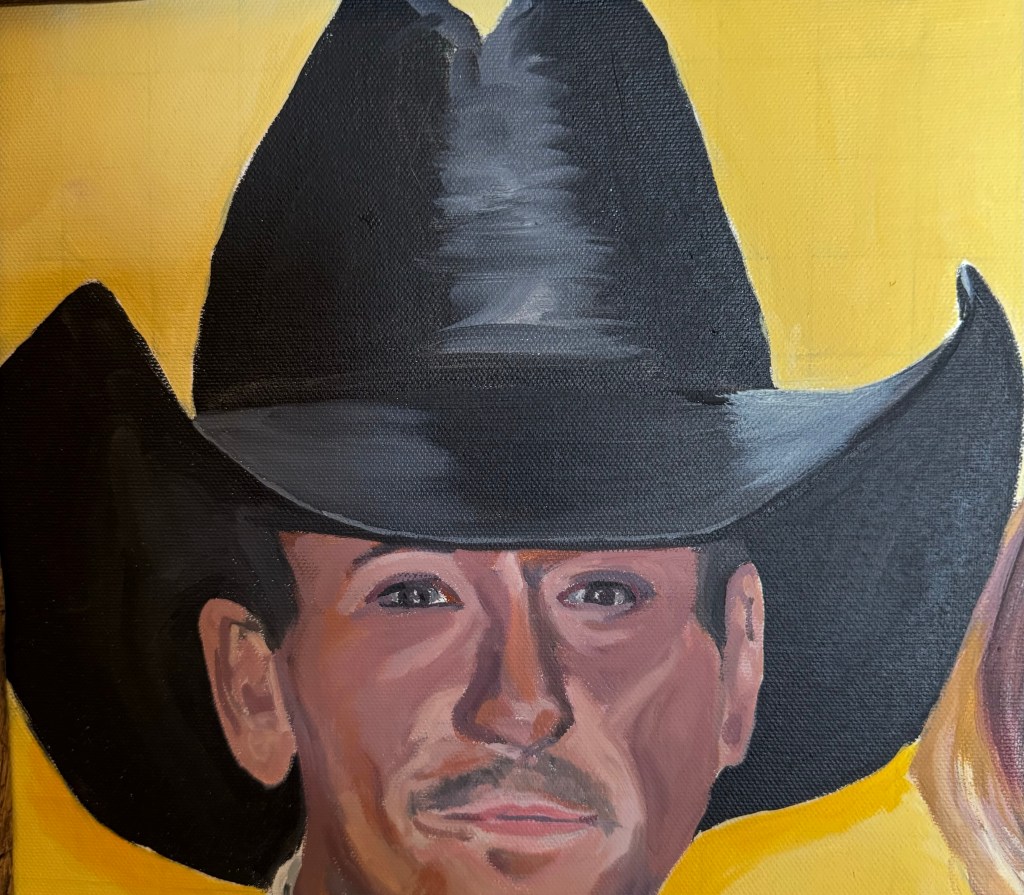
This and other poems in the portfolio of Poetry, April 2025, exalt a form of demanding, ceremonial horsemanship practiced by women in traditional female attire riding side saddles. The Mexican art form is known as escaramuza, and has its male counterpart in charrería. The poems make clear that the women of escaramuza have to put up with a ration of jeering from the males. Perhaps it’s no accident that escaramuza means “skirmish.”
… they say but
what if a man wanted to wear a dress expecting me to shrink back in horror
but i say the world will not end if a man wears a dress the world will not
end if i love who i love the world will not end if i say this place belongs to
me too the world will not end if i live as i say i must live
(“machetona”)
Where style is concerned, I generally feel my gorge rising when confronting verse which dispenses with textual boundary markers. Formlessness can trigger freefall in which reading devolves into a construing chore. I discovered, however, that reading lara silva’s poems in the run-on fashion that such texts impose did not subtract impact from them. This is refreshing, and I think it’s so because her sentences are crafted with sufficient solidity so as to survive the rush. When I reached the end, I didn’t feel as if I had missed message. The lack of punctuation engenders a momentum of assertion that lends poetic force.
Postscript: My grandmother, a ranchwoman, had a side saddle. She was beyond her riding days when I knew her, but as a kid it perplexed me no end, when viewing the odd-looking rig, how she had managed to stay on a galloping horse when seated on it. My answer came with maturity: She didn’t gallop. But the escaramucistas do!
(c) 2025 JMN — EthicalDative. All rights reserved