
“What I teach you is nothing. What you learn by doing over and over is where the learning begins.” (Simon Michael) “Writing poetry is much easier …
Five Quotes About …
“What I teach you is nothing. What you learn by doing over and over is where the learning begins.” (Simon Michael) “Writing poetry is much easier …
Five Quotes About …
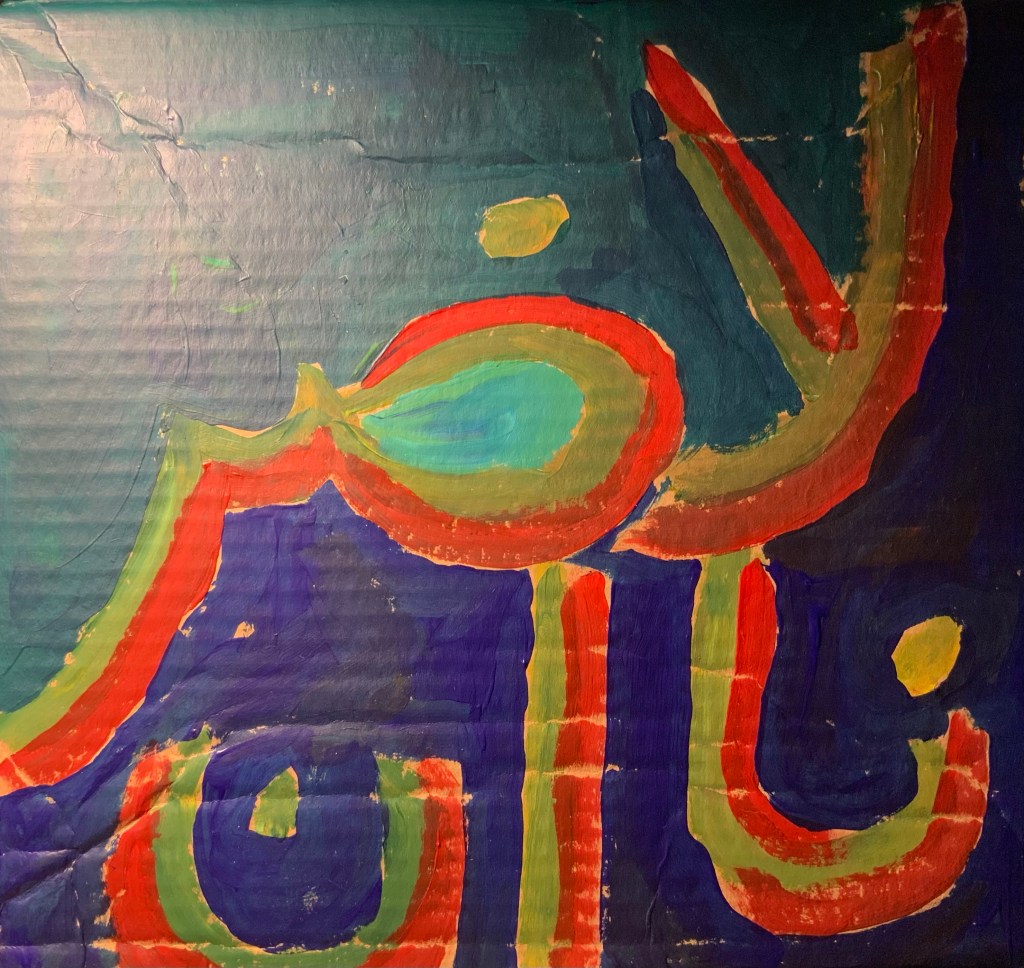
On Squirrels
I don’t defend creationism but
sometimes it’s hard to get
my head around the notion that
one bit of protoplasm put
on a bird suit, another a people suit,
and don’t get me started
on squirrels. Have you ever noted
how one can scamper up and scoot
down sheer verticals like a bat
out of who knows what?
(c) 2023 JMN — EthicalDative. All rights reserved
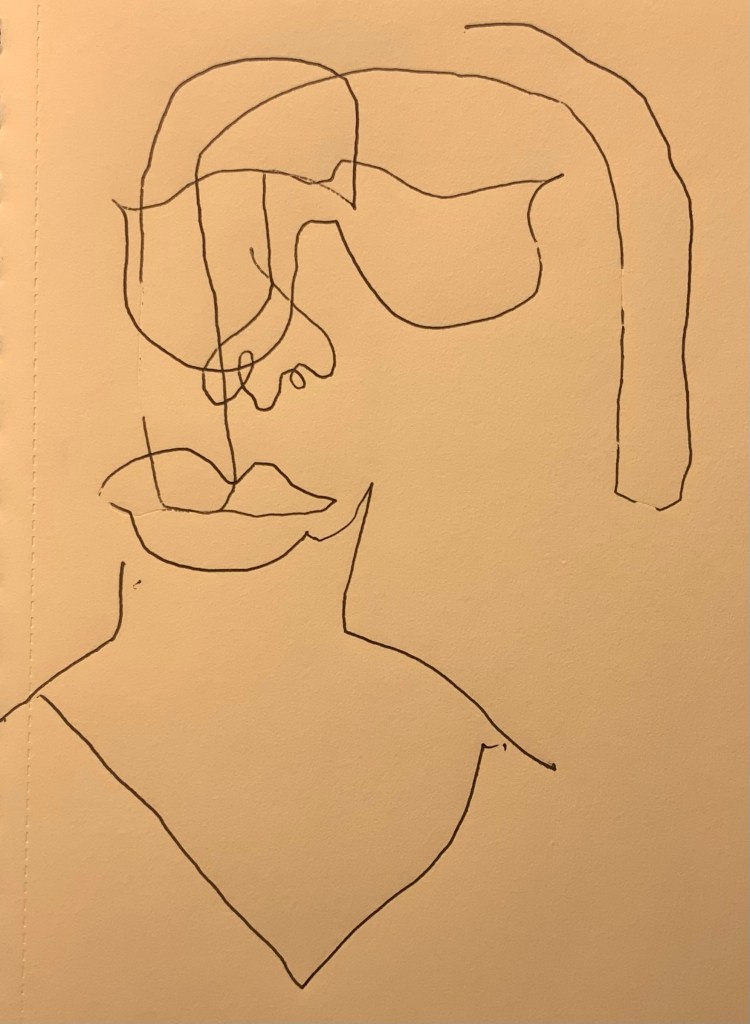
The Poets
There he sat among them
(his old friends) a walking ash
that knows how to smile.
And he still dreamed of a style
so clear it could wash a face
or make a dry mouth sing.
But they laughed, having found
themselves more astonishing.
They would drive their minds
prismatic, strange, each wrapped
in his own ecstatic wires,
over a cliff for language,
while he remained to raise
a few birds from a blank page.
Poem by Bert Meyers in Poetry, January 2023.
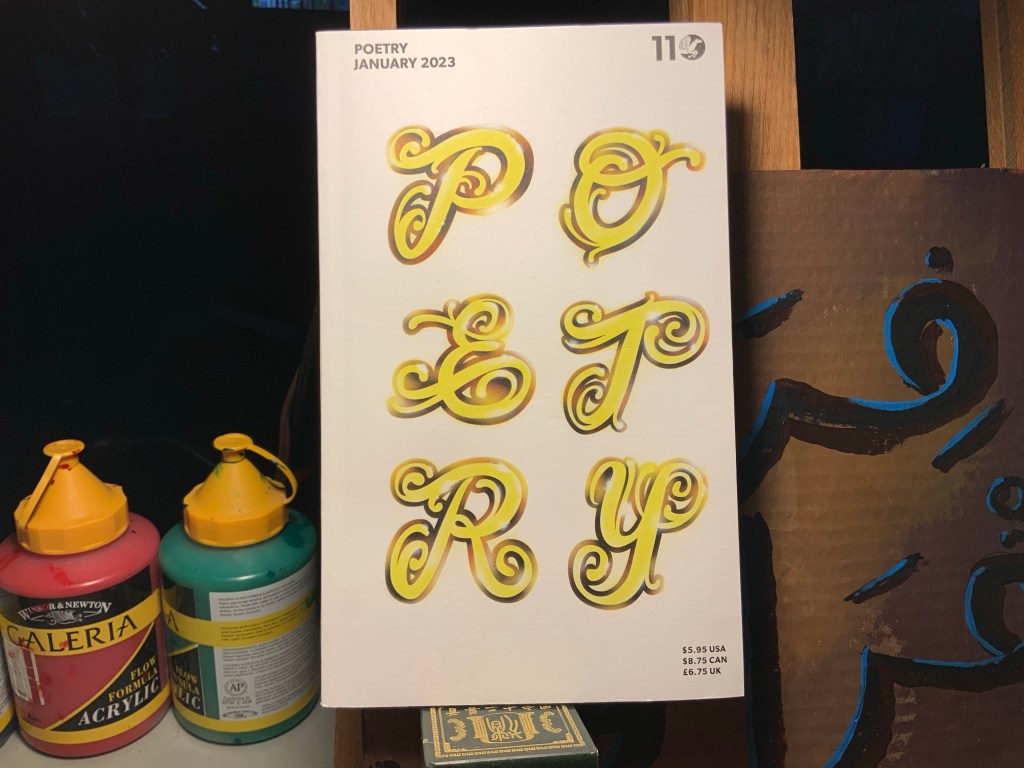
Bert Meyers is singled out for celebration in this issue of the magazine. The poem appears, ironically, in a journal that seems to be dominated by writers wrapped in their own ecstatic wires, to borrow Meyers’s phrase. As poems go, there’s relatively little to translate. “A walking ash”? The essay about him mentions that Meyers was a heavy smoker — indeed the habit is implicated in his relatively early death. “Drive their minds over a cliff for language” is so apt it explains itself — the perfect metaphor! — portraying a mode of recondite, self-referential versifying that the speaker dismisses in favor of unassuming eloquence. With its unemphatic rhyming and lucid phrasing the poem is graspable, coherent and concise, all of which makes it linger in the mind, and even on the tongue. I hear a flutter of wings!
(c) 2023 JMN — EthicalDative. All rights reserved
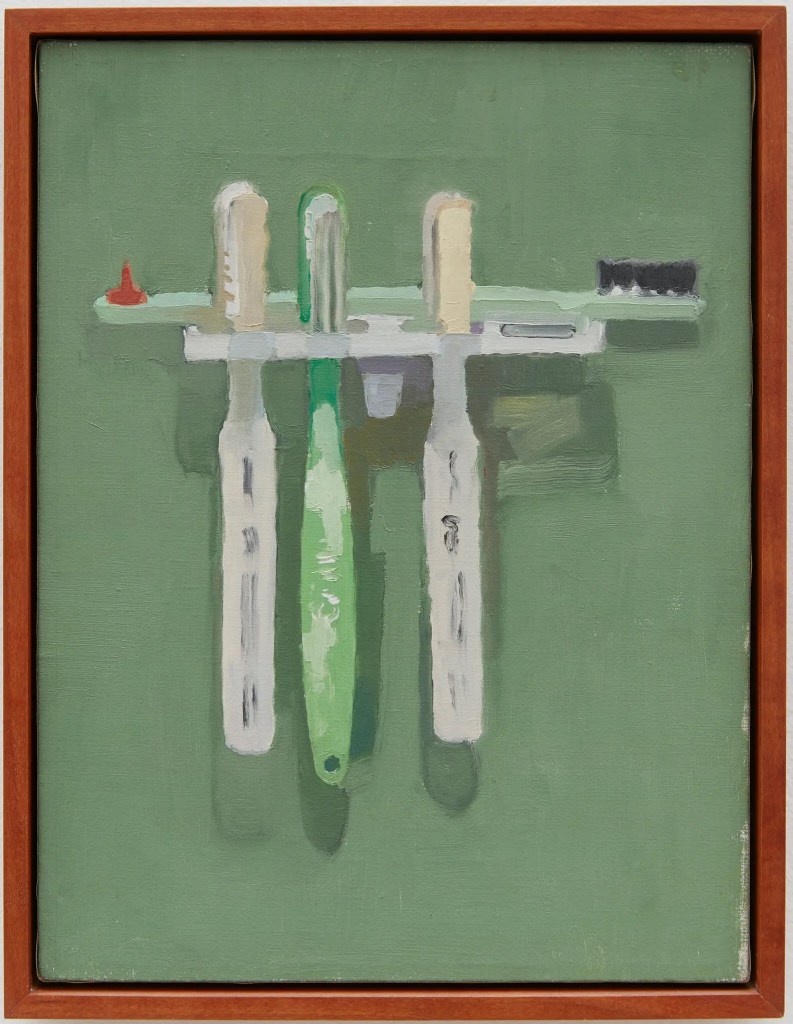
The creamy sensuality of the toothbrush rack melts your heart. Talk about ennobling humble objects with tender attention. It’s an act of painterly love lavished on a trivial appurtenance. Both lyrical and somehow sad.
“There is something I lack as a painter that de Kooning and Alex Katz have,” he jotted in his diary in 1967. “I wish I had that. I’d tell you what it was except that I don’t know.”
(Joe Brainard)
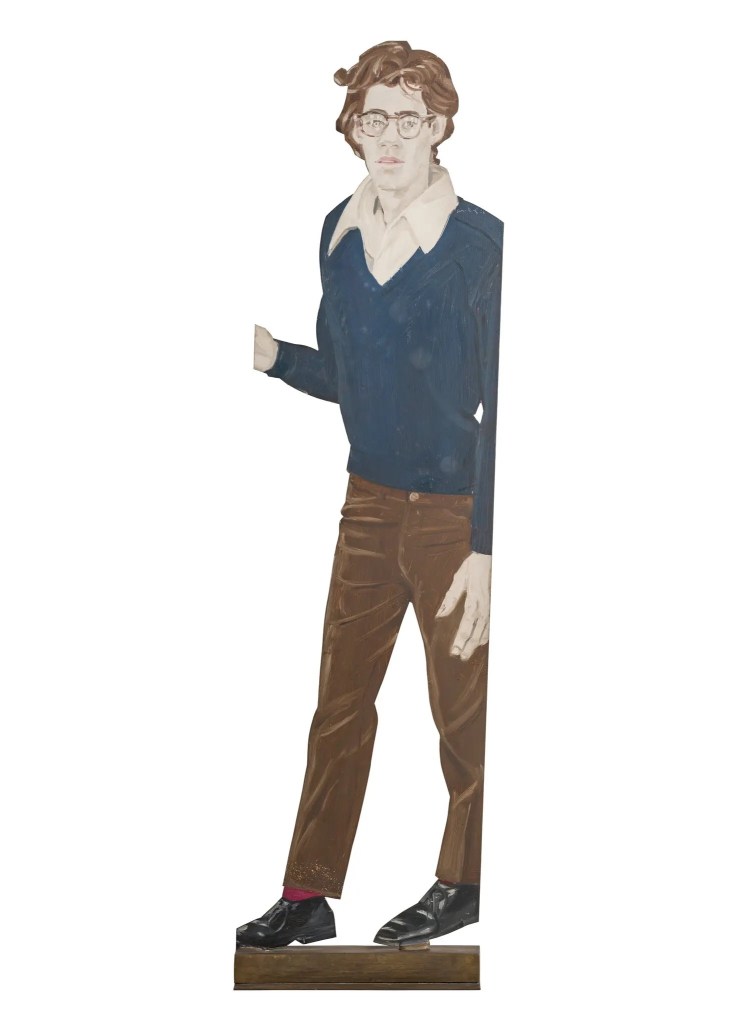
… A reticent Oklahoman who died of AIDS in 1994, at the age of 52…, [Brainard] arrived in Manhattan in 1960, and fell in with what was probably the last group of artists and writers to flourish in the city without any money… [He] sought to take up as little space as possible… specialized in small-scale works… understood how cheapo things (comic books, cigarette packaging, gift tags, restaurant receipts, etc.) can be an expression of authentic emotion… The poet Ron Padgett… recalls a period of artistic crisis in which “he took an increasingly dim view of his work.” Overly conscious of his deficiencies, he signed up for classes at the New York Academy of Art. His remaining years were given over to reading novels.
(Deborah Solomon, “No Ordinary Joe,” New York Times, 11-16-22)
(c) 2023 JMN — EthicalDative. All rights reserved

A turn of phrase can unsettle when the poet goads words beyond their commonly agreed boundaries. When the impertinence works, the reader experiences a shocked flash of assent. Ah yes! I see why you write that she “whirls” her hoe. The poet has created a context which can make the act of whirling be right for a hoe. Perhaps it connotes a manic wielding of the tool whose blur is shared with whirling. Perhaps the context is that of a person in possible breakdown who flails irrationally at grievous loss.
When it doesn’t work, the reader fails to assent. He’s stuck haggling with “whirl,” unable to divorce the word’s weight in his mind from a sense of twirling something in a circle, unable to match the association with any conceivable handling of a hoe.
There’s no “right” response. The writer’s design is to stir the reader with words. The verse is the fact; the writer’s work is done. With the making of it his limits have been tested, his choices made. The rest belongs to the reader. When the reader is stirred, it’s poetry.
Off Interstate 20 / she whirls her hoe / the acreage now / a bedroom wall / a six foot / stand of weeds… / the house lost to / a lightening fire in / ‘68 and she / whirls her hoe / It lifts and / disappears / lifts / disappears / in the sun / in the moon / The relatives pass / at 70 yelling / GIVE IT UP BEATRICE / The weeds keep working / at that one / charred wall… [My bolding.]
(Charles Behlen, “Widow Zebach,” Dreaming at the Wheel, Corona Publishing Co., 1988, p. 31)
(c) 2023 JMN — EthicalDative. All rights reserved
My pendant whatnots had a fiery itch. I bashfully exposed them to the Dermatologist. “It’s excruciating,” I said. She cast her glance and looked up brightly. “Ah yes, I see what you mean,” she said.
I pressed for amplification. “It’s neuro-dermal,” she said. “I’m going to prescribe something to calm those nerves.”
She and I have a clinical past. She knows my sun-wrecked carapace, my sordid history of sleeveless, shorts-clad tennis played in ultraviolent radiation. Now she knows my whatnots. She has also twigged, over time, to my verbal pathology.
“Is it in the nature of a psycho-dermal epithelial conflagration, then?” I said. She nodded solemnly.
“And you’re going to prescribe a palliative tubal emollient with which to put down the revolution?”
Brisk nod again. She recited a regimen of application for the tube of goo, smiled expertly, and exited the examining room. Walking gingerly out of the clinic I felt better down there already. It helps to talk things out.
(c) 2023 JMN — EthicalDative. All rights reserved

“Organised chronologically, Matisse in the 1930s begins with a look at the Nice period, exemplified by his voluptuous Odalisque with Grey Trousers (1927). A seductive model in harem pants lays on a green bedroll, surrounded by brilliant red and yellow wall patterns.”
(Diane Bernard, “Matisse’s The Dance: The masterpiece that changed history,” bbc.com, 1-18-23)
The mugwump who rails about “grammar errors” invariably goes down as a pitiable loser in greater society’s estimation, and not undeservedly.
Never mind that. I don’t give a damn what people say and write in ordinary discourse, but it sticks in my craw when a professional, native-English-speaking journalist in the hire of a reputable organ such as the BBC, writing a published article that presumptively has undergone editorial vetting, commits the hideously common fuck-up (pardon my language) exemplified in the above quotation.
For my sins, I’m condemned to be foolishly bothered by this particular fuck-up (pardon my language) and to cease being interested, invariably if unjustly, in whatever else the journalist may have to say. If you live by the expository published word, you’re perceived according to the level of your mastery of it. It’s a hotly denied truth.
(*This potty-mouthed post is emitted in the heat of petulance, to be repented at leisure. Whenever I spew invective I know I’ve slipped the bonds that tether me to good taste.)
(c) 2023 JMN — EthicalDative. All rights reserved

If you’ve worked with lumber you know knots are harder than other parts of the wood. Their toughness can stymie a handsaw and defeat a nail. There was once a vogue in home-building circles for “knotty pine.” Prized for its marbling of streaks and whorls, knotty pine paneled the dens of many a ranch-style home. The knots served decorative ends.
Metaphors are the knots of poems. It will start an argument to call them decorative. They aren’t… always, but metaphors can grind your teeth. If a metaphor doesn’t land with a certain immediacy, it’s a bomb that doesn’t detonate. The tricky thing for a versifier is that emotive force doesn’t necessarily travel on perfervid vocables. Compare these two texts:
“Sobs typhooned the wheelhouse of his heart, / as the Pink Johnson of his passion’s pilgrimage, / bottled caravel wrought for a jeroboam of exile, / lay shattered now on the ruptured crown — O ye gods! — / of his lifeless Nefertiti, / the ermine chariot of his muse’s Icarus, / his Eloise of chalcedonic eyes.”
(Me)
Earth, receive an honored guest: / William Yeats is laid to rest. / Let the Irish vessel lie / Emptied of its poetry.
(W. H. Auden)
The first text spoofs the ginning up of ersatz pathos by shaking fizzy words and spraying them at the reader.
The second text starts the ending of an elegy. It pivots from the expansive, conversing mode that has preceded to a strict, rhymed cadence betokening the ineluctable. In spirit, lump in throat, the reader falls in with fellow celebrants to walk behind a writer’s coffin. As moving speech, it explodes.
(c) 2022 JMN — EthicalDative. All rights reserved

Generative artificial intelligence is a colossal genie blasting out of its bottle as we speak. A key player in the crowded field is named Altman. Get it? Altman —> Alt + Man —> Alternative Man. I made the name up to make a point. Or did I?
A.I. has made it where we can’t know now, and in future even less, whether an utterance or an image comes from a human or from a machine. What could go wrong with such technology? Bad actors, of course. They will make sure it’s misused — there’s no new evil under the sun, nothing human is alien to me, etc. — all the platitudes are germane.
But the scourge of malign A.I. poses opportunities for humans who are still trying to have their own thoughts and speak their own words. They lie in fostering creativity that’s distinctly human. For example, cure cancer and fix famine. Solve war. Clean the oceans. Fall in love and make stupid mistakes. Write flawed poems. Learn something “useless” like algebra or Latin that will comfort you a lifetime later. In other words, have a life.
(Cade Metz and Karen Weise, “Microsoft Bets Big on the Creator of ChatGPT in Race to Dominate A.I.,” New York Times, 1-12-23)
(c) 2022 JMN — EthicalDative. All rights reserved
 EthicalDative
‘When Did He Do Well? Ne’er!’
This gallery contains 1 photo.
I’ve filched my title from the standup comedy of the matchless Gary Gulman. If you don’t know him, you owe it to yourself to track down on YouTube, exempli gratia, his explanation of how the states got their abbreviations. (c) … Continue reading →