“No Mimetic Ability”

[Stella’s] emphasis on two-dimensional surfaces was a clear rejection of the idea of painting as a window into a three-dimensional space.

A story in one of his mother’s Vogue magazines, featuring models posed in front of a painterly Franz Kline-esque Abstract Expressionist backdrop, provided him with an early clue that art wasn’t only about figuration. At Phillips Academy in Andover, Mass., in the early ’50s, when European abstraction was a prevailing force in studio art, Stella was especially influenced by the work of Hans Hofmann, a kind of proto-Abstract Expressionist from the ’40s, and the Bauhaus color theorist Josef Albers. “I had no mimetic ability,” Stella tells me, “but I was never interested in finding one, or cultivating one. No, I worked directly with the materials, actually. The big deal in postwar American painting was ‘its materiality,’ and so that was heaven for me.”

(Megan O’Grady, “The Constellation of Frank Stella,” NYTimes, 3-18-20)

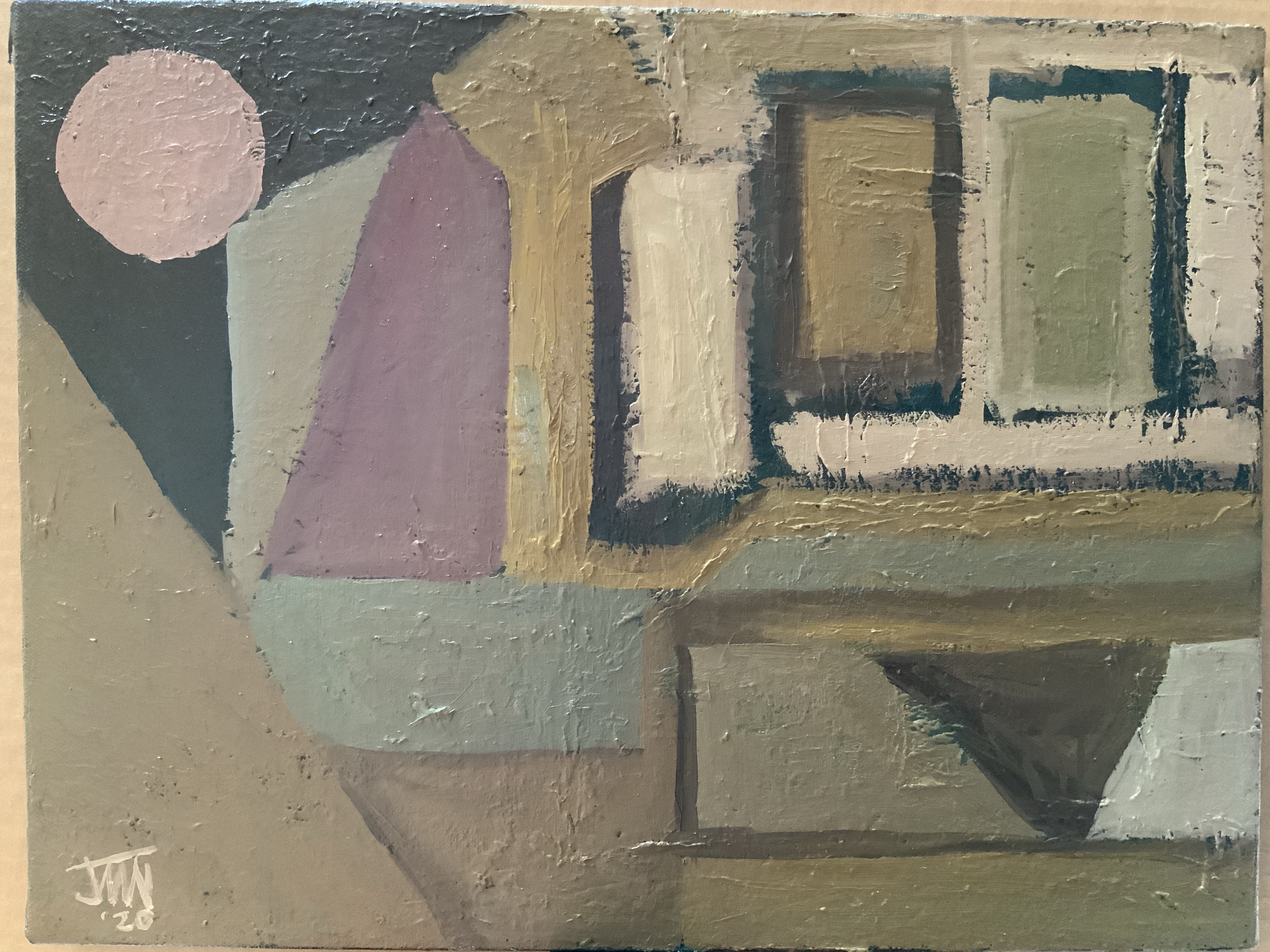
For me as an amateur painter the scariest prospect on the square feet of earth in front of my easel is to grope past mimesis and “work directly with the materials” as Stella puts it. That jump-off hovers just beyond my slogging daubs like the mirage where hot asphalt meets horizon on the highway between Balmorhea and Pecos.

(c) 2020 JMN

Posted in Commentary, Quotations | Tagged , , , | Leave a comment

Irish and Not Proud

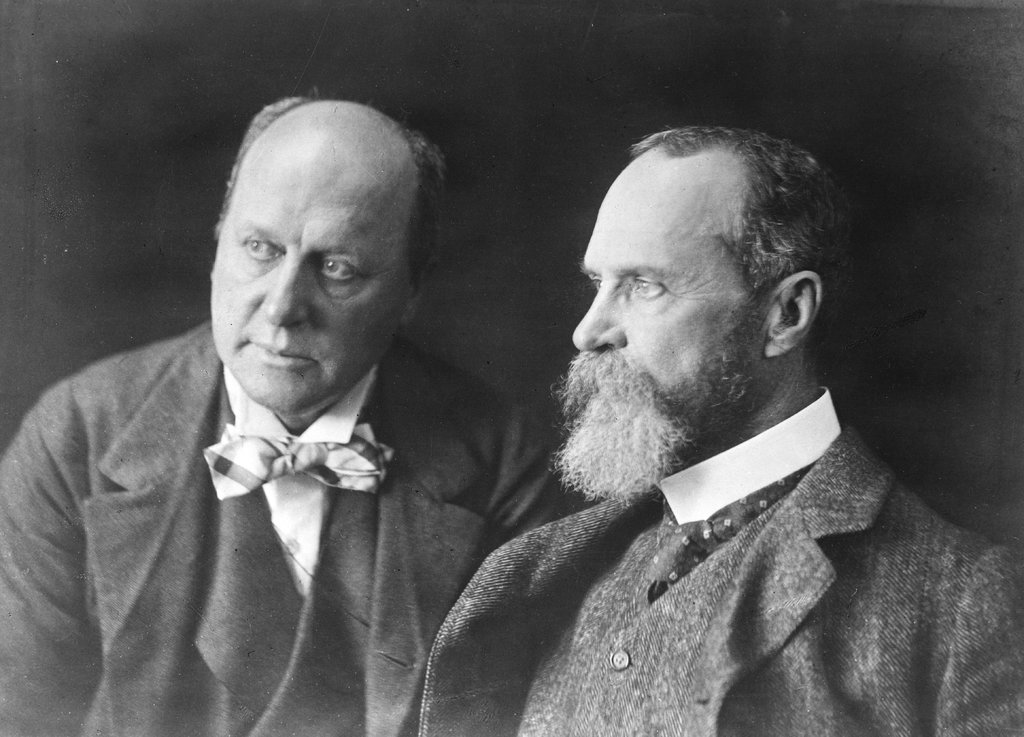
William James arrived penniless in Albany, NY from County Cavan, Ireland in the late 18th century. Over the next 30 years he created a fortune second only to that of the Astor family. His grandsons, novelist Henry and philosopher William, forcefully repudiated their mercantile Irish roots. William wrote to H.G. Wells:

“The moral flabbiness born of the exclusive worship of the bitch-goddess SUCCESS. That — with the squalid cash interpretation put on the word ‘success’ — is our national disease.”

Disavowing their Irishness would not be easy for the brothers, however. Henry crowed that his paternal grandmother, Catherine Barber, was purely English. “She represented… for us in our generation the only English blood — that of both her own parents — flowing in our veins.” He conveniently omitted that John Barber, Catherine’s father, came from Longford County, Ireland.

Henry James remained classist and anti-Irish. William, however, seemed to evolve.

In his Ingersoll Lectures… [William] James scolded his xenophobic audience, insisting that “each of these grotesque and even repulsive aliens is animated by an inner joy of living as hot or hotter than that which you feel beating in your private breast.”

The perception of immigrants as “grotesque and even repulsive aliens” is an ember in America’s private breast that malignant votaries of the bitch-goddess still blow on.

There are at least two types of moral “blindness” — the inability to see the inner lives of individuals unlike ourselves, and also the unwillingness to recognize those aspects of ourselves that quietly underwrite our histories. It is difficult but essential to remember that at one point in the not so distant past we were all trespassers and foreigners.

(John Kaag, “William James’s Varieties of Irish Experience,” NYTimes, 3-16-20)

(c) 2020 JMN
Posted in Commentary, Quotations | Tagged , , , , , , , , , , , | Leave a comment

Mindreading the Meritocracy

Of the opinion writers I read regularly in the NYTimes, the one who uses the term “meritocracy” most by far, and with pronounced ambivalence, is Ross Douthat — himself a confessed meritocrat (Hamden Hall Country Day School, magna cum laude Harvard University 2002, Phi Beta Kappa).

And wouldn’t it be especially appealing if — and here I’m afraid I’m going to be very cynical — in the course of relaxing the demands of whiteness you could, just coincidentally, make your own family’s position a little bit more secure?… Not that anyone is consciously thinking like this. What I’m describing is a subtle and subconscious current, deep down in the progressive stream. [my bolding]

Douthat’s leap of intuition at describing “a subtle and subconscious current, deep down in the progressive stream” sounds almost extrasensory. He’s too canny a thinker, however, not to postposition a discrete “maybe” to his insight.

But deep currents can run strong. And if the avowed intention of the moment is to challenge “white fragility” and yet lots of white people seem strangely enthusiastic about the challenge, it’s worth considering that maybe a different kind of fragility is in play: The stress and unhappiness felt by meritocracy’s strivers, who may be open to a revolution that seems to promise more stability and less exhaustion, and asks them only to denounce the “whiteness” of a system that’s made even its most successful participants feel fragile and existentially depressed.

(Ross Douthat, “The Real White Fragility,” NYTimes, 7-18-20)

(c) 2020 JMN

Posted in Commentary, Quotations | Tagged , , , , | Leave a comment

‘The Degeneracy of War’

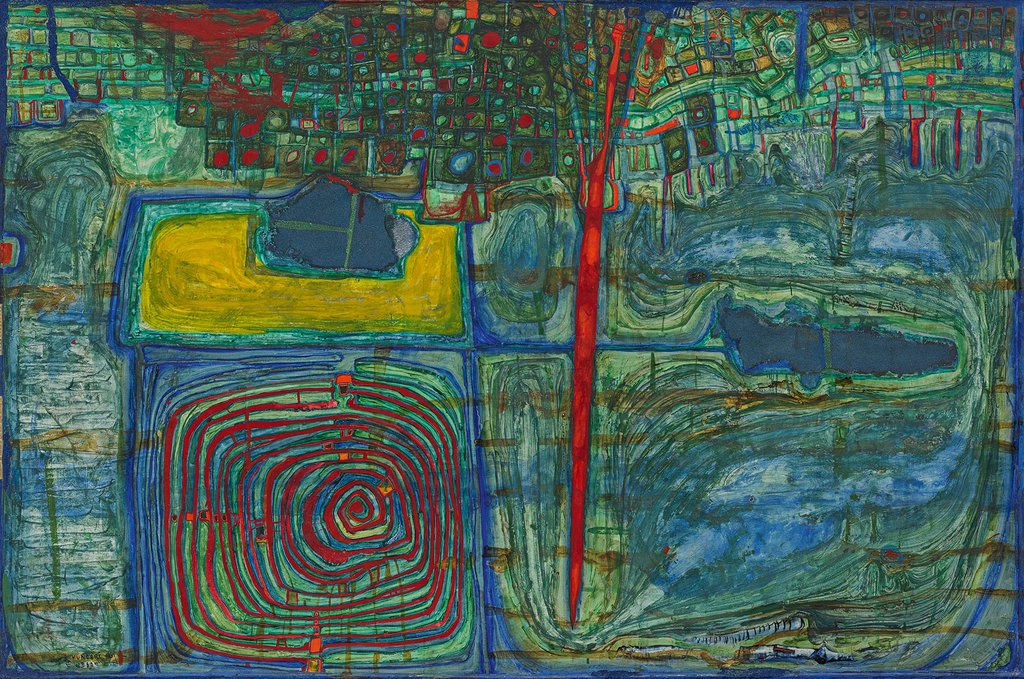
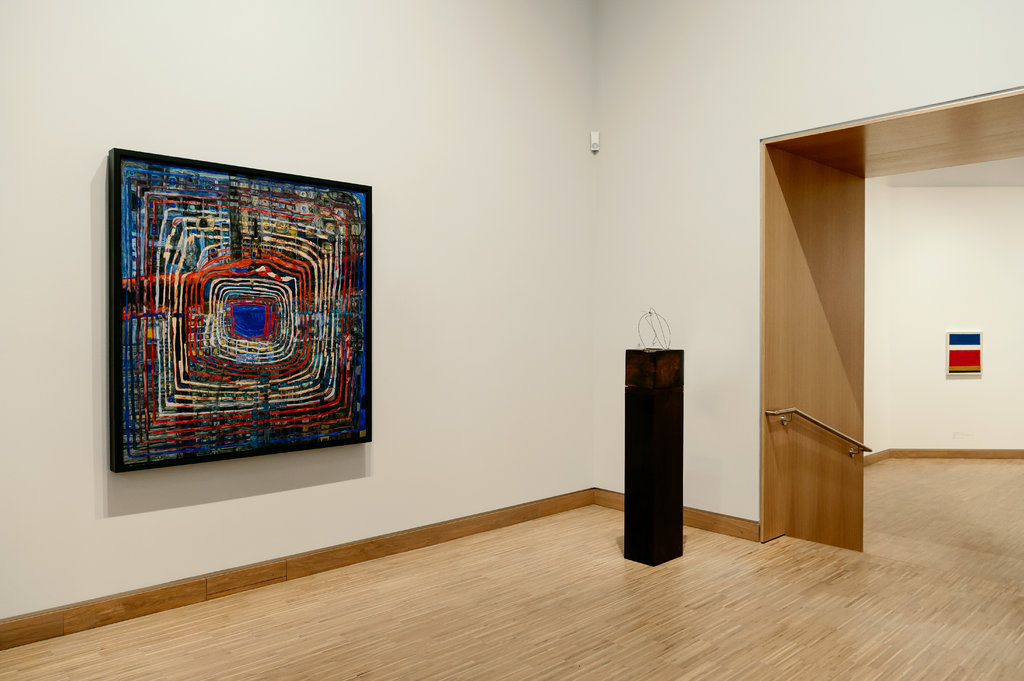
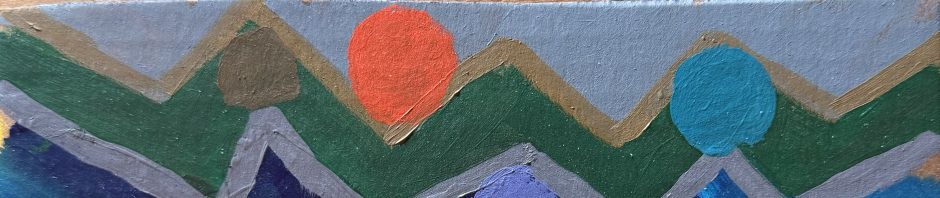
I’m fond of the colorful, map-like painting by the Austrian Hundertwasser. Also, of the sun figure that recurs in his work.

“These artists have something in common: They all turned against the ideals of the Third Reich… I’m doing a kind of exorcism… Exactly here, where ‘degenerate art’ was shown, I’m showing artists who after 1945 declared war on the degeneracy of war.”
(Klaus Albrecht Schröder, the Albertina’s general director)

(Kimberly Bradley, “A Big Idea and a Big Donor Bring a New Art Museum to Austria,” NYTimes, 3-11-20)

(c) 2020 JMN

Posted in Commentary, Quotations | Tagged , , | Leave a comment

What Makes a Poem ‘Hard’?

“Syntax” is the answer to the fudgy question.

It’s hard to reach image and reference through muddy syntax. In narrative and exposition, context comes to the rescue; in poetry often not, because a poet revels in flare-gunning lap dance moon rocks nose hair close to congeries of quandary spelunkers.

Nothing is always obscure. Poetry-speak can be so unconditioned, stark and abrupt that it’s a syntaxing decoy duck which is a real duck hiding in plain sight.

The poem is “Sacrament I” by Robin Gow (Poetry, March 2020).

& all the faucets pour oil or milk.
We fill father’s bottles, the brown and green;
thick glass blood cells, a throat-slit pouring silk.
When will the baptisms make me feel clean?

Is there a slit in a throat? And the slit is pouring silk? The hyphen makes it look descriptive, though, which begs for a described thing to follow: Has to be “silk.” Is it silk engaged in pouring, and the throat of that silk is slit? (Table for now the question of does it matter.)

We dig holes in the yard. They fill with mud.
I go, I drop in all the shiny things,
the necklaces clit-plucked, pink flower bud,
my hole — amuck mess: gargling glint rings.

Little contest here syntax-wise. I resolve “glint rings” into “rings that sparkle,” left to admire the jolt delivered when drab enunciation — We dig.. they fill… I go, I drop… — leads to the creepy hole gargling gewgaws sourced from… clit-piercings? And that single pink “bud” bobbing in apposition!

Our dish soap is blue & so is mary.
She’s plastic bottle, she’s soil bubble.
It’s baby bath, she rubs me black cherry.
We go digging for the pit, pair knuckle.

I can’t get close to lowercase mary’s “soil bubble,” but the quatrain sails past in toddler-patter voice like a toy boat in a bath tub. “Pair knuckle” neatly shoots the gap between “pair socks” and “bare knuckle.” The near-rhyme with “bubble” tickles me black cherry.

& so I repeat each morning again.
Stain skin, sugary with original sin.

The ending couplet is a marvel: a dozen words stripped to the bone — including the sly “repeat… again” quasi-solecism stopped with a crucial period. What exactly is repeated (again)? Literally, “each morning.” A follow-on act, implied repetitive and itself clarified with a comma, is the staining — not of sugary skin — but of skin (his-her own? others’?) by one who is “sugary” — a devilishly inspired descriptor! — with the innate state of badness visited upon Christian humans by the insubordination episode in Eden.

Interrogations of syntax go only so far. This adroit sonnet with its clashing symbols and skillful management of tone appears to me to be a working through of trans-spiritual burden or trauma which chooses not to speak its name.

(c) 2020 JMN

Posted in Anthology | Tagged , , , , , , , , , , , , | Leave a comment

Bayou Bull: Breaking Water News

Texas City. The American Hydrological Sodality’s southeast chapter is circulating a white paper, “Petulant Sociopathy Limitations for Drainage Management in Elevated Swamp-Tick Infestation Ecologies,” for peer review pending September publication in the journal Waterworks.

The paper’s authors, Thom Smythe and Niamh Nighey, co-wrote the recent book “Flush! It Runs Downhill,” and will be guests on the Bull’s podcast this week. Don’t miss it!

(c) 2020 JMN

Posted in Anthology | Tagged , , , , | 2 Comments

How It Gets Ugly

Half a thousand academics want Steven Pinker dropped from the list of “distinguished fellows” of the Linguistic Society of America for allegedly minimizing racial and sexist injustices.

Because this is a fight involving linguists, it features some expected elements: intense arguments about imprecise wording and sly intellectual put-downs. Professor Pinker may have inflamed matters when he suggested in response to the letter that its signers lacked stature. “I recognize only one name among the signatories,’’ he tweeted. That, said Byron T. Ahn, a linguistics professor at Princeton replied in a tweet of his own, amounted to “a kind of indirect ad hominem attack.”

(Michael Powell, “How a Famous Harvard Professor Became a Target Over His Tweets,” NYTimes, 7-15-20)

The consensus of testimony in the article is that Professor Pinker’s tenure, stature and good hair will see him through the kerfuffle. But avoid fights with linguists if you can. You may fall prey to “a kind of indirect ad hominem attack” — or worse, called out for imprecise wording.

(c) 2020 JMN

Posted in Commentary, Quotations | Tagged , , , , , | Leave a comment

History Not Happened Yet

A few years ago, I interrupted a panel discussion at the Guggenheim as it moved toward the dead-horse question of whether painting was still viable. How, I asked, uninvited, from the audience, could people talk of the end of painting when so many women were just beginning to paint? With hindsight I should have added that we were also still learning about the female painters of the past whose newly recovered works could very well influence the medium. History had in a sense not yet happened to their achievements.

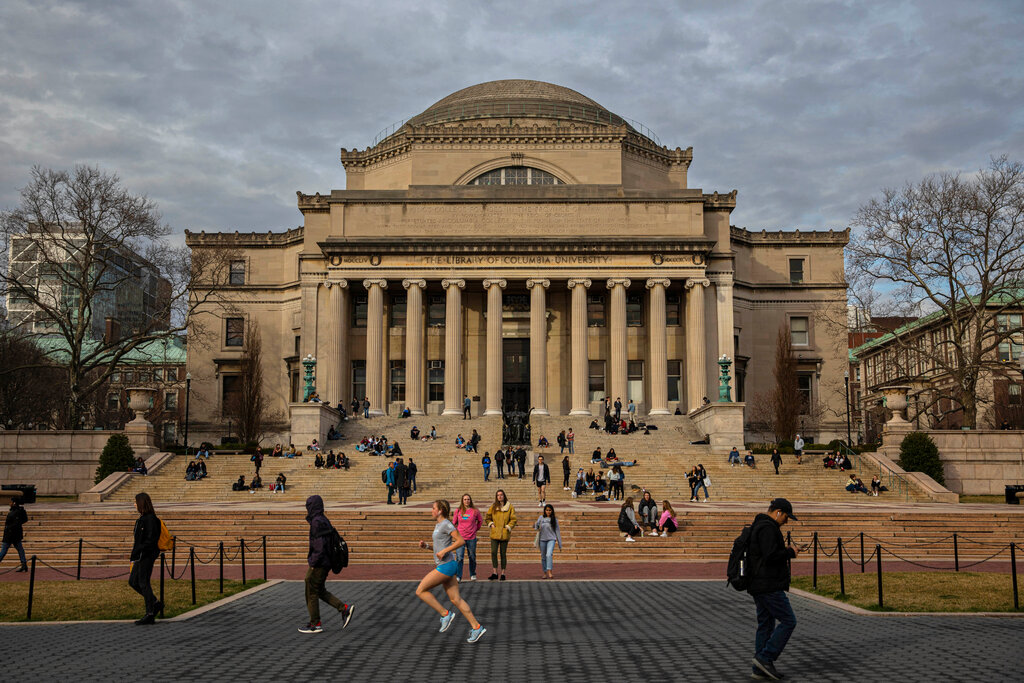
Pelton and O’Keeffe, who was six years younger, had a surprising amount in common: Both studied with Arthur Wesley Dow (Pelton at the Pratt Institute; O’Keeffe at Columbia), who encouraged their interest in landscape non-Western art and thought. Both were affected by Kandinsky’s treatise “On the Spiritual in Art” and both were invited to visit Taos and Santa Fe by the saloniste and patron Mabel Dodge Luhan. (Pelton went first in 1919, for four months.) Each was profoundly changed by the desert, finding it to be her natural habitat.

(Roberta Smith, “‘Agnes of the Desert’ Joins Modernism’s Pantheon,” NYTimes, 3-12-20)

(c) 2020 JMN

Posted in Quotations | Tagged , , | Leave a comment

A Conservative with Elite Style

But there was one small difficulty: This hawk was no Truman or Reagan, but rather a reality-television mountebank whose real attitude toward China policy was, basically, whatever gets me re-elected works.

Who has heard recently, or ever, the word “mountebank”? Ross Douthat uses it twice, and it’s not just a literate belch, it’s an exquisite choice for his context, stemming from 16th-century Italian “monta in banco!” — climb on the bench! — alluding to the tactic of attention-seeking charlatans.

… The odds of success [for Chinese goals] look better now than in the further future… But if we find a way to contain China for a decade, the Chinese century could be permanently postponed.

“Permanently postponed” is deft license, as apt for nuance and context as “further future.” Well played, Douthat. You have lofted me to a concluding ending:

We are ghosted by many tomorrows permanently postponed; it’s always just further now. The future is like a particle of cosmo-physics that can only be observed by where it was, not where it is. Or like my childhood fancy that there was a face watching me from the corner, and it hid from me as soon as I looked there.

(Ross Douthat, “The Chinese Decade,” NYTimes, 7-11-20)

(c) 2020 JMN

Posted in Anthology, Commentary, Quotations | Tagged , , , , | Leave a comment

Why Do Poets Ampersand?

The poem is “Sacrament I” by Robin Gow (Poetry, March 2020).

Excerpt, first stanza:

& all the faucets pour oil or milk.
We fill father’s bottles, the brown and green;
thick glass blood cells, a throat-slit pouring silk.
When will the baptisms make me feel clean?

When a poet tenured in creative writing at Adelphi leads with an ampersanded sentence fragment, I suspect I’m in the middle of something; at the same time it shunts me somewhere else.

I heard Robert Creeley and Gregory Corso give a reading in Chapel Hill. It felt like discovering modern poetry. Corso’s pee-stained underwear made an appearance in one of his poems, and both men pulled steadily at a jug of Gallo Hearty Burgundy sitting between them on stage. The event was outrageous and enthralling.

A similar moment was when ampersanding poetry got my attention. It screamed “modern.” I knew I was supposed to say “and” each time I passed the old abbreviated Latin copulative tiddle, but I fell into the perverse habit of saying “ampersand” instead.

I read the first line of this poem as: “ampersand all the faucets pour oil or milk.” It has a ring of its own.

Paraphrasing a famous painter: What you read is what you read. And a tenet of drawing: Read what you see, not what you think you see. The goddamned ampersand points me in the same direction: Don’t try to stretch the poem’s words and symbols beyond themselves; let them sail free of their common cargo and mapped routes.

I’ve read several rationales behind ampersanding. One that moves the needle for me urges experiencing the poem as a made object. Something you look at more than construe? A cunning box made with words? Whatever it means, this mindset comports with my attraction to free jazz, which also drives me to abstraction. I’m striving to allow the language analog of such music to infiltrate me; to collude, not collide; to grow my proprioception in poetry space.

There’s more to write myself about Robin Gow’s poem, but not now; this jot would go too long. The ampersand deflected me from my original theme: What makes poetry ‘hard’? It almost always does.

(c) 2020 JMN

Posted in Anthology | Tagged , , , , , | Leave a comment