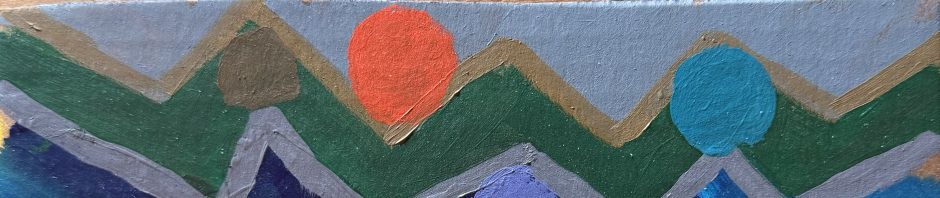

Juan Gris, “Guitare sur une table,” from 1916, at Helly Nahmad. Credit via Helly Nahmad Gallery.
Octave-of-Following (OOF) state is the state in which a fretted note is the octave of the following open string.
This is true:
E-string-1 at Fret-7 is a B-note with OOF state re B-string-2
*B-string-2 at Fret-8 is a G-note with OOF state re G-string-3
G-string-3 at Fret-7 is a D-note with OOF state re D-string-4
D-string-4 at Fret-7 is an A-note with OOF state re A-string-5
A-string-5 at Fret-7 is an E-note with OOF state re E-string-6
*OOF state occurs at Fret-7 often enough to be useful for raising note consciousness. The exception is on B-string-2. The interval between G-string-3 and B-string-2 is the only interval that isn’t a Perfect-Fourth; it’s a Major-Third. Therefore, OOF state is a half-step higher at Fret-8.
And there you have it. It’s time now for Derived Octave-of-Following (DOOF) state — coming next.
(c) 2019 JMN
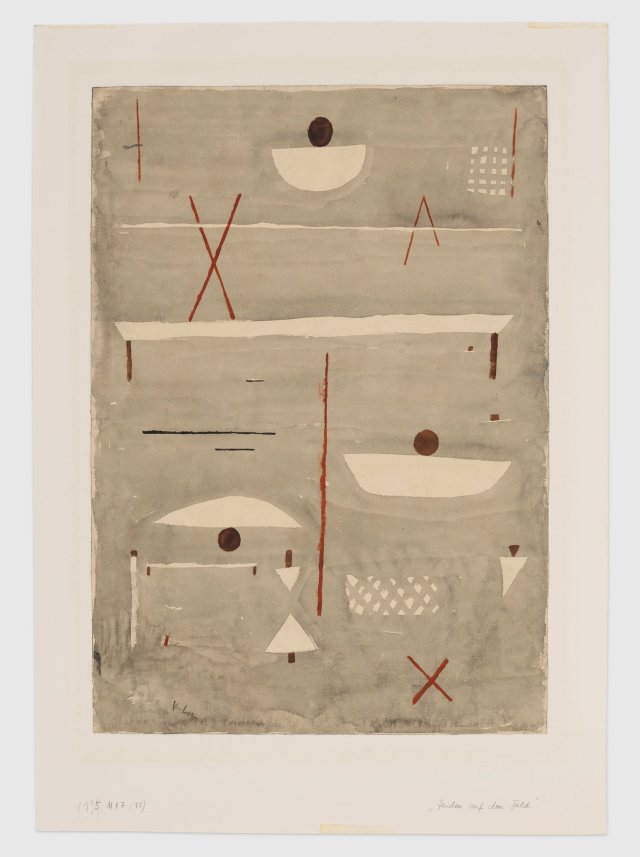
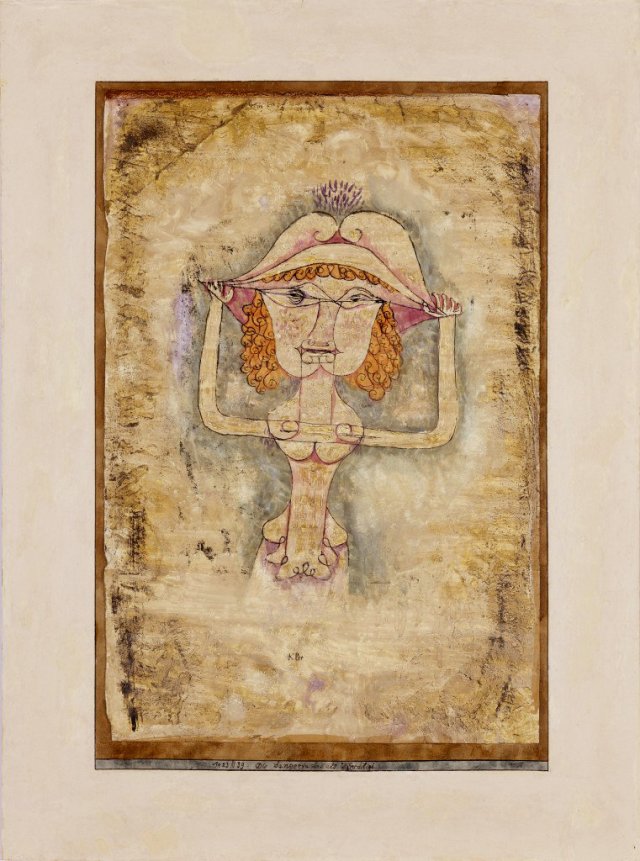
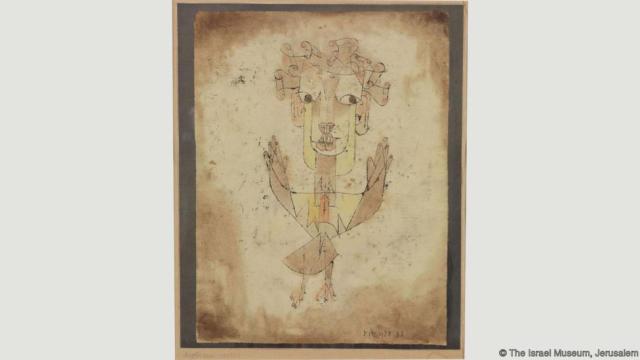


“Islands of Daring”
Any drawings that are “like letters of a foreign language” would get my attention. This is so with the drawings of Susan Hefuna.
“Untitled, 1994” by Susan Hefuna — ink drawings inspired by the wooden screens of Cairo. Credit Rebecca Smeyne for The New York Times.
And the notion of repainting famous portraits of women while eerily disguising their faces, is cheeky and provoking in a thoughtful way. The painting by Ewa Juszkiewicz shows that the scariest masks don’t have horny ears and dripping teeth. They’re much closer to what we expect to see, then don’t. They creep up on us by distorting the familiar, cobbling a fiendish false face for it.
“Untitled (after Élisabeth Vigée Le Brun)” by Ewa Juszkiewicz, 2019: one of the artist’s altered representations of classic portraits of women. Credit Rebecca Smeyne for The New York Times.
(Martha Schewendener, Will Heinrich et al., “At Frieze New York, Islands of Daring,” NYTimes, 5-2-19)
(c) 2019 JMN