
Which One Is ‘They’? A Way Almost to Tell

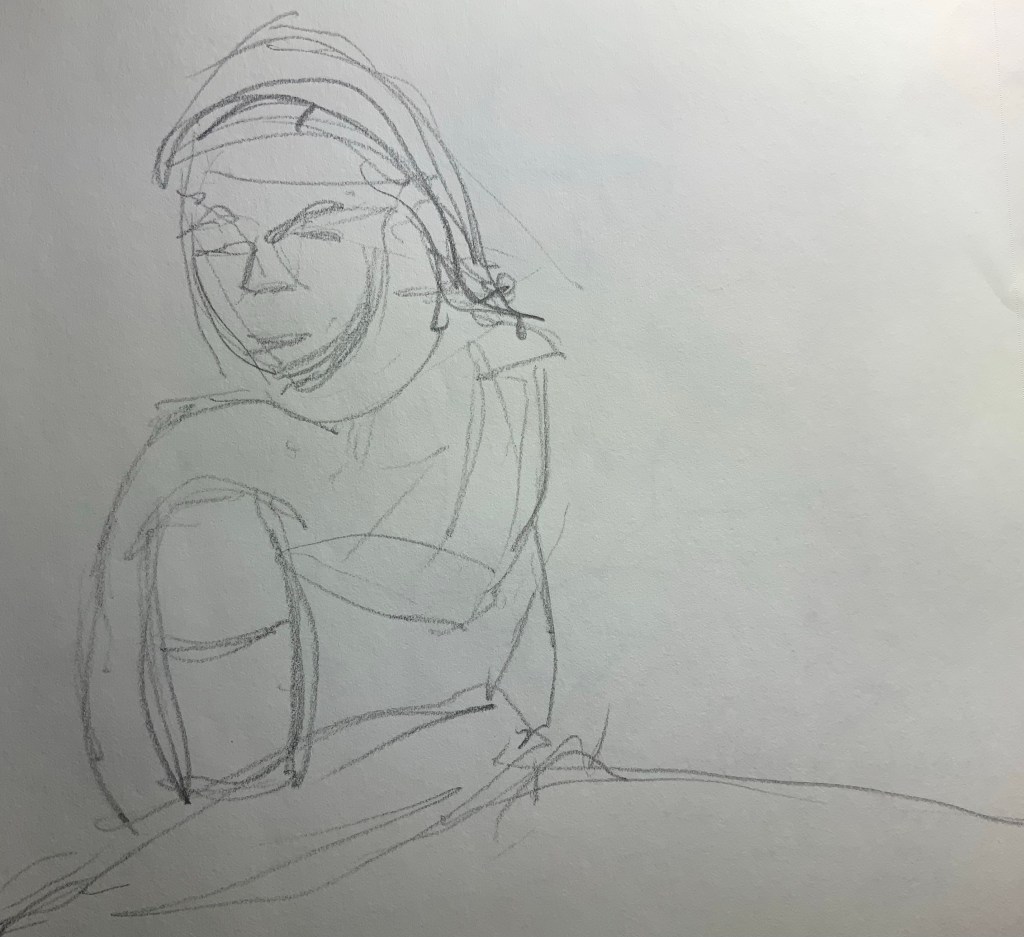
Why don’t people stay STILL for a minute?!*

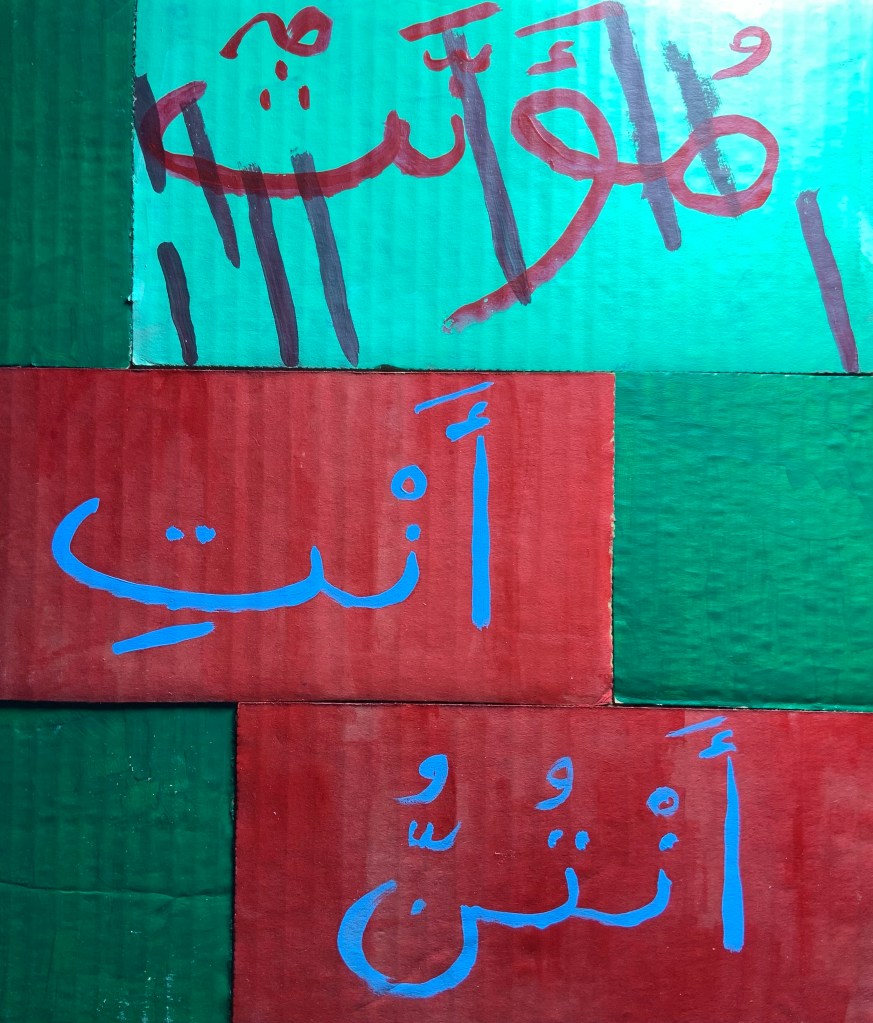
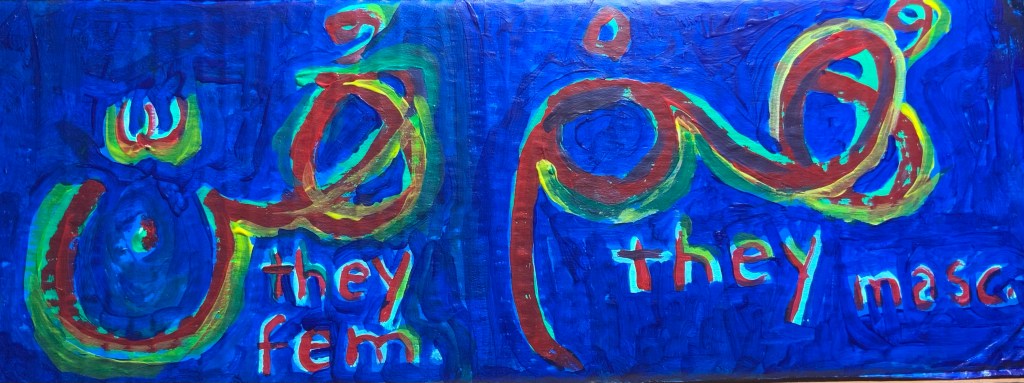
Let’s work together, good citizens: Go ahead and write they instead of he or she if you must, but keep the -s ending on the verb. It will result in phrases such as they wants. People will want to amend it to they want, but stick to your guns. They’ll get used to it, and there’s a good reason. It’s penny-wise and pound-foolish to jettison grammatical number on top of grammatical gender owing to a mere transient dissonance. Number has no sex. Keep it. Persons can be binary-evasive and still remain singular. Saving the -s trues the circle and will dispel ambiguity on occasion.

That’s it. Read no further unless you want proof.

***

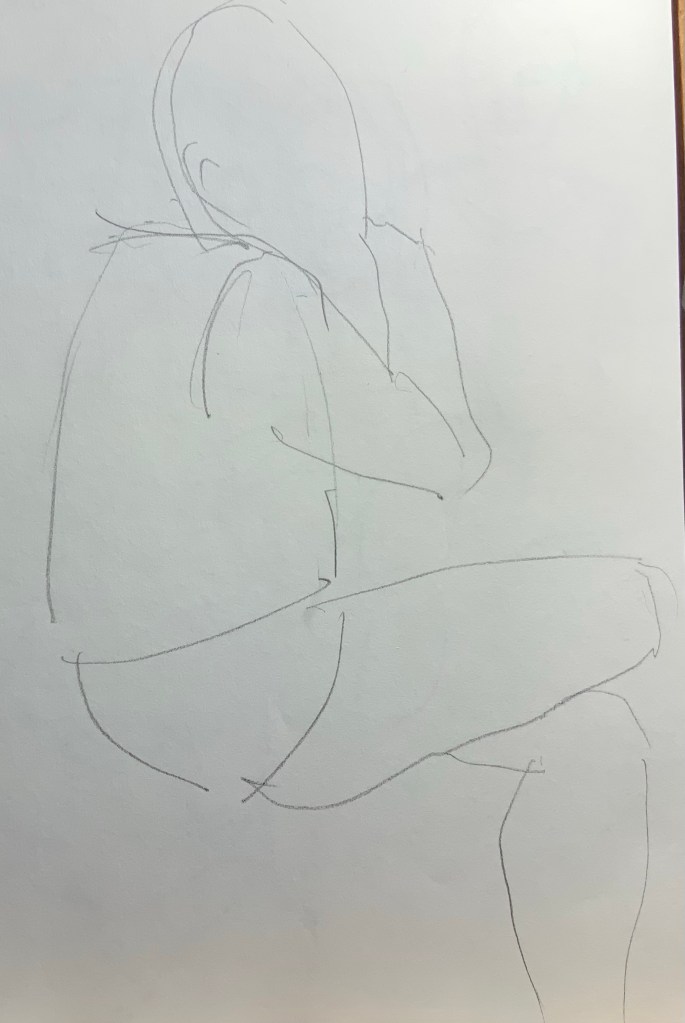
Why don’t people stay STILL for a minute?!* Still asking.

Consider this narrative:

Saoirse and Niamh have creative writing degrees. Saoirse earned hers from Indiana, Niamh hers from Cornell. Oisín told Niamh he wanted Saoirse to edit his book.

Purging gender from the narrative, except for the names, we replace hers, he and his with they-forms.

Saoirse earned theirs from Indiana, Niamh theirs from Cornell. — Context here is sufficient to bind theirs to Saoirse in one case and to Niamh in the other. People don’t earn someone else’s degree, do they?

Oisín told Niamh they wants Saoirse to edit their book. — There it is: they wants. The -s binds they to Oisín on an Occam’s razor footing.

We’re stuck with ambiguity elsewhere, worse luck. Whose is the book to be edited? Oisín’s? One co-authored by Niamh and Saoirse? One in manuscript by Siobhan, whom we don’t even know and is unmentioned in the narrative? The gender-weighted original is succinctly clear. Its gender-scrubbed version must be encumbered with elaboration of some sort to be airtight. Airtight speech works better than leaky speech, especially in space.

Strop the tongue.
(c) 2022 JMN — EthicalDative. All rights reserved

Posted in Commentary | Tagged , , , , , | 2 Comments

Which One Is ‘They’? A Way Almost to Tell

Why don’t people stay STILL for a minute?!*

Let’s work together, good citizens: Go ahead and write they instead of he or she if you must, but keep the -s ending on the verb. It will result in phrases such as they wants. People will want to amend it to they want, but stick to your guns. They’ll get used to it, and there’s a good reason. It’s penny-wise and pound-foolish to jettison grammatical number on top of grammatical gender owing to a mere transient dissonance. Number has no sex. Keep it. Persons can be binary-evasive and still remain singular. Saving the -s trues the circle and will dispel ambiguity on occasion.

That’s it. Read no further unless you want proof.

***

Why don’t people stay STILL for a minute?!* Still asking.

Consider this narrative:

Saoirse and Niamh have creative writing degrees. Saoirse earned hers from Indiana, Niamh hers from Cornell. Oisín told Niamh he wanted Saoirse to edit his book.

Purging gender from the narrative, except for the names, we replace hers, he and his with they-forms.

Saoirse earned theirs from Indiana, Niamh theirs from Cornell. — Context here is sufficient to bind theirs to Saoirse in one case and to Niamh in the other. People don’t earn someone else’s degree, do they?

Oisín told Niamh they wants Saoirse to edit their book. — There it is: they wants. The -s binds they to Oisín on an Occam’s razor footing.

We’re stuck with ambiguity elsewhere, worse luck. Whose is the book to be edited? Oisín’s? One co-authored by Niamh and Saoirse? One in manuscript by Siobhan, whom we don’t even know and is unmentioned in the narrative? The gender-weighted original is succinctly clear. Its gender-scrubbed version must be encumbered with elaboration of some sort to be airtight. Airtight speech works better than leaky speech, especially in space.

Strop the tongue.
(c) 2022 JMN — EthicalDative. All rights reserved
Posted in Commentary | Tagged , , , , , | Leave a comment

Two Ghosts Between Covers

I converse from time to time with a bibliophile. It inspires me to recount a bookish tale.

On the skids from academia I kept either of two books near me as a talisman, carrying one even to bars. They didn’t relate directly to my teaching or my research domain or my committee servitude. They connected me to where I wanted to be, a place in my head, a fantasized detour around my impending dead end.

I didn’t find that detour. Oddly enough the two titles, with the names of their authors, faded from memory. Periodically I’ve sought to drag them out of the quicksands of recollection. Recently they returned to mind of their own accord.

The first book was “Tiempo de silencio” by Luis Martin-Santos, a Basque Spaniard killed in a car wreck in his forties as I recall. It intrigued me that he was a psychiatrist. What I remember of the work is short chapters without clear connection one to the next. It seemed daring and experimental.

The other book was “Los albañiles” by Mexican writer Vicente Leñero. I know nothing about Leñero. His narrative, set in Mexico City among construction workers (I’m relying on memory), read like a fever dream. I dwelt on the text and hovered over it. Its technique and language were challenging. I think it made me feel good to tackle it.

Those books are gone, sold or donated with the rest. I wonder what I would think of them now? I would be tempted to buy them again to read and see.

Read the rune.
(c) 2022 JMN — EthicalDative. All rights reserved
Posted in Commentary | Tagged , , , | 5 Comments

The Seer and the Seen

The musketeer —> the musked; the buccaneer —> the bucked; the mountaineer —> the mounted; the privateer —> the deprived; the profiteer —> the profited; the marketeer —> the marketed; the brexiteer —> the exited; the rocketeer —> the rooked; the racketeer —> the racked.

The ‘-eer’ suffix endows the doer with a swagger of domination. The ‘-ed’ suffix drapes the done in the pale cast of screwed.

There are variants with reflux. Take ‘suck.’ The doer is the sucker. The done is the sucked or the suckered.

Or ‘lose.’ The doer is the loser and the done is the lost.

He’s still out there, good citizens. Secure the vote, foster voting, protect our elections.

Cryptic diptych.
(c) 2022 JMN — EthicalDative. All rights reserved
Posted in Commentary | Tagged , , , | 1 Comment

Texas Made Him. The New Yorker Claimed Him

What would John Bennet do? He’d keep it brief.

(Nick Paumgarten, “John Bennet, Enemy of the ‘Blah Blah Blah’,” The New Yorker, 7-14-22)

That’s how Nick Paumgarten starts his tribute to John Bennet, a New Yorker editor, recently deceased, who was venerated by his writers.

John Bennet came from a “hardscrabble childhood” in East Texas. He got his start at The New Yorker in 1975, as a collator, someone who copies out each reader’s edits onto a master proof.

“I got to see everybody’s style, and I got to steal everybody’s moves,” he recently told a friend.

His obit isn’t the best way to meet a paladin of style, but better so than never. I will remember John Bennet immediately for “what became known as the Impossible Sentence, which he composed, with Nancy Franklin, in the eighties, made up of words (or usages) that were effectively banned from the magazine”:

“Intrigued by the massive smarts of the balding, feisty, prestigious workaholic, Tom Wolfe promptly spat on the quality photo located above the urinal.”

Brevity is the soul of it.
(c) 2022 JMN — EthicalDative. All rights reserved

Posted in Commentary, Quotations | Tagged , , , , | 2 Comments

‘Crypto Casino’ and ‘Derp’

The way I see it, crypto evolved into a sort of postmodern pyramid scheme. The industry lured investors in with a combination of technobabble and libertarian derp; it used some of that cash flow to buy the illusion of respectability, which brought in even more investors. And for a while, even as the risks multiplied, it became, in effect, too big to regulate… [This may be] a moment in which effective regulation has become politically possible… before crypto stops being a mere casino and becomes a threat to financial stability [All bolding mine — JMN].

(Paul Krugman, “Crypto Is Crashing. Where Were the Regulators?” NYTimes, 7-11-22)

I would suggest investors are “lured” and not “lured in,” but that’s a matter of style. The ‘in’ does add realized force to the bait-taking. Krugman’s good at dropping nuggets of the patois du jour in his columns. Hello, derp: “speech or action that’s foolish or stupid.” There’s ever a fresh word for stale states. Poaching the gaming term ‘casino’ for application to finance registers a tick on the rhetoric scale.

Crypto currency seems more of an attitude than a substance, something like an arcane, dark matter floating in the blockchain nebula. Language-wise, the term ‘crypto’ is magnetized for me because of its connection to ‘cryptic.’ The discovery of ‘cryptic coloration’ in high school biology, and of ‘lapidary’ somewhere else (Baudelaire?), gave me two favored words at an early stage in the quest for crypto literacy.

(c) 2022 JMN — EthicalDative. All rights reserved
Posted in Commentary, Quotations | Tagged , , , | Leave a comment

‘Your Cheatin’ Heart Will Tell on You’

From Rae Armantrout — https://ethicaldative.com/2022/04/12/how-poetry-feels-about-itself/

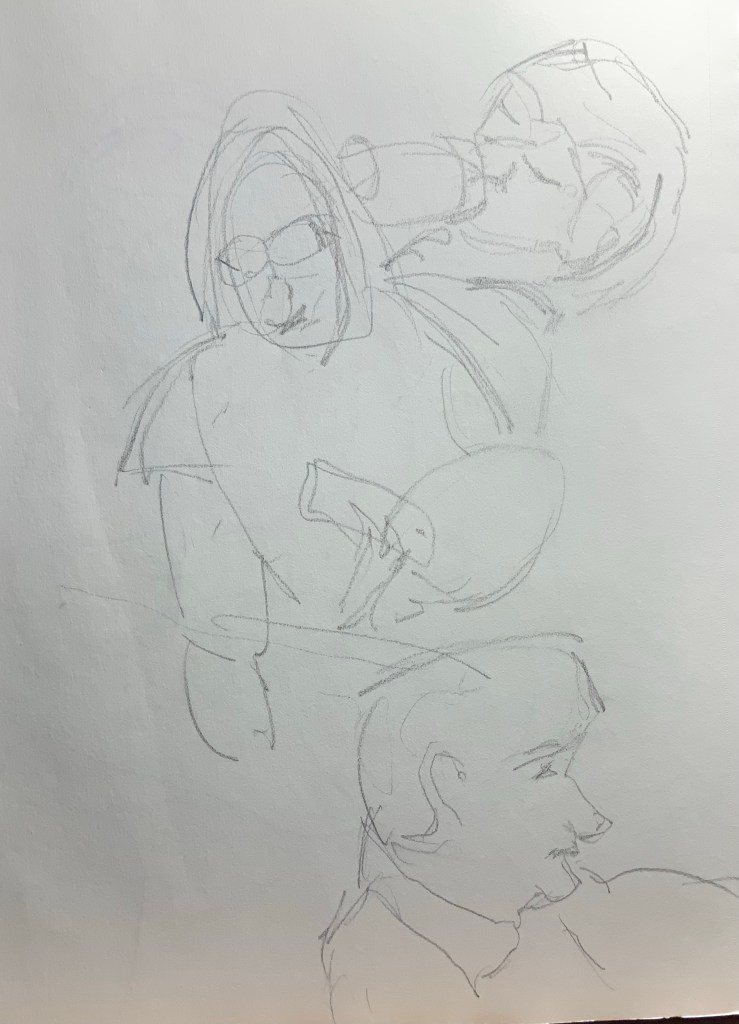
… Is the best song ever written. It makes a start, goes somewhere you can follow, and has a wind-up. Hank Williams tells a story every man jack of us can relate to. This song and a few beers will see you through hard times. Your modern tunes don’t hold a candle to it. I wish they’d make music great again.

Hank teaches us in this song how a woman can hurt a man, make him play the fool, break his spirit and his heart with one kick. In theory a man can cheat, too. But men don’t cry, and there’s cryin’ all the way through this song. Besides, it ain’t “heart” that makes a man what he is, is it?

From Rae Armantrout — https://ethicaldative.com/2022/04/12/how-poetry-feels-about-itself/

Let’s face facts. Women are what’s called mononuclear by nature. They’re meant to stand by their man, so it hurts more when they cheat. On the other side of the coin, a redblooded man is built to follow his instink, to get his hoggin’s — you know what I mean. Boys will be boys. When there’s a bull in the pasture, the heifers come a-callin’!

You want real poetry? Listen to it:

Your cheatin’ heart will pine someday
And crave the love you threw away…

Your friends,
Brett K. and the Boys

Brevity is the soul of it
(c) 2022 JMN — EthicalDative. All rights reserved
Posted in Anthology | Tagged , , | Leave a comment

‘Blown Up’ by Gunfire

An obstetrician who happened to be at the parade that day described the Highland Park massacre of July 4, 2022:

The people killed were “blown up by that gunfire,” he said, “blown up. The horrific scene of some of the bodies is unspeakable for the average person.”

A battle rifle is a soldier’s rod and staff in the valley of the shadow of combat — a tool to survive and prevail. The soldier doesn’t have to shoot with high accuracy to inflict “unspeakable” injury on the enemy, a crucial advantage in the hell of war.

To carry out a mass shooting, a person in the U.S. will choose a battle rifle over a handgun whenever possible. To a disturbed mind, it’s simply the best tool for the job.

Writing in 2018, a radiologist in Florida described the tracks that bullets leave through a human liver. A typical 9mm handgun’s is a thin gray line roughly the size of the projectile. An AR-15 bullet simply pulps the organ; it “passes through the body like a cigarette boat traveling at maximum speed through a tiny canal… Exit wounds can be the size of an orange.” The handgun victim might reach a trauma center alive and be saved; the rifle victim usually hasn’t a prayer.

It doesn’t seem controversial to say that someone who murders even a single fellow human is not coming from a good place in his head, unless the Devil made us. Solutions that involve improved mental health services for identifying and treating potential perpetrators of mass shootings have not come to the fore yet. Neither have solutions that substantially diminish the likelihood that they will obtain rifles and ammunition.

As Uncle Walter (Cronkite) used to say in signing off the CBS nightly news: “And that’s the way it is, Saturday, July 16, 2022.”

(Charles M. Blow, “Show the Carnage,” NYTimes, 7-6-22)
(Christina Prignano and Ryan Huddle, “There have been at least 314 mass shootings so far in 2022. There have been only 186 days,” bostonglobe.com, 7-5-22)

Still small voice
(c) 2022 JMN — EthicalDative. All rights reserved

Posted in Commentary, Quotations | Tagged | 2 Comments

Horns UP! The Ides of Texas Are Upon You

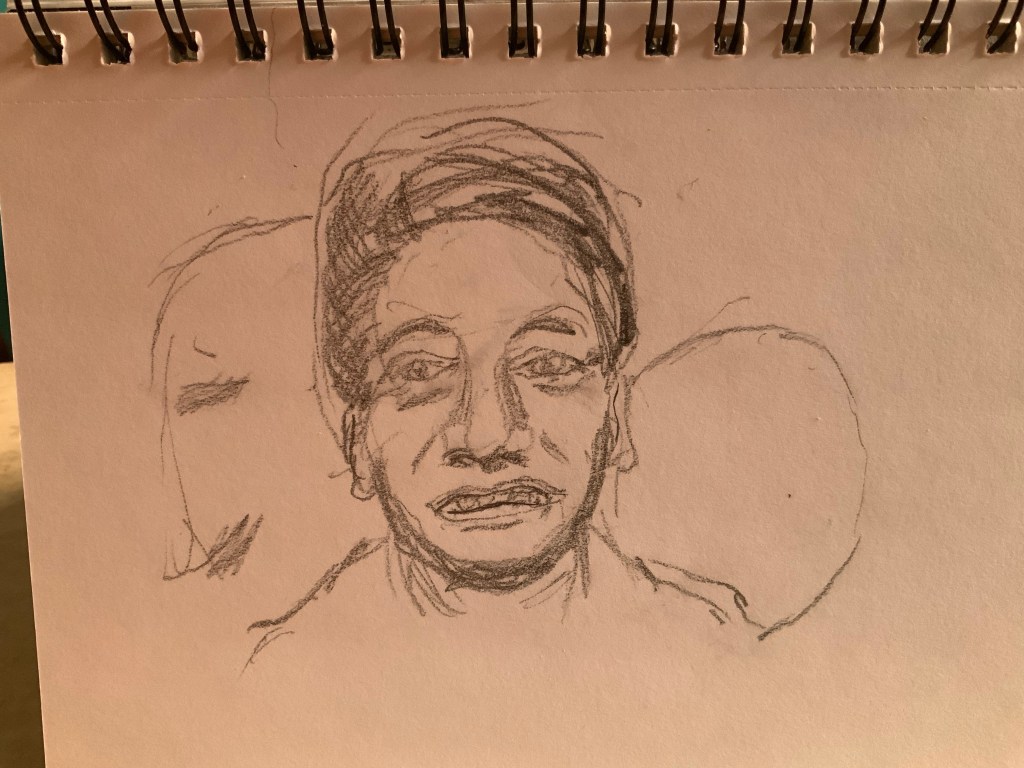
Also the eyes. All the live long day. You can not get away. God help us.

Still small voice.
(c) 2022 JMN — EthicalDative. All rights reserved
Posted in Commentary | Tagged , | 1 Comment

The F-Word Is Spawning

https://ethicaldative.com/2021/12/16/never-send-to-know-for-whom-the-tales-told/

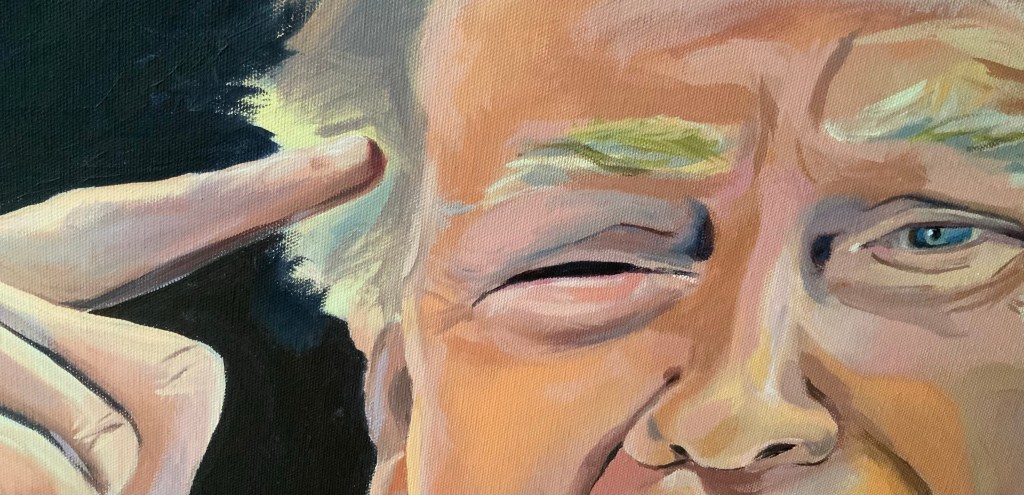
When words turn flammable we call them “f-words.” They’re too hot to utter.

F***. — The granddaddy of f-words. All f-words trace their ancestry to this one. It’s unsafe for print and held flammable by stare decisis until Alito. In the formerly-United-K, striving-to-again-be-Great Britain, it’s a staple of effing and blinding.

Fascist. — British radio presenter James O’Brien says “f-word,” when he means “fascist,” referring to policies proposed and enacted by the Tory government. The Tories hate the word. He doesn’t give a fig, does he? He knows it’s flammable and flaunts it in their faces.

Filibuster. — Laws are plucked and spatchcocked with the Senate filibuster. They bleed out because they need 60 votes to pass. It lets the few ride herd on the many. Formerly a fiddle and a fudge, “filibuster” is a McF-word now in the Speaker’s honor.

Fifth. — The ex-brass looked like a man with his cahooties in a vise. Fifth! he croaked, when asked if he believed in the peaceful transition of government. A pettifogger manhandles the plea into: My client prefers to keep his innocence to himself. “Fifth” leaves a skidmark on the polity’s underpants. It’s an f-word now, except when used for bourbon.

(c) 2022 JMN — EthicalDative. All rights reserved
Posted in Anthology, Commentary | Tagged , | Leave a comment