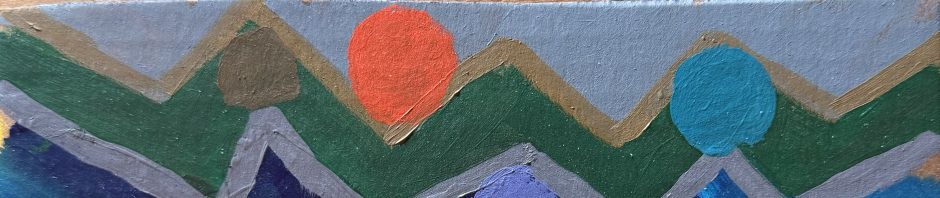

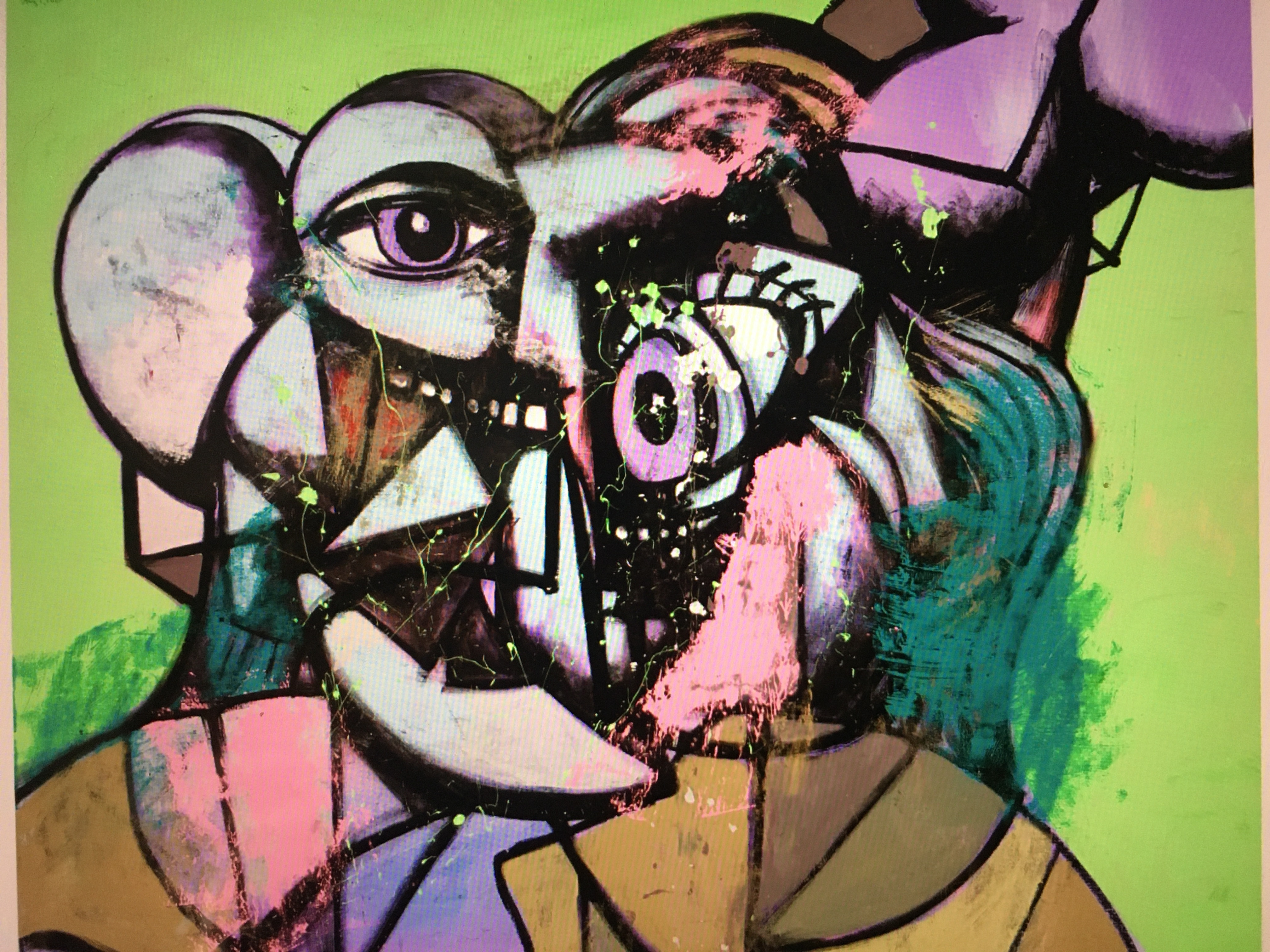
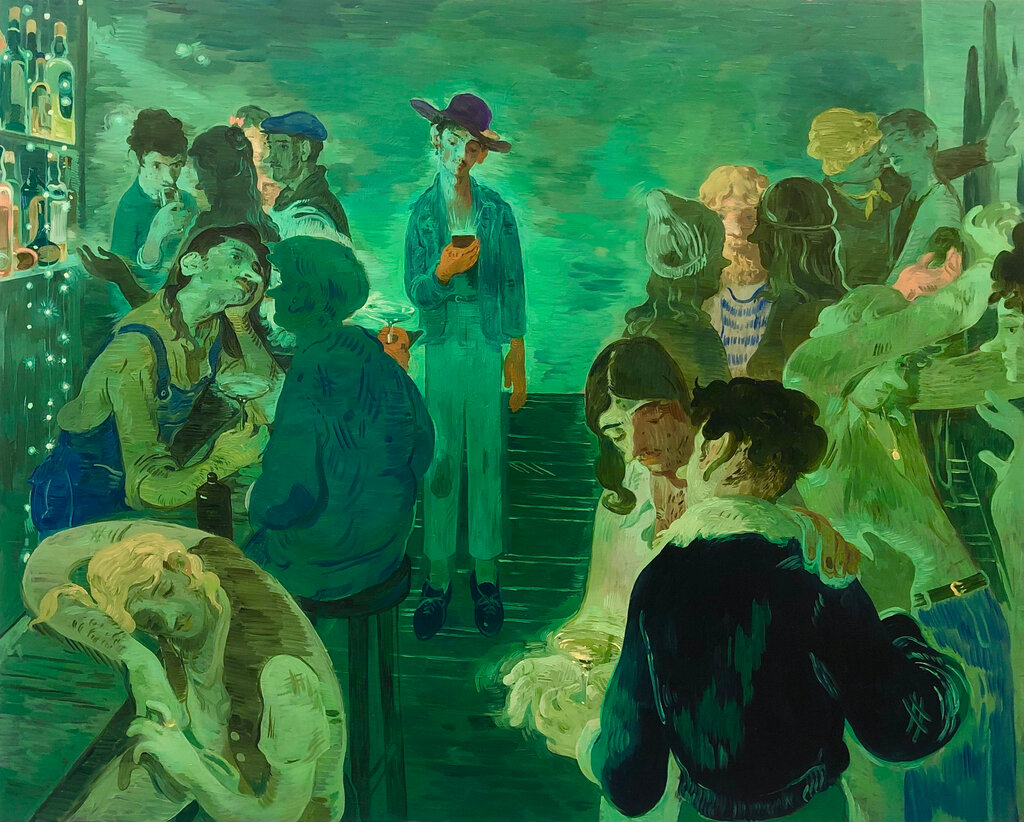
In the matter of electing to be born of illustrious forebears Alice Trumbull Mason, of Litchfield, Connecticut, chose well. Her rumbling name preserves affiliation with a “well-off family of old New England stock.” (All stock isn’t equal even where egalitarian mythology reigns!) Ancestors included Revolutionary-era painter John Trumbull and William Bradford, a 17th-century governor of the Plymouth colony.
Roberta Smith writes that Mason “has long been a painter’s painter, known mainly to a small number of artists and collectors.”
To be a “painter’s painter” is to be known mainly to a coterie of adepts and buffs. It’s an interesting label, presumably losing its force if an artist attracts broader recognition. In urging “institutional attention” for Mason’s achievement, Smith credits her with finding her voice early and with “adamantine pursuit of its implications.”
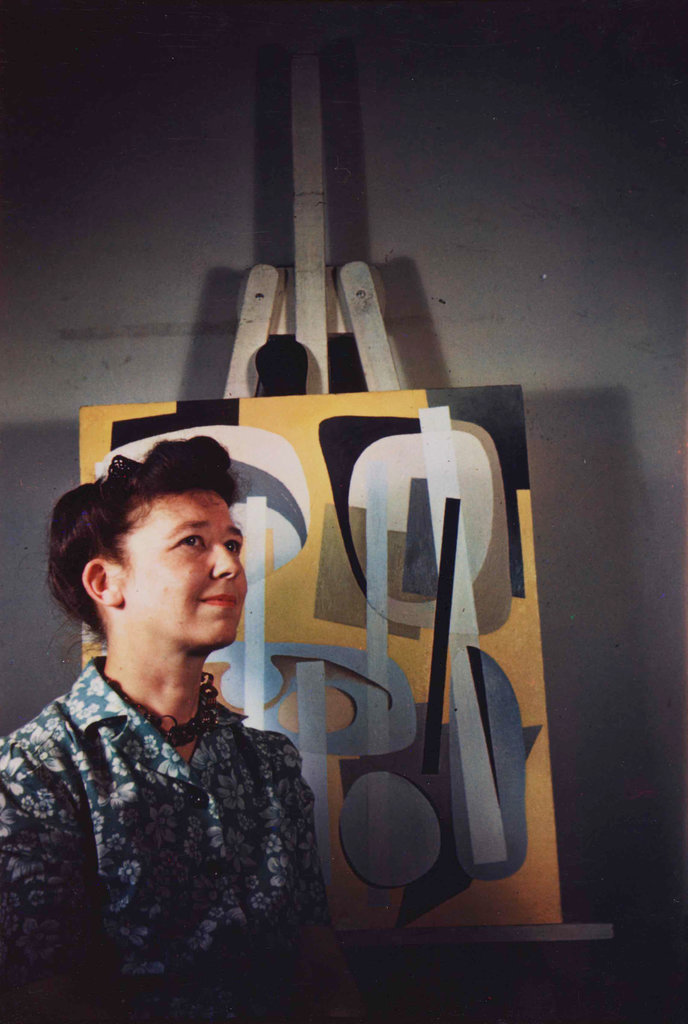
Mason held steadfastly that abstraction was “the true realism” (her words). Her influences ran through Wassily Kandinsky and Joan Miró to light on Piet Mondrian.
She spent long periods as a single mother when her sea captain husband was away, during which time she stopped painting and wrote poetry instead. The likes of William Carlos Williams and Gertrude Stein, encouraged her to publish.

Mason’s work is not something you absorb in a flash. Its integrity, “mindfulness” and assured beauty emerge slowly, in careful compositions, color choices, delicate but tactile brushwork, and inevitable balance.
(Roberta Smith, “Alice Trumbull Mason: America’s Forgotten Modernist,” NYTimes, 4-20-20)
(c) 2020 JMN




 EthicalDative
‘The Flag Is Also Waving You’
Someone who studies flags is a “vexillologist.” There’s a North American Vexillological Association for persons devoted to this study. In the 18th and 19th centuries, a flag was not so much a symbol as a practical way to tell from a distance whether a ship or an army was friend or foe, according to a past president of the association.
What I take away from Jennifer Finney Boylan’s piece about Maine’s flag, besides a happy meeting with “vexillology,” is how flags can become bully props pressed into the service of hem-kissing and disuniting narratives.
Words can evolve similarly, especially under the stress of feral politics. The advent of “homeland” rather than “national” security took our civic discourse in the direction of Uniting and Strengthening America by Providing Appropriate Tools Required to Intercept and Obstruct Terrorism, or the “USA PATRIOT Act.” The labels have a discomfiting whiff to the “fatherland” to them.
Boylan’s parting comment is food for thought: “When you wave the flag, the flag is also waving you.”
(Jennifer Finney Boylan, “Two Flags Over Maine (and America),” NYTimes, 6-10-20)
(c) 2020 JMN)