The cartoon by Brendan Loper is tagged “Very good people.”
The tagline evokes the Unite the Right “Tiki-torch” rally of August 12, 2017, held in Charlottesville, Virginia. A self-declared white supremacist rammed his car into a crowd of counter-protesters, killing Heather Heyer and injuring 19 other people. In subsequent remarks, Tr***p referred to “very fine people on both sides.”
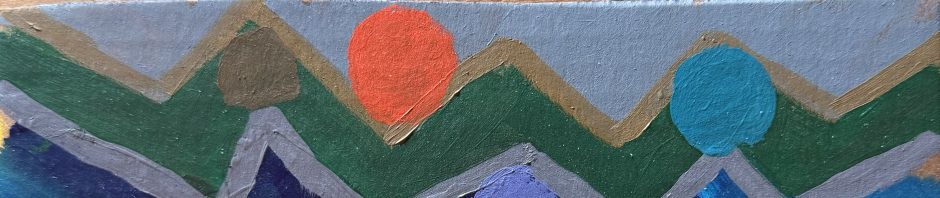
Te pongo aquí un cuadro reciente, tonto y burlón, mal logrado por supuesto, de ejecución turbia, hiciera lo que hiciera. Está pintado sobre otro cuadro que hizo tu abuelo, mi papá. El suyo fue un desnudo masculino sentado, visto de … Continue reading →
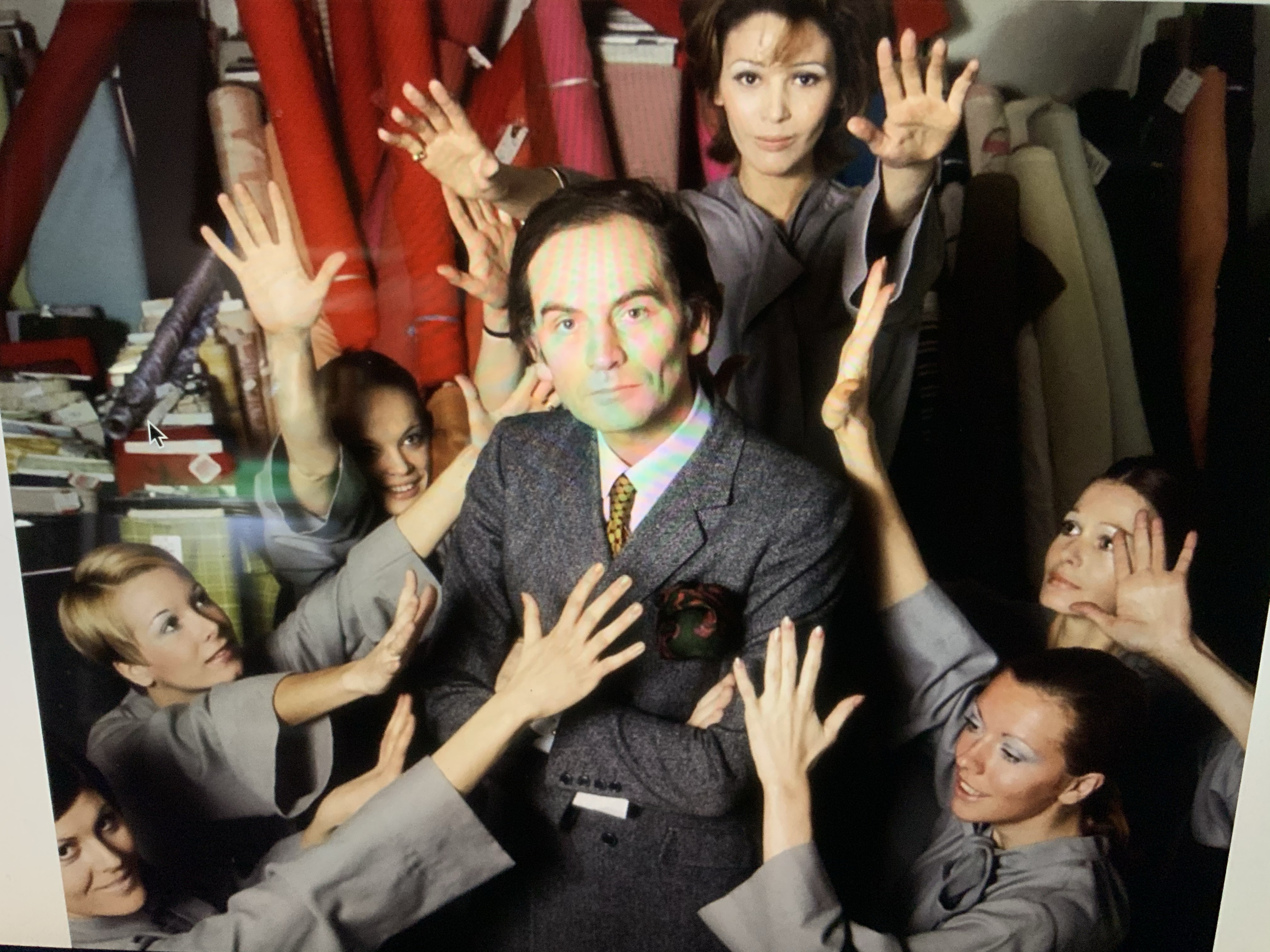
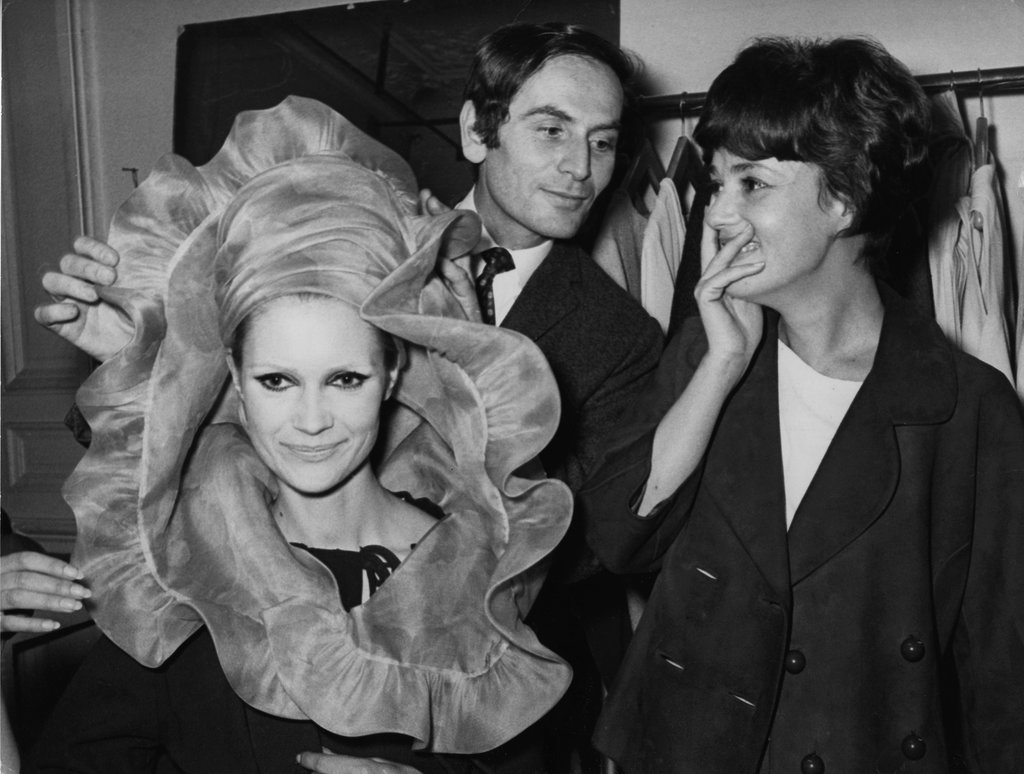
All respect to Pierre Cardin’s memory and legacy. I’m no fan of censuring yesterday’s culture for not living up to today’s expectations. But in matters such as gender parity it doesn’t seem unfair to observe dispassionately how an artifact may beacon values discordant with the current moment’s.
The photograph (above) is delicious for its dated, risible ickiness. It contrives a harmonic that resonates with Cardin’s art-driven, if blatant, abstraction from the cash cow audience feeding his coffers. There’s a soupçon of je m’en foutisme in his saying “I think of the dress… The woman doesn’t matter.”
In the staged tableau, saturnine, impassive, gauntly handsome and exquisitely tailored, the Ozymandias of fashion, master of his imperium, with a sneer of command basks in the mimed fervor of swarming corybants who beseech his favor by offering their compliant flesh as rack and billboard for his effulgent creations.
What the lens conveys is a decadent machismo that swaggers through the thread trade while slouching through other industries with unglamorous, deadening efficacy. The image preserved has a Leona Helmsley aura to it, minus the felony.
A good pub feels a bit like a living room: a familiar, informal space where you can have a pint with friends and strangers… Enjoying a drink in a room that has been used for the same purpose for hundreds of years is an anchoring experience you are unlikely to get from your sofa.
(Eleanor Salter, “Will Britain’s Pubs Survive the Coronavirus?” NYTimes, 5-15-20)
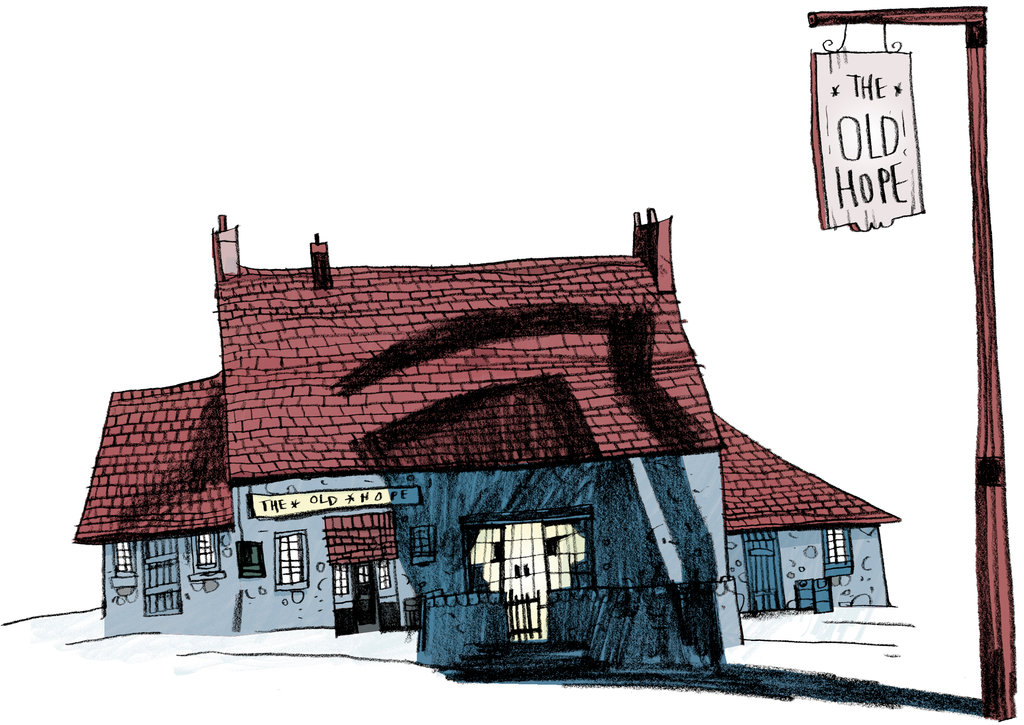
I give high marks to this article’s illustration for its clever spookiness and skillful draughtsmanship.
The encomium to the British pub makes me realize how alcohol-centric my own relationship with booze is. Wherever I find myself, a bottle alone endears that spot to me; anchors me there; lends beauty to the moment; wraps me in fuzzy contentment.
My sofa is the ideal spot to “have a pint.” If I’m caught outside the house, any perch that’s friend-and-stranger-free will do for a swig. The alcohol completes it — a boosting and buffering companionable consolation.
Mine is not a commended orientation, I grant, which is why I corked the bottle.
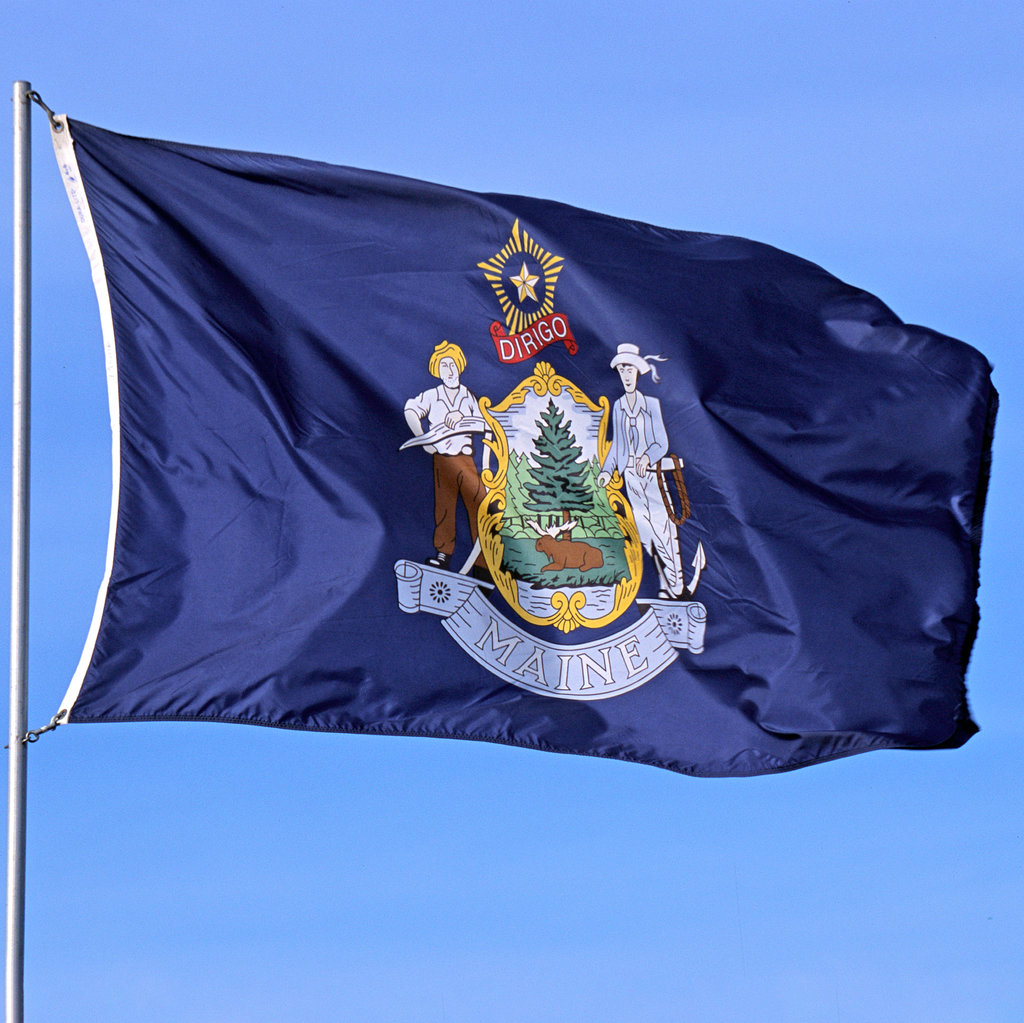
The 1901 flag of Maine. Credit… David B. Martucci.
Someone who studies flags is a “vexillologist.” There’s a North American Vexillological Association for persons devoted to this study. In the 18th and 19th centuries, a flag was not so much a symbol as a practical way to tell from a distance whether a ship or an army was friend or foe, according to a past president of the association.
The contemporary Maine flag. Credit… Visions of America/Corbis, via Getty Images.
What I take away from Jennifer Finney Boylan’s piece about Maine’s flag, besides a happy meeting with “vexillology,” is how flags can become bully props pressed into the service of hem-kissing and disuniting narratives.
Words can evolve similarly, especially under the stress of feral politics. The advent of “homeland” rather than “national” security took our civic discourse in the direction of Uniting and Strengthening America by Providing Appropriate Tools Required to Intercept and Obstruct Terrorism, or the “USA PATRIOT Act.” The labels have a discomfiting whiff to the “fatherland” to them.
Boylan’s parting comment is food for thought: “When you wave the flag, the flag is also waving you.”
(Jennifer Finney Boylan, “Two Flags Over Maine (and America),” NYTimes, 6-10-20)
“Spring” (1931), a joyful painting from “Alice Trumbull Mason: A Pioneer of Abstraction.” Credit… Alice Trumbull Mason/Artists Rights Society (ARS), New York; via Washburn Gallery.
In the matter of electing to be born of illustrious forebears Alice Trumbull Mason, of Litchfield, Connecticut, chose well. Her rumbling name preserves affiliation with a “well-off family of old New England stock.” (All stock isn’t equal even where egalitarian mythology reigns!) Ancestors included Revolutionary-era painter John Trumbull and William Bradford, a 17th-century governor of the Plymouth colony.
Roberta Smith writes that Mason “has long been a painter’s painter, known mainly to a small number of artists and collectors.”
To be a “painter’s painter” is to be known mainly to a coterie of adepts and buffs. It’s an interesting label, presumably losing its force if an artist attracts broader recognition. In urging “institutional attention” for Mason’s achievement, Smith credits her with finding her voice early and with “adamantine pursuit of its implications.”
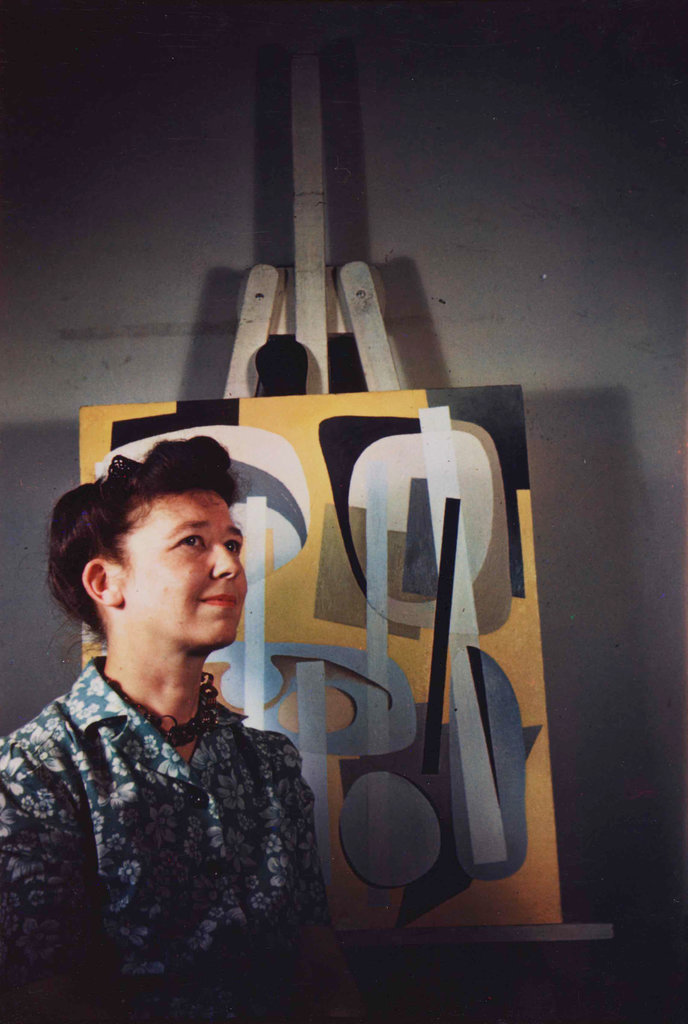
Alice Trumbull Mason in 1946. She was a true independent whose careful, balanced abstractions are just being appreciated. Credit… via Alice Trumbull Mason, the Archives American Art, and Washburn Gallery; Charlie Horowitz.
Mason held steadfastly that abstraction was “the true realism” (her words). Her influences ran through Wassily Kandinsky and Joan Miró to light on Piet Mondrian.
She spent long periods as a single mother when her sea captain husband was away, during which time she stopped painting and wrote poetry instead. The likes of William Carlos Williams and Gertrude Stein, encouraged her to publish.
Mason’s “Paradox #10 Chiaroscuro” (1968) is a geometric landscape. Credit… Alice Trumbull Mason/Artists Rights Society (ARS), New York; via Washburn Gallery.
Mason’s work is not something you absorb in a flash. Its integrity, “mindfulness” and assured beauty emerge slowly, in careful compositions, color choices, delicate but tactile brushwork, and inevitable balance.
Mr. Cardin in his Paris studio in 1963 with a model and the actress Jeanne Moreau, right. Credit… Pierre Godot/Associated Press.
“I wash with my own soap… I wear my own perfume, go to bed with my own sheets, have my own food products. I live on me.”
The proudest garment in my closet was once a blazer with the Pierre Cardin label on it. Stealing a trope from the great man, I was merely the water it shaped.
Clothing, he said, was meant “to give the body its shape, the way a glass gives shape to the water poured into it.”
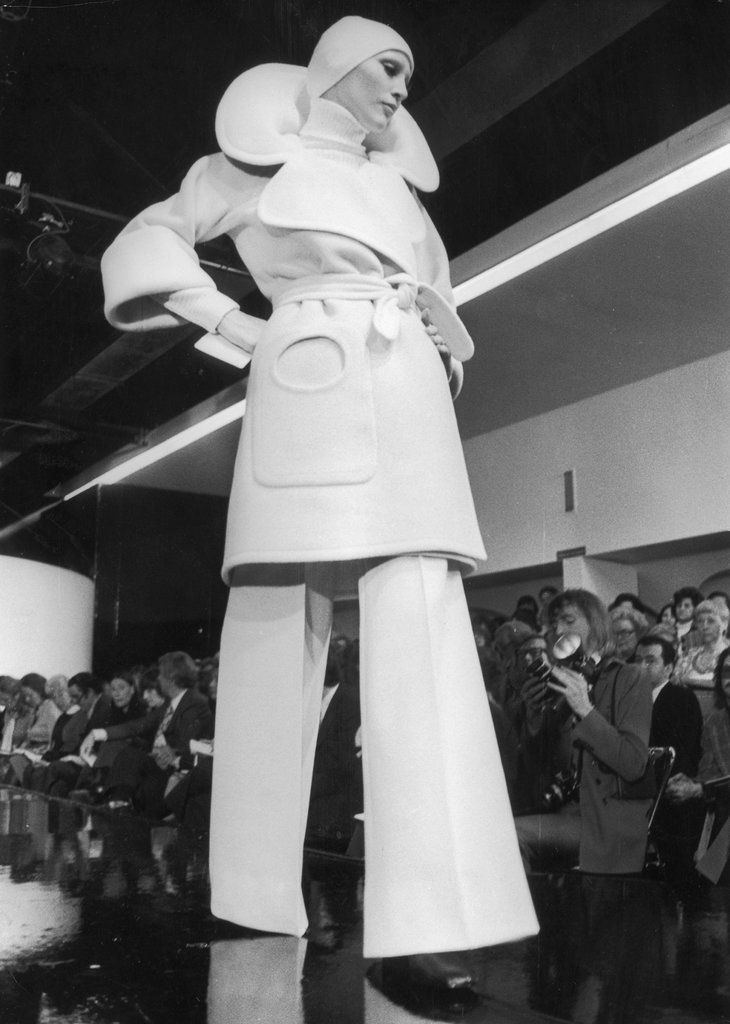
A Pierre Cardin trouser suit in an undated photo. Mr. Cardin viewed the female body as an abstraction, a hanger of sorts. “I think of the dress,” he said. “The woman doesn’t matter.” Credit…Keystone/Getty Images.
The consummately French Italian-born designer, Pietro Costante Cardin (1922-2020), has shuffled off this mortal runway in his tenth decade.
He earned the title “Napoleon of licensors” from his marketing. Judging by this obituary, added to the outsized gifts and acumen that he parlayed cannily into wealth and fame was a Napoleonic knack for lionizing himself.
“I was born an artiste… but I am a businessman.” “The dresses I prefer… are those I invent for a life that does not yet exist.” “If I can put a Maxim’s [restaurant] in Beijing, I can put a Maxim’s on the moon.” “I don’t play cards, I don’t smoke, I don’t drink, I don’t like sports… I just work. It’s marvelous. It amuses me.” “My life is on an intellectual level much higher than that of La Couture.” “I’m the financier, the banker and the creator… I’ve always done what I wanted because I’ve never had a boss.”
(Ruth La Ferla, “Pierre Cardin, Designer to the Famous and Merchant to the Masses, Dies at 98,” NYTimes, 12-29-20)
Cardin creations at a fashion show in Moscow in 2011. Credit… Alexander Nemenov/Agence France-Presse — Getty Images.
High fashion isn’t about clothing per se; it’s about concept and vision embodied by an art whose chief medium is drapery around bodies. Keeping that thought present helps me value the outlandish contributions of the fashion titans.
Monte Brown and his wife Christine at Brown, Owens, and Brumley Family Funeral Home and Crematory, in Fort Worth. Credit… Ilana Panich-Linsman for The New York Times.
“What everybody is talking about right now is, what happened to pneumonia?” he said. “What happened to a lot of deals, a lot of common flu deaths, why is everything being reported Covid now?… We’ve heard that hospitals are getting reimbursed more for Covid cases…”
Perhaps Mr. Brown sensed that I was skeptical. “Right now you’re located in Texas, you’re in North Texas, you’re in the Bible Belt,” he told me. “So people around here have a different philosophy than a lot of people in New York.” Mr. Brown paused for a moment, holding my eyes with a practiced earnestness. “I’m just being honest.”
(Elizabeth Bruenig, “Death and Texas,” NYTimes, 6-5-20)
We Texans often have to remind visitors of where they’re located and where they’re from. It’s a kind of forgetfulness we cure them of with our honesty.
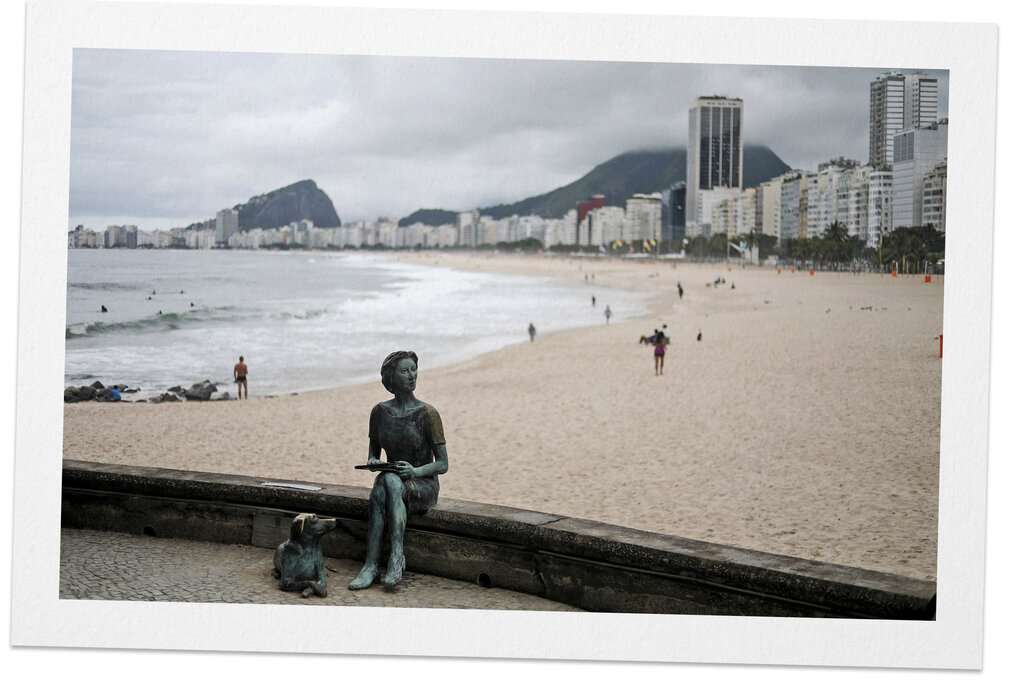
A statue of Lispector on Leme Beach in Rio de Janeiro. She was a literary sensation in Brazil who cultivated an air of mystery. Credit… Fabio Motta/EPA, via Shutterstock.
The 1940s debut novel of Brazilian writer Clarice Lispector (1920 – 1977), “Perto do Coração Selvagem” (“Near to the Wild Heart”), is described as the “reflections of a young female protagonist determined to live freely in a world ordered by men.”
This informative tribute to her shows how hard it can be for a female artist to fight free of the male gaze.
In a newspaper review, the poet Lêdo Ivo called the book “the greatest novel a woman has ever written in the Portuguese language.” “Hurricane Clarice,” declared the writer Francisco de Assis Barbosa on reading the book.
We’re told that many of her male critics and admirers echoed translator Gregory Rabassa’s remark that Lispector “looked like Marlene Dietrich and wrote like Virginia Woolf,” a comment which Lispector herself rebuffed.
“I don’t like when they say that I have an affinity with Virginia Woolf,” Lispector wrote in one column, adding that she had encountered Woolf’s work only after her own first novel was published. “I don’t want to forgive her for committing suicide. The terrible duty is to go to the end.”
The statue of a solitary woman on a Rio beach (“I belong to Brazil,” she wrote) pouring her “mystery” into her writings is an appealing memorial to a woman who kept her cool intact.
(Lucas Iberico Lozada, “Overlooked No More: Novelist Who Captivated Brazil,” NYTimes, 12-18-20)
[XCIV] Si muero, sobrevíveme con tanta fuerza pura If I die, survive me with so much pure force que despiertes la furia del pálido y del frío, that you awake the fury of the pallid and the cold, de sur a sur levanta tus ojos indelebles, from south to south raise your indelible eyes, de sol a sol que suene tu boca de guitarra. from sun to sun let your guitar mouth sound.
No quiero que vacilen tu risa ni tus pasos, I want neither your laughter nor your steps to falter, no quiero que se muera me herencia de alegría, nor my inheritance of joy to die; no llames a mi pecho, estoy ausente. do not invoke my chest, I am gone. Vive en mi ausencia como en una casa. Live in my absence as if it were a house.
Es una casa tan grande la ausencia It is such a grand house, absence, que pasarás en ella a través de los muros that in it you will pass straight through the walls y colgarás los cuadros en el aire. and you will hang the pictures in the air.
Es una casa tan transparente la ausencia Absence is a house that’s so transparent que yo sin vida te veré vivir that, lifeless, I will see you live y si sufres, mi amor, me moriré otra vez. and if you suffer, love of mine, I’ll die again.
Veinte poemas de amor y una canción desesperada. Cien sonetos de amor, 1924, Pablo Neruda y Herederos de Pablo Neruda 1994, Random House Mondadori Cuarta edición en U.S.A: febrero 2004






 EthicalDative
The Other Virus
The cartoon by Brendan Loper is tagged “Very good people.”
The tagline evokes the Unite the Right “Tiki-torch” rally of August 12, 2017, held in Charlottesville, Virginia. A self-declared white supremacist rammed his car into a crowd of counter-protesters, killing Heather Heyer and injuring 19 other people. In subsequent remarks, Tr***p referred to “very fine people on both sides.”
(c) 2020 JMN