The first published science journal, Philosophical Transactions of the Royal Society, was published in 1667 and consisted mostly of letters and brief dispatches. Credit… Album British Library, via Alamy. (Illustration from Carl Zimmer, “How You Should Read Coronavirus Studies, Or Any Science Paper,” NYTimes, 6-1-20)
The knowledge and assumptions that determine The Shed’s personal path through the pandemic are excerpted below. As the science evolves, our behavior will adapt accordingly. Godspeed and safe harbor to everyone. May we reach a common goal of the greatest possible health and wellbeing everywhere, for all, bar none.
Long Haul Ahead We will be in this pandemic era for the long haul, likely a year or more. The masks, the social distancing, the fretful hand-washing, the aching withdrawal from friends and family — those steps are still the best hope of staying well, and will be for some time to come.
Masks Beneficial Most experts now agree that if everyone wears a mask, individuals protect one another… And when combined with hand washing and other protective measures, such as social distancing, masks help reduce the transmission of disease…
Asymptomatic Spread … No one can afford to be cavalier about catching it. About 35 percent of infected people have no symptoms at all, so if they are out and about, they could unknowingly infect other people.
Herd Immunity Difficult We can’t count on herd immunity to keep us healthy… The antibodies that protect people against viruses infecting mucosal surfaces like the lining of the nose [in diseases such as influenza and whooping cough] tend to be short-lived.
Warm Weather No Guarantee We can’t count on warm weather to defeat the virus… If someone infected sits near you and coughs, or talks a lot or sings, it doesn’t really matter where you’re sitting and how nice a day it is… [The virus] has a world population with no immunity waiting to be infected. Bring on the sun; the novel coronavirus will survive…
Goal of Many Over 50 “As an older person, what I want is not to end up on a respirator…”
(All excerpts are from “Six Months of Coronavirus: Here’s Some of What We’ve Learned,” NYTimes, 6-3-20)
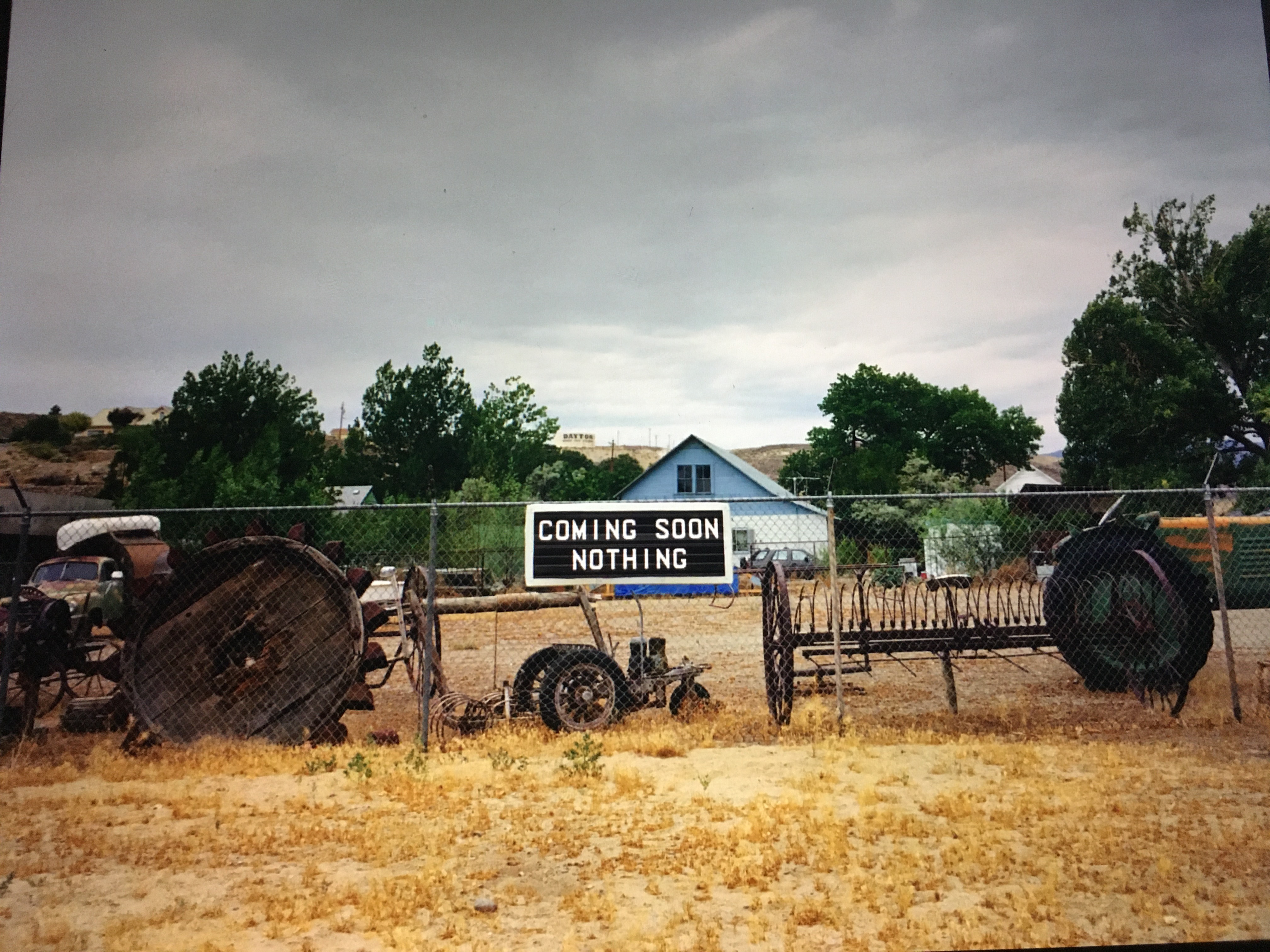
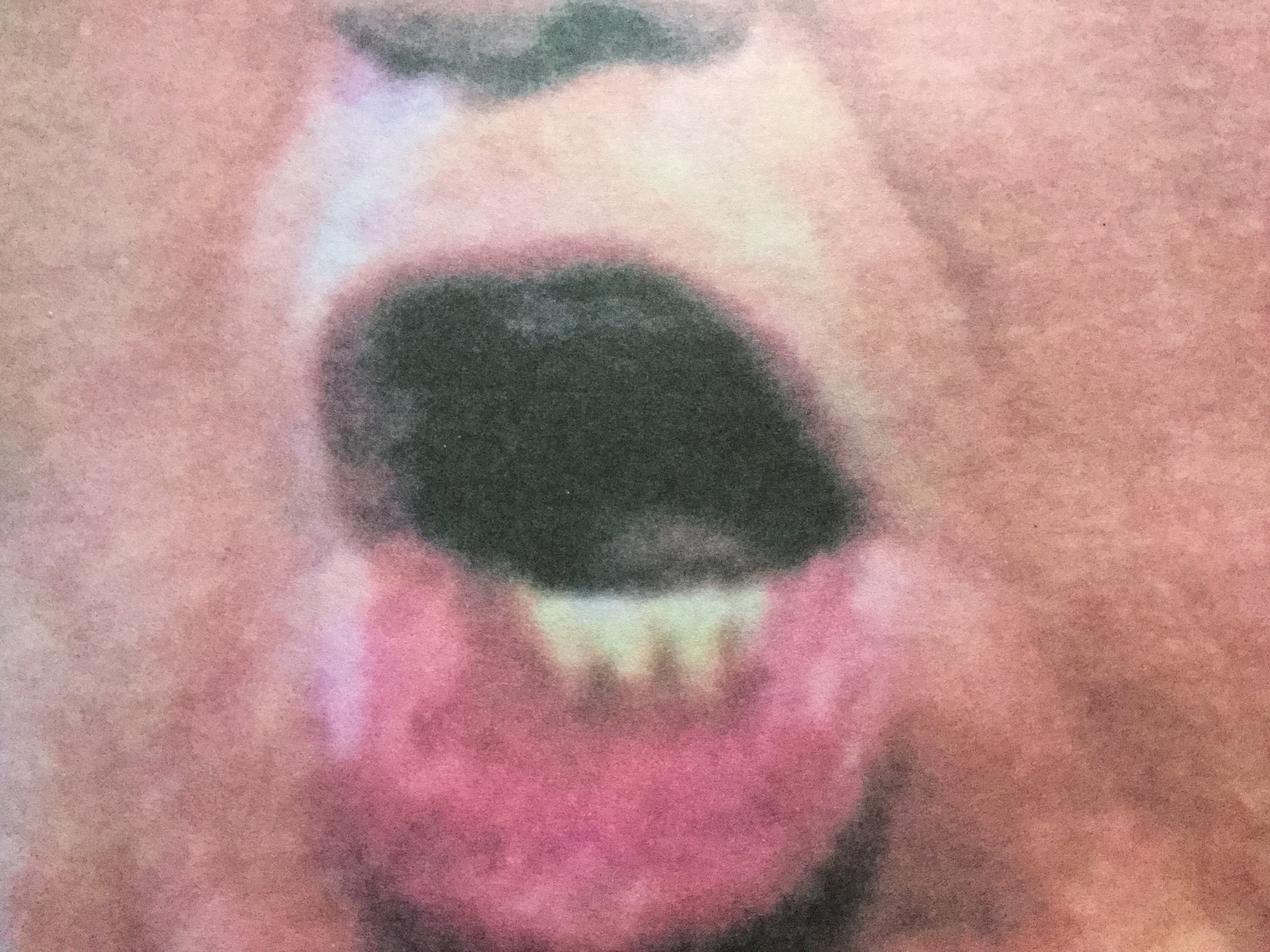
Roadside sign in Dayton, Nevada, 2002. Photograph: Jane Hilton/Courtesy of the artist and Eleven Fine Art. (Lisa O’Kelly, “The big picture: a deadpan roadside sign in Nevada,” theguardian.com, 5-31-20).
the tru-est words they says is that there are no per se
true words for it for ev-‘ry thing has a no-thing if
My dog with the candy name goes off at the drop of a hat. When the washing machine rumbles a cycle-change from the tenebrosity of its cave, I wish I could say Taffy ululates, but it would overdress the event. She does peal like popcorn at the sinister clank.
Loving waggy Taff nonsensically is my segue to the poetry of unknown words. Words to me unknown are new words; and known words used new ways have an unlikely hood to them that also stretches a body no-pain-no-gainfully.
Poets can’t be trusted to call Jane merely plain — due respect — or a thing by its first name. It’s the storied glory of the tribe, and keeps me toeing each new line in the sand they raise.
Here are sonorous fragments ripe with newness and reverence from Pascale Petit in Poetry, April 2020:
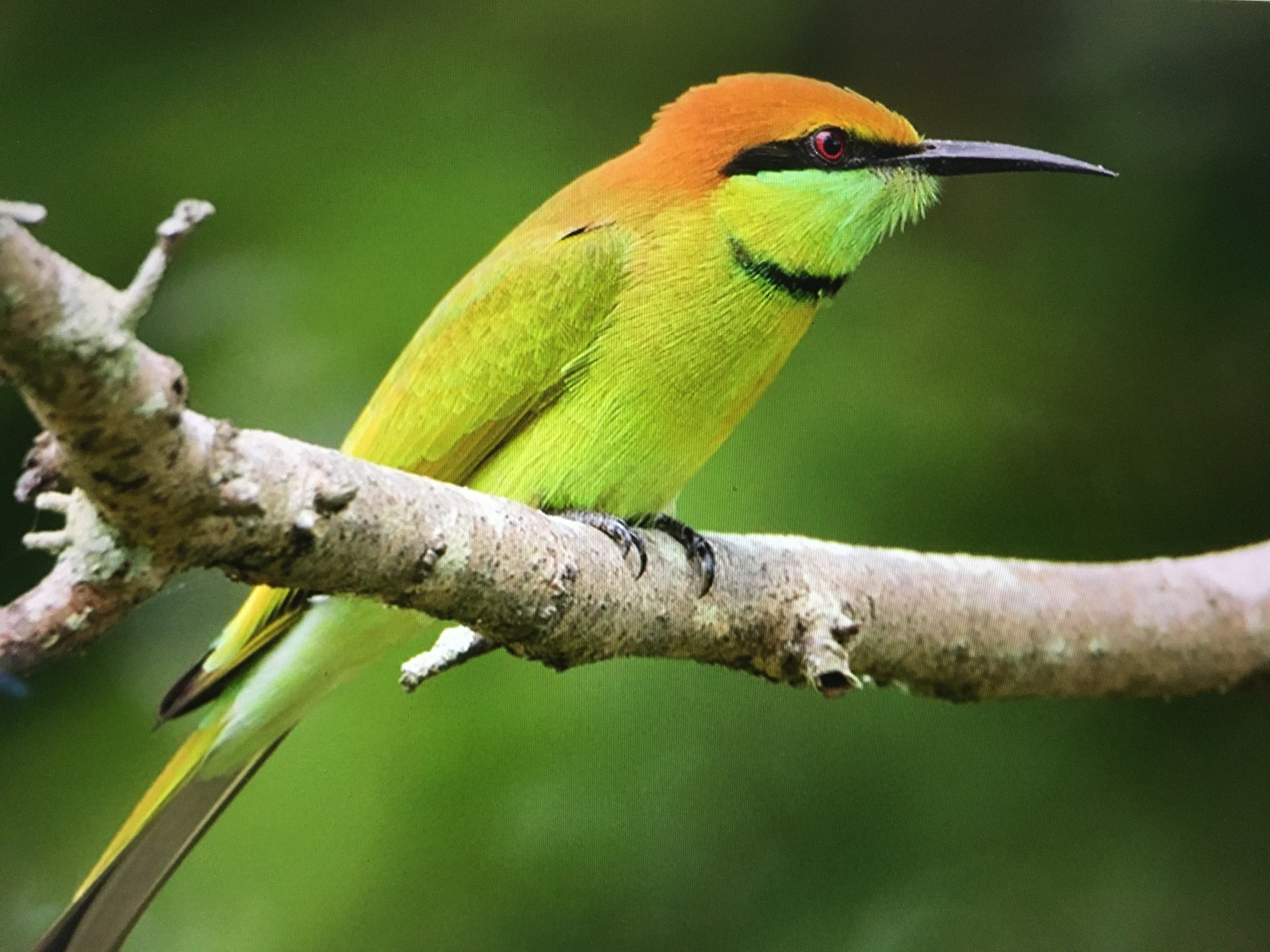
Green Bee-Eater More precious than all / the gems of Jaipur— / the green bee-eater […] with his space-black bill / and rufous cap…
Swamp Deer The barasingha bears his twenty-tined rack / like a crucified forest […] he crosses the highway / with all the birds of Kaziranga / balanced on each fork…
barasingha: swamp deer (Rucervus duvaucelii); native to India; status Vulnerable (population decreasing). green bee-eater: (Merops orientalis); a passerine (perching!) bird in the bee-eater family; status Least Concern (population increasing). Jaipur: capital of the Indian state of Rajasthan. Kaziranga: a national park in the Indian state of Assam. rufous: reddish-brown in color.
A trader on the floor of the New York Stock Exchange, in March. Credit… Lucas Jackson/Reuters.
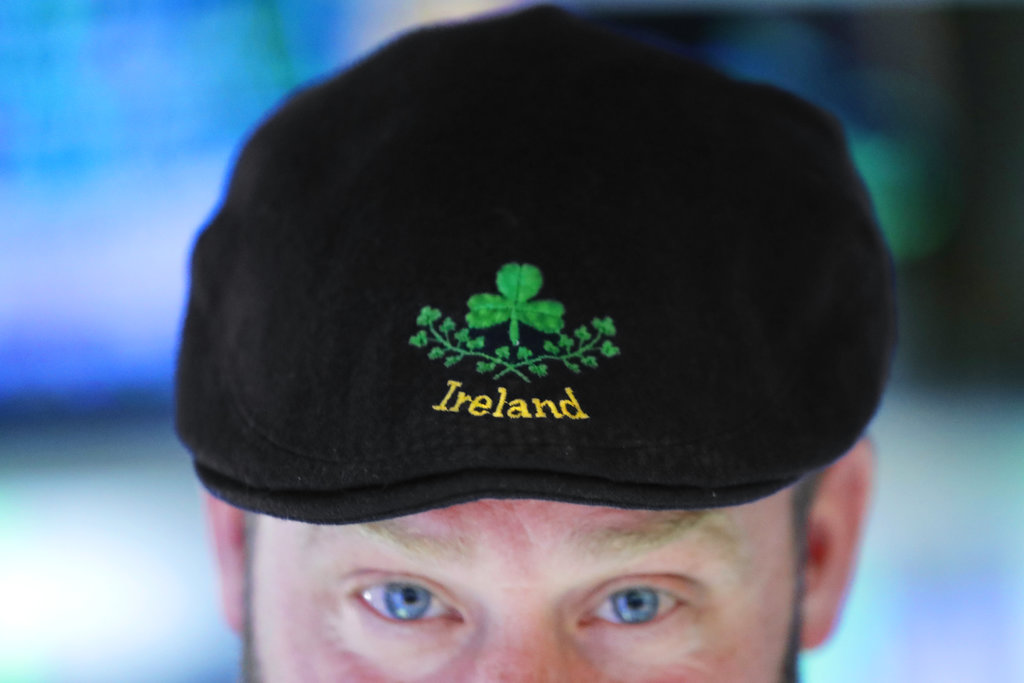
“You have to keep them as your friend,” [Trump] said while presenting the traditional shamrock bowl to the Irish prime minister at the White House last year. “You don’t want to fight with the Irish. It’s too tough — it’s too bloody.”
More than 33 million Americans claim Irish ancestry…
[Trump’s] campaign… is hawking Trump Luck of the Irish whiskey glasses, two for $30.
During the Iowa caucuses, Joe Biden, the great-grandson of a blind fiddler from Ireland’s Cooley Mountains… [circulated] a two-page endorsement letter handwritten by a nun.
(Shawn McCreesh, “Donald Trump, Joe Biden and the Vote of the Irish,” NYTimes, 5-25-20)
Whiskey glasses, a nun’s handwriting — these are potent symbols. However, the race may come down to which man can say “taoiseach.”
View from a manhole; damage dam-break; dom of dommage; taurine feces fence; chicanery chiclet; rush-to-fudge; jeerleader; freedom-loafer; warlard; crested mask-mocker; pharmacological jiggery-poker; spatchcocked eaglet; church-grade yellowcake; count no-count…
No matter how you pencil-whip it, Wharton-school it, or word-smith it, the bully virus — made great again in America — just keeps juking past every coughed-up hairball and tossed-up word-wall.
Poetry kicks in at such times — when farse alarms go off in decapitated duchies.
Build That Poem! Build That Poem! — A shield and bulwark ‘gainst the wooly bull*.
In my language, the one I recall now only by closing my eyes, the word for love is Yeu. And the word for weakness is Yếu. How you say what you mean changes what you say. Some call this prayer. I call it watch your mouth.
(Ocean Vuong, “Not Even This,” Poetry, April 2020)
God knows. God being, and being God, speaks something and the thing is (or was). It’s begot — by God!
God said light, and Alexander Graham Bell’s mother conceived.
Art is similar. Art says something in its medium — the chosen one — and something’s there.
Whether it’s Velasquez populating a room with his paints, or Cecil Taylor illustrating Eternity with seventeen minutes of his piano, Art is God-light.
Art and God both are light-like, are they not? Faith calls it He. I call it wash your mouth.
A museumgoer contemplates ” Las Meninas ,” by Diego Velázquez, at the Prado in Madrid. Credit… Emilio Parra Doiztua for The New York Times.
“Great art is, by definition, complex…”
(David Zwirner, “Art Is How We Justify Our Existence,” 5-22-20)
Says who?* A thing, by definition, doesn’t define itself; its definition is a human construct — like art itself.
Religions are complex. Christianity, for example, embosoms a Trinity, an angelology with a ninefold celestial hierarchy, and persons called vaticanologists.
Is “Las Meninas” complex, or is it virtuosic — an exemplar of radical skill in the service of simplicity? Great art has a directness that can feel so massive it forces us to shift into a lower gear to pull it.
Zwirner bounces back insightfully at the end of his essay. He mentions how, during the lockdown, he has contacted many artists in their studios.
… I couldn’t shake the feeling that I was interrupting them. They had more important things to do than talk to me. They were making art.
*David Zwirner is an art dealer with galleries in New York, London, Paris, and Hong Kong.
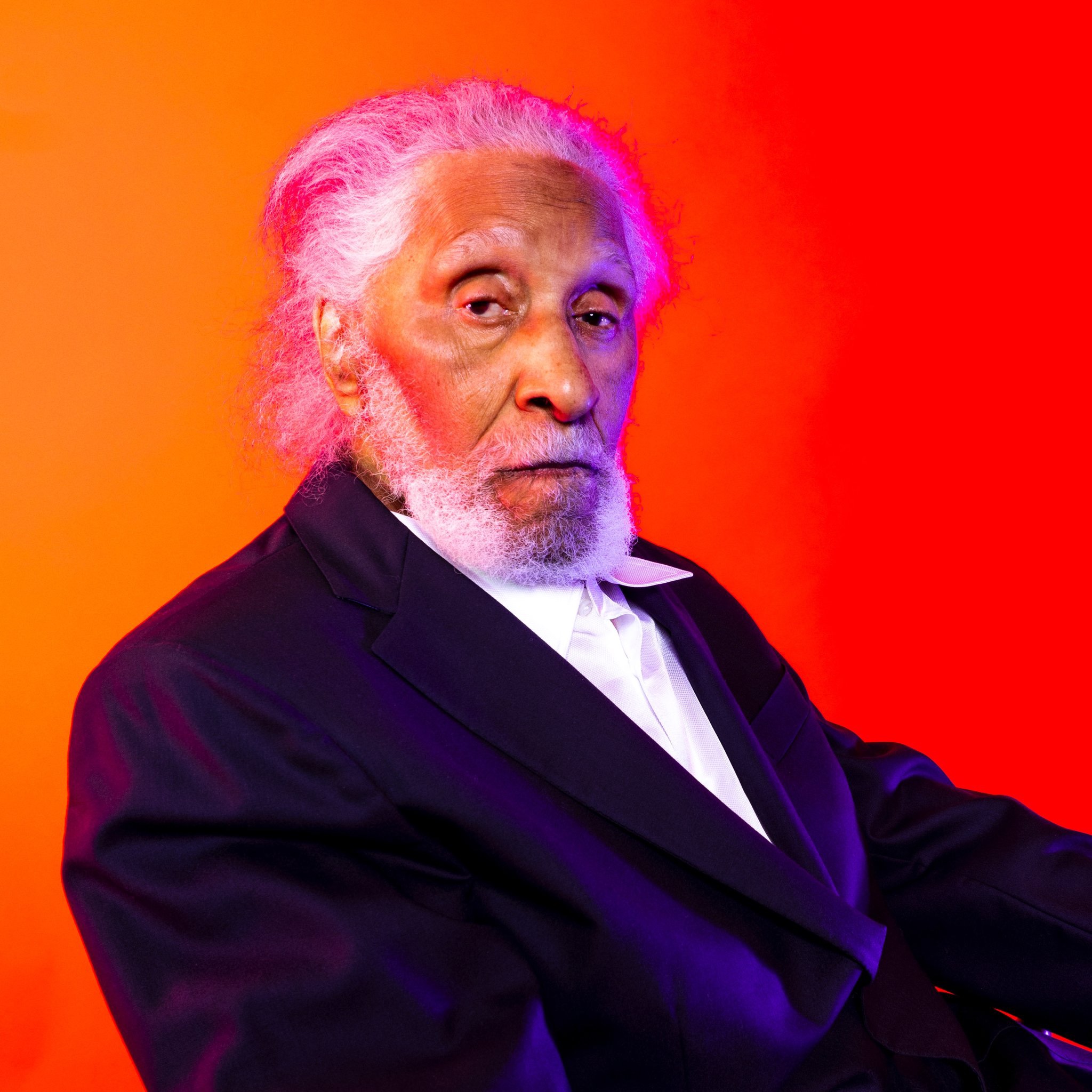
Dark matters don’t lend themselves to nosegay piety. I sniff something of my allergy to vestments and gospels in Sonny Rollins’s tolerance, at 89, for honoring the elusive there where it lies. He has, by his words, shunned the laughing gas expelled by preachers, and blown rapture out his horn, instead, for many a year.
‘Happy’ is not the word… but I am the most content I’ve ever been. I have most things figured out.
And this is going to sound funny, but my highest place musically was not about playing for a crowd. I played a couple of concerts early on where I was out in the open in the afternoon. I was able to look up in the sky, and I felt a communication; I felt that I was part of something. Not the crowd. Something bigger.
Photograph by Mamadi Doumbouya.
(David Marchese, “The Jazz Icon Sonny Rollins Knows Life Is a Solo Trip,” NYTimes, 2-21-20)





 EthicalDative
View from The Shed
The knowledge and assumptions that determine The Shed’s personal path through the pandemic are excerpted below. As the science evolves, our behavior will adapt accordingly. Godspeed and safe harbor to everyone. May we reach a common goal of the greatest possible health and wellbeing everywhere, for all, bar none.
Long Haul Ahead
We will be in this pandemic era for the long haul, likely a year or more. The masks, the social distancing, the fretful hand-washing, the aching withdrawal from friends and family — those steps are still the best hope of staying well, and will be for some time to come.
Masks Beneficial
Most experts now agree that if everyone wears a mask, individuals protect one another… And when combined with hand washing and other protective measures, such as social distancing, masks help reduce the transmission of disease…
Asymptomatic Spread
… No one can afford to be cavalier about catching it. About 35 percent of infected people have no symptoms at all, so if they are out and about, they could unknowingly infect other people.
Herd Immunity Difficult
We can’t count on herd immunity to keep us healthy… The antibodies that protect people against viruses infecting mucosal surfaces like the lining of the nose [in diseases such as influenza and whooping cough] tend to be short-lived.
Warm Weather No Guarantee
We can’t count on warm weather to defeat the virus… If someone infected sits near you and coughs, or talks a lot or sings, it doesn’t really matter where you’re sitting and how nice a day it is… [The virus] has a world population with no immunity waiting to be infected. Bring on the sun; the novel coronavirus will survive…
Goal of Many Over 50
“As an older person, what I want is not to end up on a respirator…”
(All excerpts are from “Six Months of Coronavirus: Here’s Some of What We’ve Learned,” NYTimes, 6-3-20)
(c) 2020 JMN