… What we saw in Texas is… a doom loop of climate polarization, where climate crises lead, paradoxically, to a politics that’s more desperate for fossil fuels, more dismissive of international or even interstate cooperation.
Cooperation is humanity’s superpower, and the way we have enlarged our circle — from kin, to tribes, to religions, to countries, to the world — is miraculous.
(Ezra Klein, “Texas is a Rich State in a Rich Country, and Look What Happened,” NYTimes, 2-25-21)
“For a healthy politics to flourish it needs reference points outside itself — reference points of truth and a conception of the common good… When everything becomes political, that is the end of politics.” Making everything politics “totally distorts your ability to read reality.” (Moshe Halbertal, Hebrew University religious philosopher)
(Thomas L. Friedman, “Can You Believe This Is Happening in America?” NYTimes, 2-23-21)
At first blush it seems like a paradox to say that when everything is politics, politics disappears.
The comment may provide a clue, however, to understanding a point of Ludwig Wittgenstein’s thought (which I am struggling to grasp):
The world is determined by the facts, and by these being all the facts (TLP 1.11) For the totality of facts determines both what is the case, and also all that is not the case. (TLP 1.12)
In his gnomic fashion Wittgenstein seems to imply that in order to perceive what something is, we must also perceive what it is not.
Deprived of their “is-not-ness,” things lose their definition; by flooding our logical and linguistic space, they cease to be.
[Still from NYTimes video “The Last Word: Lawrence Ferlinghetti.] For more than 50 years, the poet Lawrence Ferlinghetti kept the bohemian and beat spirit alive at his City Lights Bookstore in San Francisco. In 2007, he spoke to The Times about his life and legacy. Credit… Brian Flaherty for The New York Times.
“In some ways what I really did was mind the store,” he told The Guardian in 2006. “When I arrived in San Francisco in 1951 I was wearing a beret. If anything I was the last of the bohemians rather than the first of the Beats.”
Lawrence Ferlinghetti died on February 22, 2021, age 101. Certain details of his fruitful life seize me:
— Fetched off to Strasbourg, France in early childhood, where he learned French, which he spoke before English. — Degree in journalism from the University of North Carolina at Chapel Hill (my alma mater), attracted there by his taste for Thomas Wolfe. — Master’s thesis on Ruskin and Turner at Columbia University, which fostered a lifelong love of painting. Then a doctorate in comparative literature from the Sorbonne.
Mr. Ferlinghetti in 1970. He lived in the North Beach section of San Francisco for most of his adult life. Credit… Sam Falk/The New York Times.
Ferlinghetti called “Little Boy,” the species of memoir that he published In 2019, “an experimental novel” about “an imaginary me.”
(Jesse McKinley, “Lawrence Ferlinghetti, Poet Who Nurtured the Beats, Dies at 101,” NYTimes, 2-23-21)
… Millions of Texans whose health and finances were already battered by a year of Covid-19 now face a grinding recovery from a storm estimated to cost upward of $20 billion, the costliest in state history…
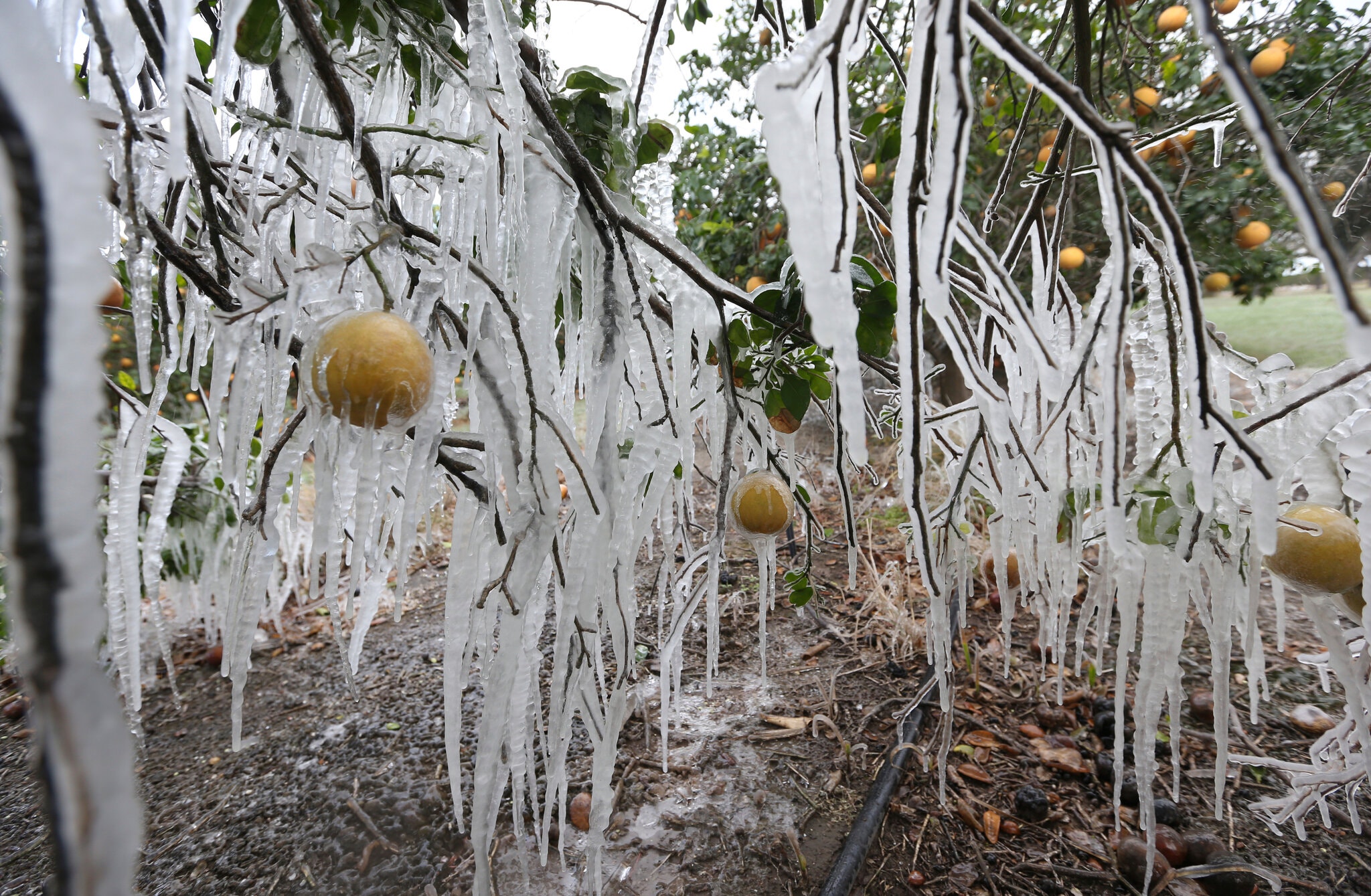
Texas is roughly the size of France combined with Switzerland. At one point, during the week of February 15, every one of the state’s 254 counties was under a freeze warning.
A week later, on February 22 (yesterday), this was the status:
… Gas stations were without fuel, grocery store shelves were empty and long lines formed in the early-morning darkness at food distribution sites. About 8.6 million people were still being told to boil their drinking water, and about 120,000 others had no water at all as plumbers and water utilities battled an epidemic of leaky, broken pipes.
(Jack Healy, “‘Like We’re Being Cursed’: First Covid and Now Waterlogged Homes,” NYTimes, 2-22-21)
[XC] Pensé morir, sentí de cerca el frío, I thought I would die, felt up close the cold, y de cuanto viví, sólo a ti te dejaba: and of all the life I’d lived, only you was I leaving: tu boca eran mi día y mi noche terrestres my earthly day and night were your mouth, y tu piel la república fundada por mis besos. your skin the republic founded on my kisses.
En ese instante se terminaron los libros, That very instant books came to an end, la amistad, los tesoros sin tregua acumulados, friendship, treasures relentlessly accrued, la casa transparente que tú y yo construimos: the see-through house that you and I together built: todo dejó de ser, menos tus ojos. all of it came not to exist, save for your eyes.
Porque el amor, mientras la vida nos acosa, For love, while life is nipping at our heels, es simplemente una ola alta sobre las olas, is simply one tall wave on top of other waves pero ay cuando la muerte viene a tocar la puerta but — oh — when death comes knocking at the door
hay sólo tu mirada para tanto vacío, there’s just your gaze for so much emptiness, sólo tu claridad para no seguir siendo, just your light for stopping to be me, sólo tu amor para cerrar la sombra. just your love to draw the blind on darkness.
Veinte poemas de amor y una canción desesperada. Cien sonetos de amor 1924, Pablo Neruda y Herederos de Pablo Neruda 1994, Random House Mondadori Cuarta edición en U.S.A: febrero 2004
Exxon Mobil refinery in Baytown, Texas. Photograph: Jessica Rinaldi/Reuters.
The Great Texas Freeze (February 14-20, 2021) triggered a noisome toxic fart from the crippled state’s fossil gut.
The five largest refiners emitted nearly 337,000lb of pollutants, including benzene, carbon monoxide, hydrogen sulfide and sulfur dioxide, according to preliminary data supplied to the Texas Commission on Environment Quality (TCEQ)… Total pollution at Houston-area facilities during the cold snap totaled approximately 703,000 pounds…
(Reuters in Houston, “Texas freeze led to release of tons of air pollutants as refineries shut,” theguardian.com, 2-21-21)
Researchers say there is no safe amount of benzene for human exposure.
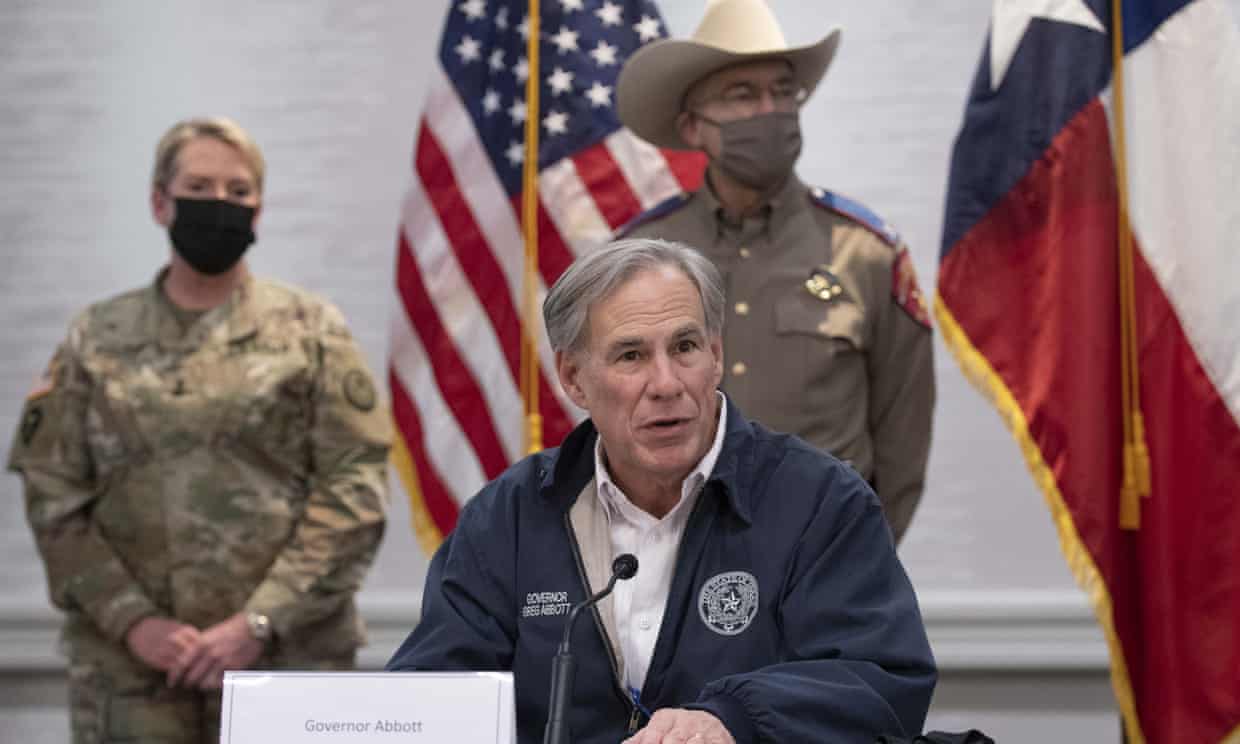
Greg Abbott, Texas’s Republican governor. Abbott and other Republicans were accused of ‘wanting to point fingers at everything except the problem’. Photograph: Bob Daemmrich/ZUMA Wire/REX/Shutterstock.
On Sunday [February 13], demand for electricity hit a winter record, at 69,150 megawatts, and by Monday morning, more than 30,000 megawatts of power went offline. These plant outages represented twice the level that the Electric Reliability Council of Texas, or ERCOT, considers an “extreme generator outage” in its scenario planning. (Jesse Jenkins, “A Plan to Future-Proof the Texas Power Grid,” NYTimes, 2-18-21)
A cold, sharp dagger has slashed through Texas, America’s largest and proudest producer of fossil fuels, while stranding millions without heat or light… embarrassing a political class that just weeks ago pledged to defend the oil and gas industry — its own Alamo — from the Biden administration. (Richard Parker, “Texas Could Have Kept the Lights On,” NYTimes, 2-17-21)
Edinburg, Texas, on Feb. 15.Credit…Delcia Lopez/The Monitor, via Associated Press.
“Get off your ass and take care of your own family!… No one owes you or your family anything; nor is it the local government’s responsibility to support you during trying times like this! Sink or swim, it’s your choice! The City and County, along with power providers or any other service owes you NOTHING!… Only the strong will survive and the weak will perish. Folks, God has given us the tools to support ourselves in times like this.” [Facebook rant of Tom Boyd, ex-mayor of Colorado City, Texas] (Guardian Staff, “US mayor quits after telling residents it’s ‘sink or swim’ amid deadly snowstorm,” theguardian.com, 2-17-21)
“Bottom line: thank God for baseload energy made up of fossil fuels,” Representative Dan Crenshaw, a Texas Republican with a growing national profile, tweeted on Wednesday [Feb. 17]. (Tom McCarthy, Erum Salam, Joan E Greve, “Republican leaders in Texas face growing backlash as power crisis deepens,” theguardian.com, 2-18-21)
The ear was pricked by news that the Duke of Edinburgh was in hospital. Her Majesty is being kept closely apprised. The Duke and Duchess of Cornwall are on the scene. (The Duke of York’s whereabouts is presently unreported.) The Duke and Duchess of Cambridge likewise are in sympathetic attendance. The Duke and Duchess of Sussex send love and support from their bijou villa in LA.
The Duchess of Sussex, of course, is expecting a new sibling for Master Archie Harrison Mountbatten-Windsor, which precludes international travel for her in the intermediate future. Since she and the Duke are stepping down as working royals, they will have more respite from toil in order to spend quality time with themselves.
(From deep in the arctic heart of Texas a bit of friendly fun with their highnesses. All respect to Prince Philip, and good wishes for his recovery.)
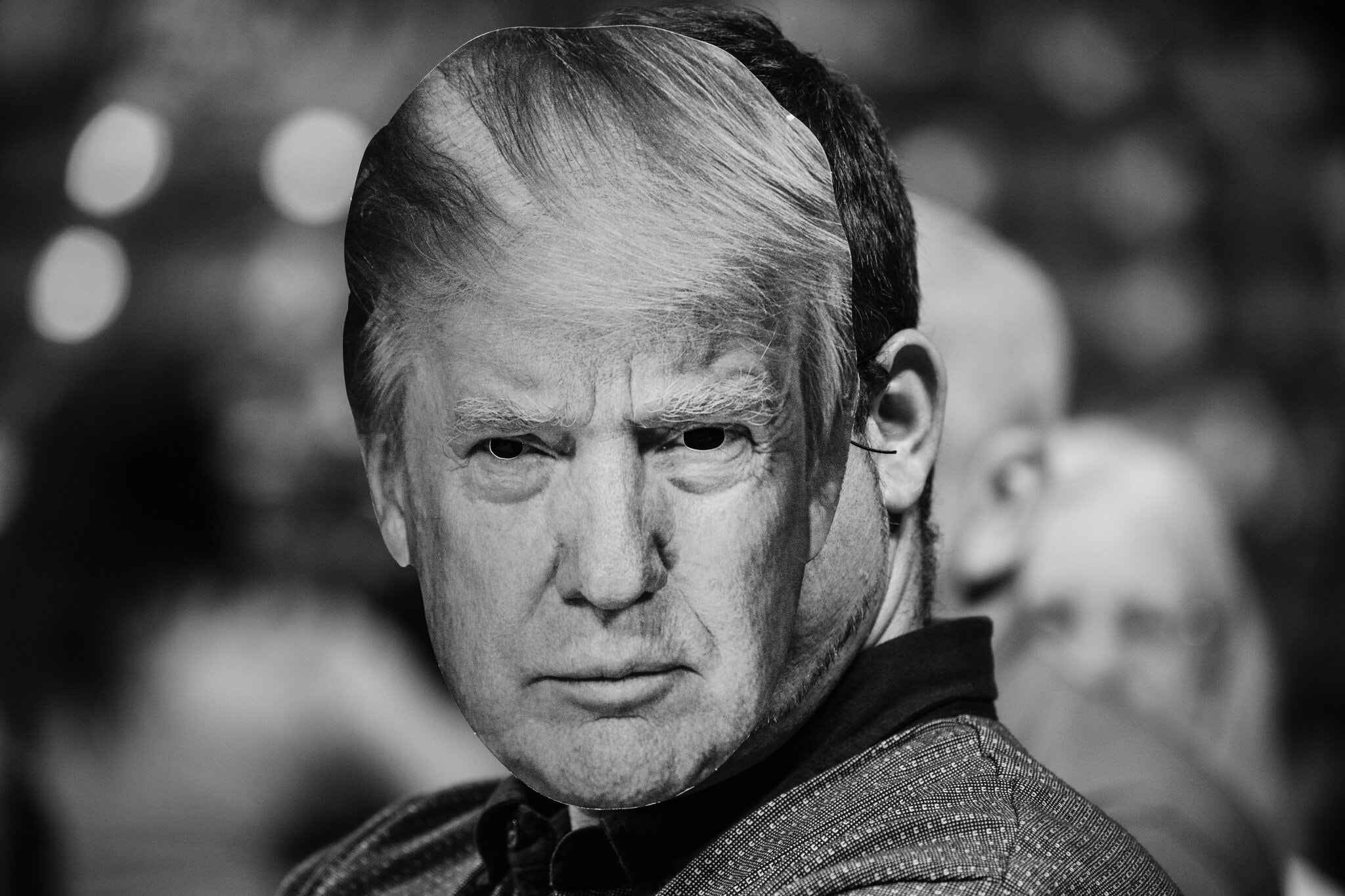
A Trump supporter wearing a paper mask of the former president’s face at a rally in Pennsylvania in 2018. Credit… Damon Winter/The New York Times.
Senator Pat Toomey of Pennsylvania is one of 7 Republican senators who voted to convict the former president during his impeachment trial. Toomey has said he will not run for reelection in 2022.
WASHINGTON, DC – JANUARY 30: Sen. Pat Toomey (R-PA) leaves the Senate chamber during a recess in the Senate impeachment trial of U.S. President Donald Trump continues at the U.S. Capitol on January 30, 2020 in Washington, DC. On Thursday, Senators continue asking questions for the House impeachment managers and the president’s defense team. (Photo by Drew Angerer/Getty Images)
“We did not send him there to vote his conscience. We did not send him there to do the right thing or whatever he said he’s doing,” one Pennsylvania Republican Party official explained. “We sent him there to represent us.”
(Jamelle Bouie, “If There Was a Republican Civil War, It Appears to Be Over,” NYTimes, 2-17-21)
The thing speaks of, by and for itself (and the G.O.P.).






A Whiff of Wittgenstein
“For a healthy politics to flourish it needs reference points outside itself — reference points of truth and a conception of the common good… When everything becomes political, that is the end of politics.” Making everything politics “totally distorts your ability to read reality.”
(Moshe Halbertal, Hebrew University religious philosopher)
(Thomas L. Friedman, “Can You Believe This Is Happening in America?” NYTimes, 2-23-21)
At first blush it seems like a paradox to say that when everything is politics, politics disappears.
The comment may provide a clue, however, to understanding a point of Ludwig Wittgenstein’s thought (which I am struggling to grasp):
The world is determined by the facts, and by these being all the facts (TLP 1.11)
For the totality of facts determines both what is the case, and also all that is not the case. (TLP 1.12)
In his gnomic fashion Wittgenstein seems to imply that in order to perceive what something is, we must also perceive what it is not.
Deprived of their “is-not-ness,” things lose their definition; by flooding our logical and linguistic space, they cease to be.
We then lose our way.
(c) 2021 JMN