Representative Adam Kinzinger, a centrist Republican and six-term member of Congress thought to be weighing a run for statewide office in 2022. Photograph: Reuters.
“Oh my, what a disappointment you are to us and to God!” said the letter, addressed to Kinzinger, the word “disappointment” underlined three times and “God” underlined once, according to the version published by the Times. “You go against your Christian principles and join the ‘devil’s army’ (Democrats and the fake news media).”
Adam Kinzinger is a Republican Congressman from Illinois. His father has 32 cousins who join God and Fox in reviling Kinzinger for his apostasy.
“You should be very proud that you have lost the respect of Lou Dobbs, Tucker Carlson, Sean Hannity, Laura Ingraham, Greg Kelly etc. and most importantly in our book, Mark Levin and Rush Limbaugh and us!” the letter said…
(Tom McCarthy, “Family of anti-Trump Republican condemns him: ‘A disappointment to us and to God,’ theguardian.com, 2-16-21)
Oh my. It appears the wrath of a woman spurned is matched by that of principled Christians and God.
“The clear message that we get from the proceedings in America is that after all the toings and froings and all the kerfuffle, American democracy is strong and the American constitution is strong and robust.”
(Martin Pengelly, “Boris Johnson calls Trump impeachment over Capitol attack ‘kerfuffle’,” theguardian.com, 2-14-21)
Hmmm. Calling the proceedings a kerfuffle smacks of Valentine kiss-blowing from 10 Downing to Mar-a Lago. Could we agree it was at least a bit of sticky wicket, Mr. Prime Minister?
Civilians who take handgun training in Texas shoot at human outlines. The practice fits the tool to its purpose, which is felling humans. The shooter aims for center body mass — a generous sweet spot housing vital organs. Fifty rounds inside number “8” of the concentric circles scores perfect.
As a bombardier trainee in WWII, my dad learned to take apart and assemble a .50-calibre machine gun while blindfolded. “It has 70 pieces,” he wrote home.
In his adolescence he had been shot in the abdomen by a law officer. It was accidental. The officer, a friend, had been demonstrating a quick-draw maneuver to my dad.
In my youth there were a rifle and shotgun in the house, but no handguns. “Too easy to wave around and shoot someone,” my dad decreed.
Living in a pistol-packing culture in 2021 triggered those memories, and a reflection. My country gives each girl and boy their war: granddad WWI; dad WWII; his cousins Korea; my cohort Vietnam; my son, a Navy nurse, the ongoing Bush wars; and so on.
Always shun lapse of recollection of the sacred massacre. What rallies to the cry dressed in flags doesn’t look like civic virtue; more like a cherished grudge stalking a human shape to settle scores with.
[XCI] La edad nos cubre como la llovizna, Age covers us like drizzle, interminable y árido es el tiempo, interminable and arid is time, una pluma de sal toca tu rostro, a feather of salt touches your face, una gotera carcomió mi traje: a falling drop etched away my suit:
el tiempo no distingue entre mis manos time does not distinguish my hands from o un vuelo de naranjas en las tuyas: a flight of oranges in yours: pica con nieve y azadón la vida: life chops weed with snow and with the hoe: la vida tuya que es la vida mía. that life of yours that’s my life too.
La vida mía que te di se llena This life I gave to you fills up de años, como el volumen de un racimo. with years, like the massing of a bunch of grapes. Regresarán las uvas a la tierra. The grapes will make their way back to the earth.
Y aún allá abajo el tiempo sigue siendo, And even there below time keeps on being, esperando, lloviendo sobre el polvo, waiting, raining down on dust, ávido de borrar hasta la ausencia. avid to erase its very absence.
Veinte poemas de amor y una canción desesperada. Cien sonetos de amor 1924, Pablo Neruda y Herederos de Pablo Neruda 1994, Random House Mondadori Cuarta edición en U.S.A: febrero 2004
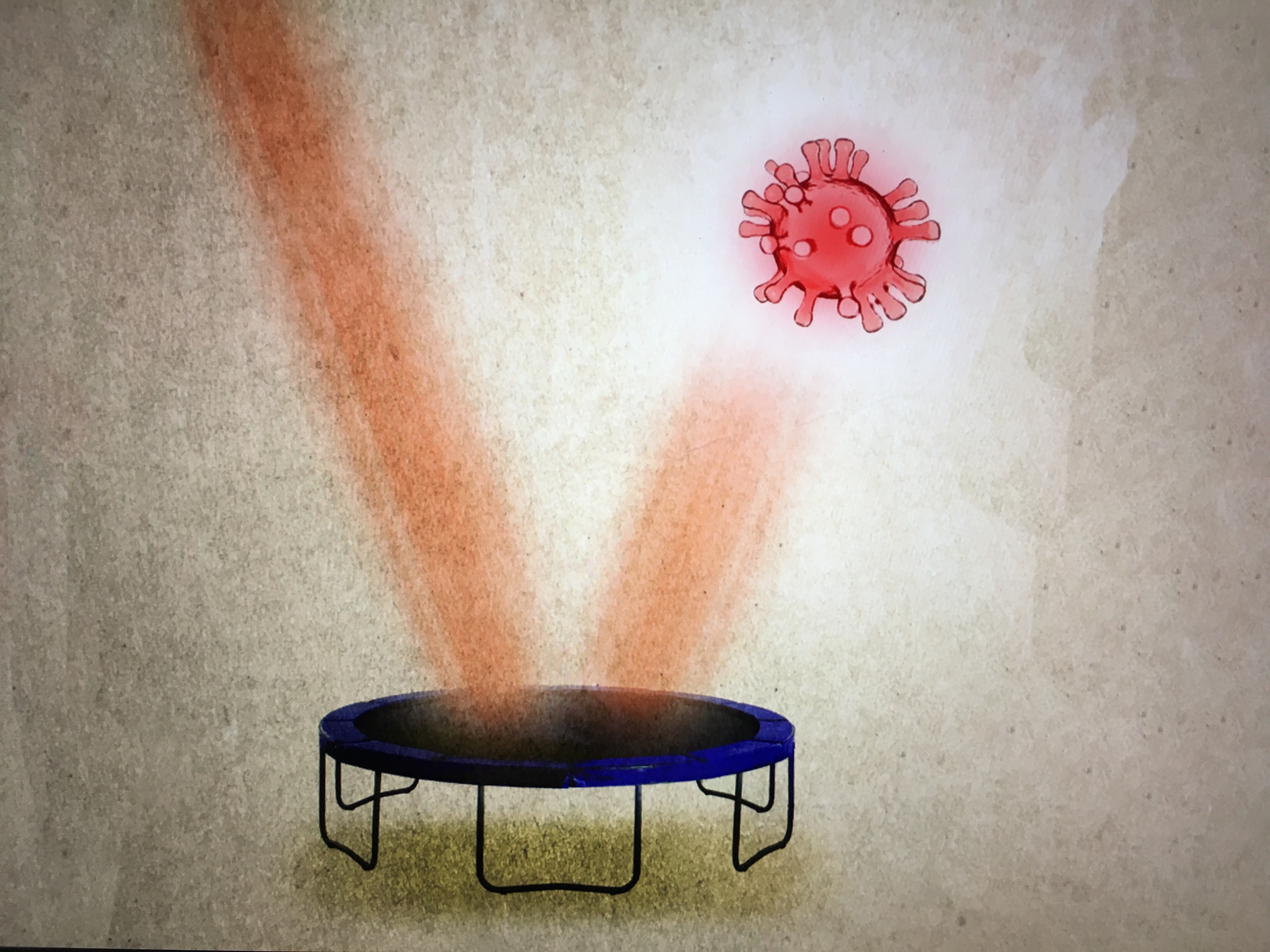
The article cited here doesn’t credit this clever illustration.
From the confines of a rural burrow (!) in a republic reeling from 4 years of accelerated decline, the notion of national greatness has the consistency of a heat mirage.
Still, it comes as a shock, amid a pandemic, that 42 countries do genetic sequencing better than the United States.
Confirmation of reinfection [of COVID-19] requires genetic sequencing of paired samples from each episode to tell whether the genomes involved are different.
But the U.S. lacks the capacity for robust genetic sequencing, the process that identifies the fingerprint of a specific virus so it can be compared with other strains. Jeff Zients, head of the federal covid task force, noted late last month that the U.S. ranks 43rd in the world in genomic sequencing.
(JoNel Aleccia, “Why the U.S. is underestimating COVID-19 reinfection,” Kaiser Health News, 2-8-21)
I’ve had a unique opportunity to parley with a friend over how the intervocalic “d” sounds in Spanish word endings such as “-ado,” “-edo,” “-ido,” “-odo,” and “-udo.”
English-speaking students of Spanish will tend to say such endings with the English “d” sound. It’s the sound Americans commonly produce when saying such words as “letter,” “butter” and “eater” — phonetically described as a voiced alveolar flap.
The sound required by the Spanish endings is a voiced dental fricative, similar to the sound of the “th” in words such as “bother,” “leather” and “dither.”
It arose in our discussion that my friend had trouble recognizing the difference between the unvoiced dental fricative sound of English words such as “ethical,” “method” and “lethargic” versus the voiced variant in the “bother-leather-dither” trio.
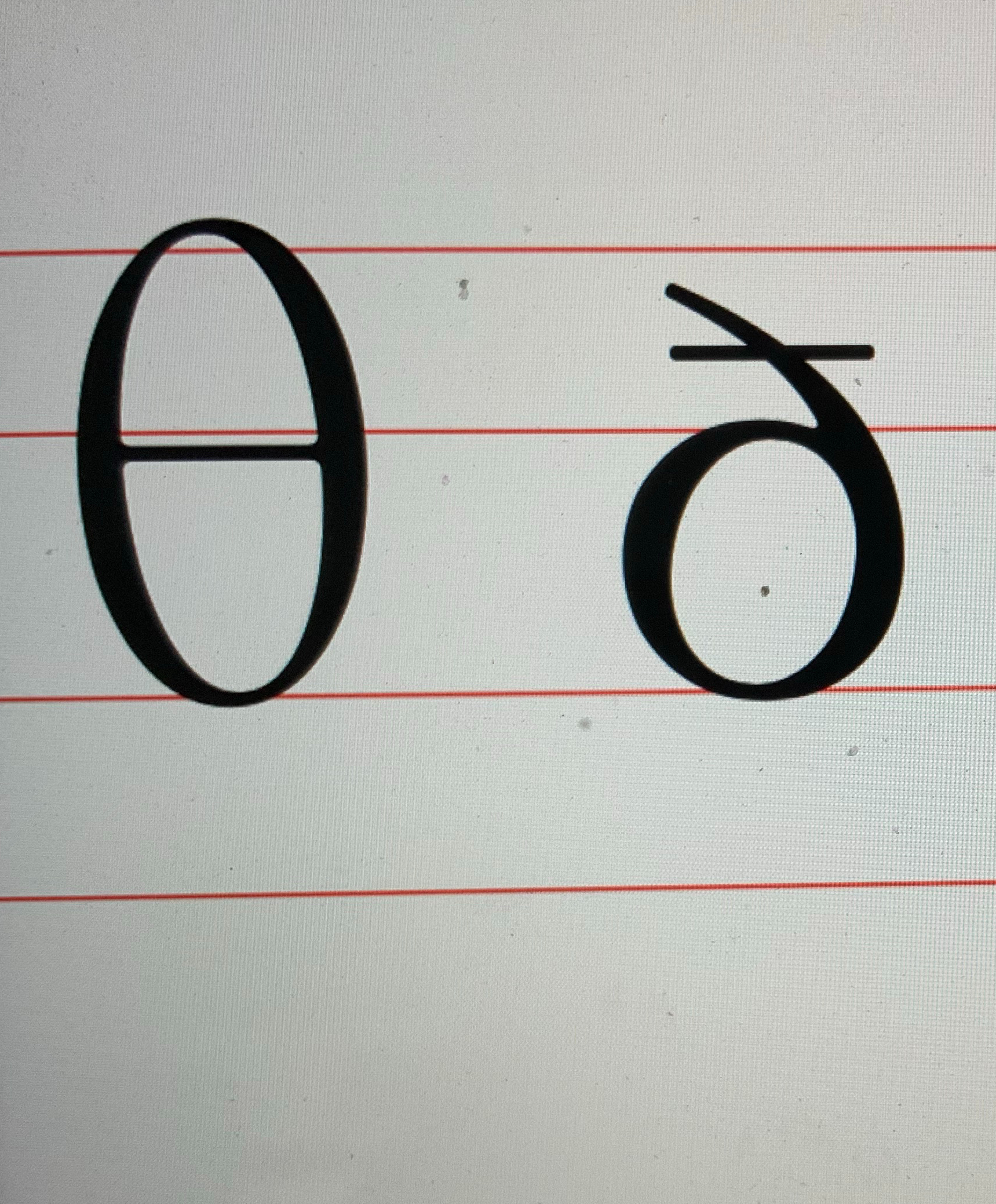
The phonetic symbol for the unvoiced variant is the Greek letter “theta”; the symbol for the voiced variant is the Old English and Icelandic letter “eth.”
When the Spanish word endings mentioned above are pronounced with the English flap “d” sound, a word such as Spanish “todo” (“all”) may be misunderstood as “toro” (“bull”).
A similar instance is furnished by Selena’s song transcribed as “Bidi Bidi Bom Bom,” where she was probably singing what Spanish would write as “biri biri bam bam.”
I’ve devised a fun game for my friend. There are 3 camps: the Ether camp, the Either camp, and the Eater camp.
Which of the following English words belong in each camp?
matter, pithy, father, mythical, feather, otter, nothing, rather, frothy, other, monolithic, utter, northern, north, southern, south, fodder, Etheridge, fritter, Carthage, nether, oath, later, thistle, wither. (Hint: The Ether camp has 11. The Either camp has 8. The Eater camp has 6.)
Which of the following Spanish words belong in each camp? (Translations provided merely to satisfy curiosity.)
lodo (“mud”), moro (“Moor”), pero (“but”), vampiro (“vampire”), nudo (“knot”), estampido (“bang”), loro (“parrot”), módulo (“module”), matador (bullfighter), lirio (“lily”), nítido (clear-cut). (Hint: The Ether camp has 0. The Either camp has 6. The Eater camp has 5)
Note: In the Castilian dialect spoken in much of Spain, the Ether camp would be populated with words such as enlace (“link”), pozo (“well”), and raza (“race”). For my friend and me, that’s a discussion for another day.
When I re-read my EthicalDative posts at a later date they often seem overly arch or frivolous — less trenchant and cleansing than they felt at the moment of posting. “Stale” is the word to describe them, I suppose, with its meaning of “horse urine.”
Elizabeth Kolbert, who writes cogently about the environment, says:
Being a journalist is a bit like being a magpie. You’re always on the lookout for something shiny — a phrase, a fact, an insight — and you never know where you’re going to find it. (“Please Don’t Ask Elizabeth Kolbert How She Organizes Her Books,” NYTimes, 2-4-21)
In Kolbert’s statement, substitute “journalist” with “blogger who asserts an interest in language” and I swim into view.
I resonated likewise to columnist Farhad Manjoo’s recent confession to being left in the viral dust:
… I was far from alone in finding the GameStop saga compelling. By the time I was set to write my column this week, the story had already gone supernova, lighting up seemingly every corner of digital media… I was chagrined to find that every hot take I could think of had already been heatedly taken. (Farhad Manjoo, “Can We Please Stop Talking About Stocks, Please?” NYTimes, 2-3-21)
Manjoo’s viewpoints are often congruent with mine or easily adoptable. They’re lent force by a perspicacious echoing of trendy lingo.
My burden is to hang ten on the passing shiny-and-hot with a semblance of nervy verve that doesn’t pall by end of day.
Keir Starmer at a community pharmacy vaccination centre in Asda Watford Supercentre, February 2021. Photograph: WPA/Getty Images.
… I was momentarily stirred to hear there were some handbags between Boris Johnson and Keir Starmer in one of parliament’s corridors after prime minister’s questions on Wednesday… According to some reports, the Labour leader was “puce” and “rattled”… I guess it’s fitting that [Starmer] has finally mildly lost his rag in a misunderstanding… No doubt he ran the full gamut of emotions from shirty to tetchy…
… Britain is a majority-nutter nation, and we mostly want to elect politicians with something of the nutter to them… Thatcher and Blair: obvious nutters… Fast-forward to… Johnson. Nutter. The message of the 2016 referendum was the euphoric nutting of David Cameron (non-nutter)… The reason Jeremy Corbyn – full nutter – did better than expected against useless anti-nutter Theresa May in 2017 was simply because he WAS full nutter…
Corbyn… was the wrong kind of nutter. He was not a kindred nutter. As for May… She parked the bus… Nobody wants to watch that… The worry for Labour is that… watching Starmer is just like watching May, or maybe José Mourinho without the eye-gouging… I suspect that even when the nutter of the day has cocked it up, what the nutter-addicted people are always really crying out for is just another nutter, a different nutter, a new nutter to bathe us in nostalgia for whichever previous nutters we currently yearn for… Have you seen the epic parish council meeting video that went viral this week?
(Marina Hyde, “Britons want a bit of drama from their leaders — and Keir Starmer isn’t serving it,” theguardian.com, 2-5-21)
Admittedly this phrasebud nosegay is picked free of context from what Marina Hyde herself describes as her “whimsical” column, and that’s the fun of it — the nutter part.
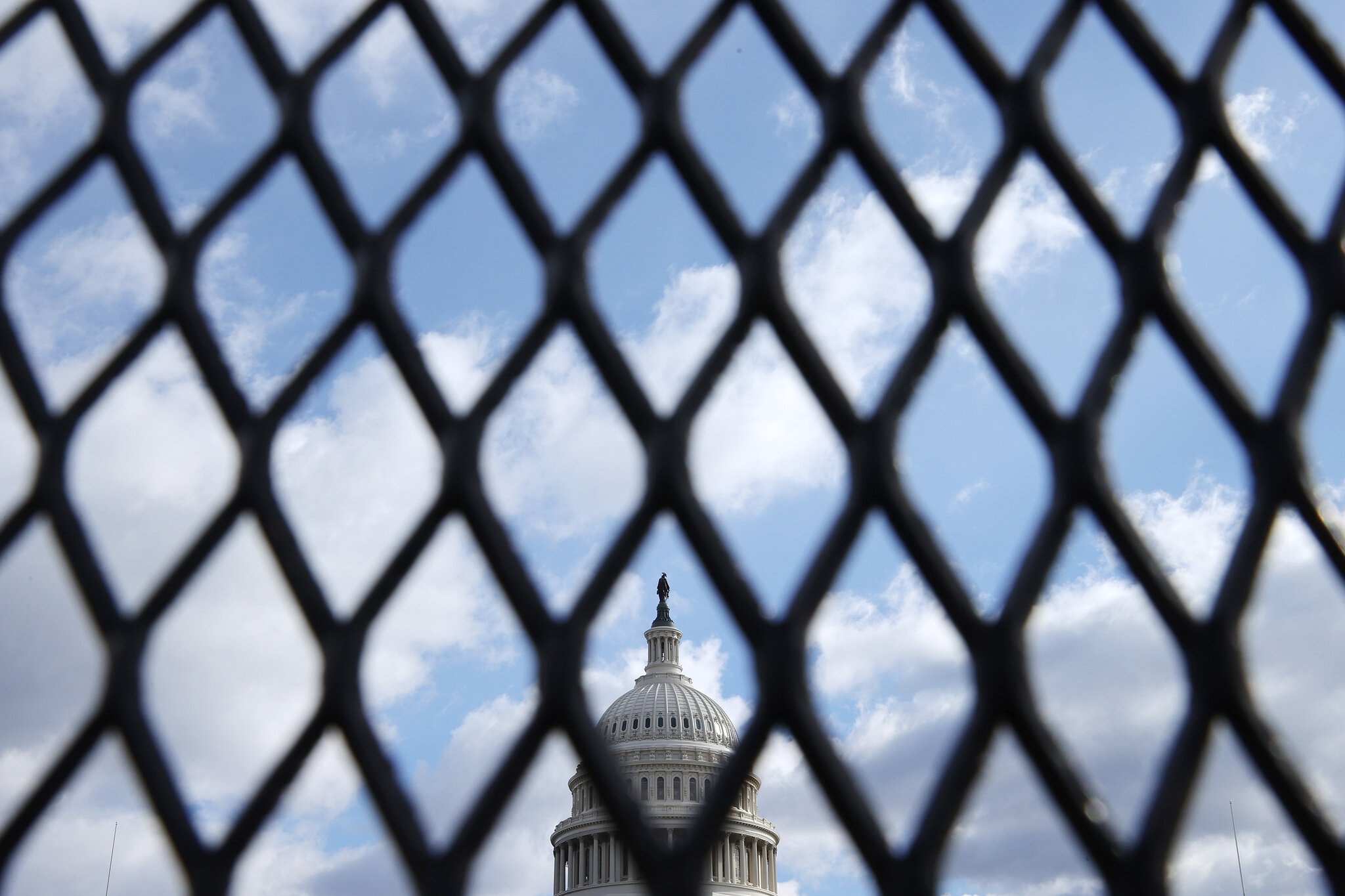
It is radical in its inanity, a legislative chamber designed by dadaists.
No, Ezra Klein! Comparing the U.S. Senate to a Dada design sullies Dada and its legacy.
There’s a better comparison elsewhere in Klein’s essay:
In 2012, Steven Teles, a political scientist at Johns Hopkins University, published a paper arguing that American public policy had become defined by kludges. “The term comes out of the world of computer programming, where a kludge is an inelegant patch put in place to be backward compatible with the rest of a system,” he wrote. “When you add up enough kludges, you get a very complicated program, one that is hard to understand and subject to crashes. In other words, Windows.”
Or the Senate.
(Ezra Klein, “The Senate Has Become a Dadaist Nightmare,” NYTimes, 2-4-21)
I encountered the term “kludge” as a novice programmer. I pronounced it to rhyme with “sludge” until I heard it uttered by a real programmer, who rhymed it with “Scrooge.”
From my current perch in the Apple cybersphere I have fondly receding memories of the bad old days of Microsoft Windows. The memories are still vivid enough, however, for me to appreciate the wicked aptness of Klein’s comparison of the Senate to buggy software.
[XCII] Amor mío, si muero y tú no mueres, My love, if I die and you don’t die, no demos al dolor más territorio: let us not give grief more territory: amor mío, si mueres y no muero, my love, if you die and I don’t die, no hay extensión como la que vivimos. there’s no extension like the one we live.
Polvo en el trigo, arena en las arenas Dust on wheat, sand on the sands, el tiempo, el agua errante, el viento vago time, wandering water, uncertain wind nos llevó como grano navegante. carried us like seafaring grain.
Esta pradera en que nos encontramos, This meadow in which we find ourselves, ¡oh pequeño infinito! devolvemos. — O little infinitum! — we give back. Pero este amor, amor, no ha terminado, But this love, love, has not finished,
y así como no tuvo nacimiento and so just as it had no birth no tiene muerte, es como un largo río, it has no death, it’s like a long river, sólo cambia de tierra y de labios. it only changes land and changes lips.
Veinte poemas de amor y una canción desesperada. Cien sonetos de amor 1924, Pablo Neruda y Herederos de Pablo Neruda 1994, Random House Mondadori Cuarta edición en U.S.A: febrero 2004









Reading God’s Mind
“Oh my, what a disappointment you are to us and to God!” said the letter, addressed to Kinzinger, the word “disappointment” underlined three times and “God” underlined once, according to the version published by the Times. “You go against your Christian principles and join the ‘devil’s army’ (Democrats and the fake news media).”
Adam Kinzinger is a Republican Congressman from Illinois. His father has 32 cousins who join God and Fox in reviling Kinzinger for his apostasy.
“You should be very proud that you have lost the respect of Lou Dobbs, Tucker Carlson, Sean Hannity, Laura Ingraham, Greg Kelly etc. and most importantly in our book, Mark Levin and Rush Limbaugh and us!” the letter said…
(Tom McCarthy, “Family of anti-Trump Republican condemns him: ‘A disappointment to us and to God,’ theguardian.com, 2-16-21)
Oh my. It appears the wrath of a woman spurned is matched by that of principled Christians and God.
(c) 2021 JMN