‘High-End’ Jinks in ‘Opulent’ Joints

Ninety-one people broke the state’s 50-person limit at an October wedding held at the North Fork Country Club in Cutchogue, NY. Afterwards, 30 tested positive for the virus and 156 wound up quarantined.

In a second New York event in September, at least 80 people attended a “high-end” Sweet 16 party that left 37 people testing positive and 270 quarantined.

County officials fined an opulent catering hall, the Miller Place Inn, $12,000 for hosting [the]… party.

(Ed Shanahan, “Wedding and Birthday Party Infect 56, Leaving Nearly 300 in Quarantine,” NYTimes, 10-28-20)

This nondescript article was mundane and banal by late October; the world by then was rife with anecdote about the privileged classes flouting restrictions imposed on the restive, snarling masses. What caught my attention was the unprofessional rhetoric of the journalism, a rare lapse by NYTimes standards.

However, the article set me to thinking of the Fitzgerald quote I remembered as “The rich are different from you and me.” Assuming it to be from “The Great Gatsby,” I looked it up and learned that it’s from his 1926 story “The Rich Boy.”

“Let me tell you about the very rich. They are different from you and me. They possess and enjoy early, and it does something to them, makes them soft where we are hard, and cynical where we are trustful, in a way that, unless you were born rich, it is very difficult to understand. They think, deep in their hearts, that they are better than we are because we had to discover the compensations and refuges of life for ourselves. Even when they enter deep into our world or sink below us, they still think that they are better than we are. They are different. ”

(c) 2020 JMN

Posted in Commentary, Quotations | Tagged , , , , , , | Leave a comment

Less Majesty

Lèse-maj·es·té: “the insulting of a monarch or other ruler.”

Oliver Dowden, the UK culture secretary, wants Netflix to play a “health warning” before The Crown so viewers are aware that the historical drama is a work of fiction.

“It’s a beautifully produced work of fiction, so as with other TV productions, Netflix should be very clear at the beginning it is just that … Without this, I fear a generation of viewers who did not live through these events may mistake fiction for fact.”

At present viewers are warned that the show contains nudity, sex, violence and suicide references, and is suitable for viewers who are 15 and older.

Accusations of inaccuracies in Peter Morgan’s production span from repeatedly showing the Queen “wrongly dressed for trooping the colour” to disputes over Charles’ fishing technique.

(Lanre Bakare, “Culture secretary to ask Netflix to play ‘health warning’ that The Crown is fictional,” theguardian.com, 11-29-20)

(c) 2020 JMN

Posted in Quotations | Tagged , , , | Leave a comment

Pictures Matter

Richard Frishman is a photographer based near Seattle. You can follow his work on Instagram.

(Photographs and Text by Richard Frishman, “Hidden in Plain Sight: The Ghosts of Segregation,” NYTimes, 11-30-20)

(c) 2020 JMN

Posted in Commentary | Tagged , , , , | Leave a comment

Derek Fordjour

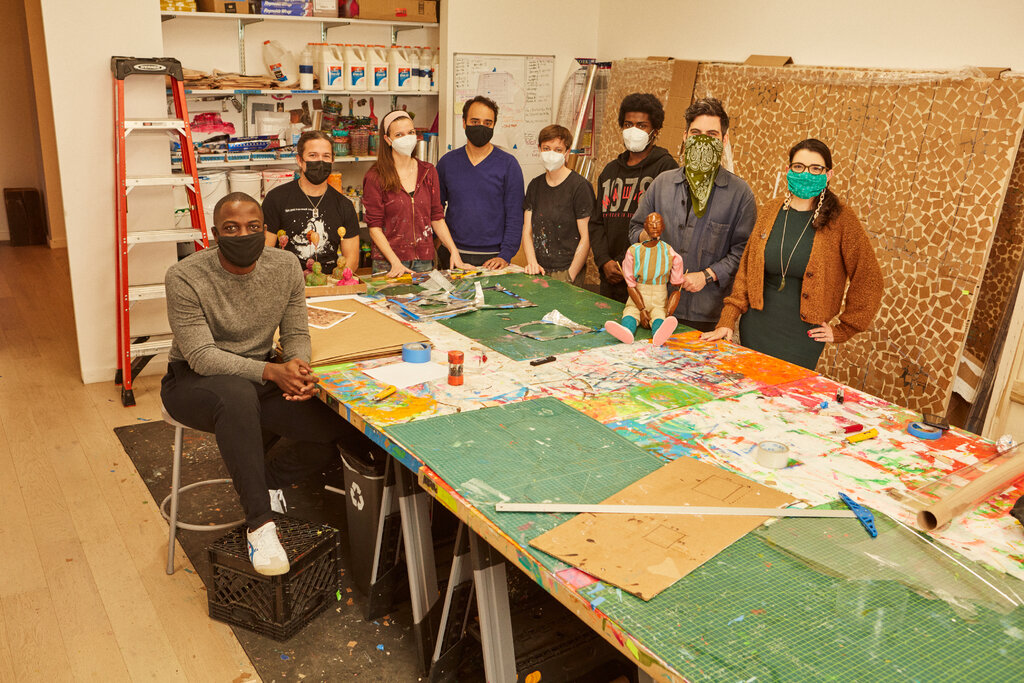
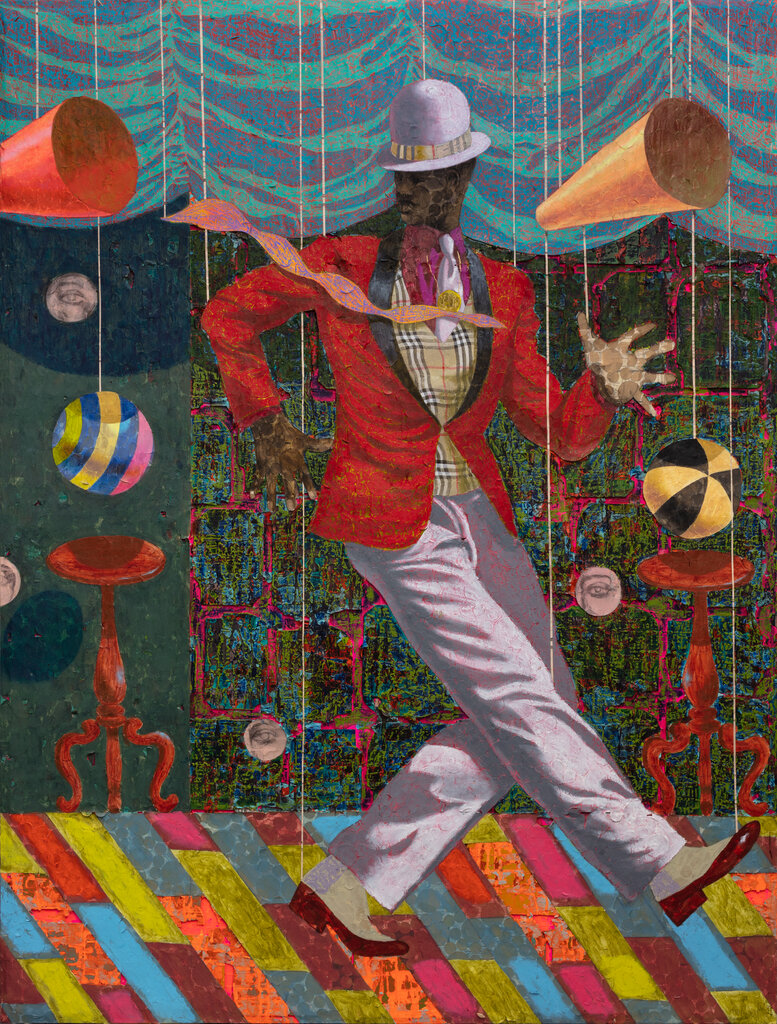
“I love learning other ways to have a conversation,” Mr. Fordjour said after the rehearsal, a collaboration with the puppet artist Nick Lehane. “Painting has its utility, but performance is another register.”

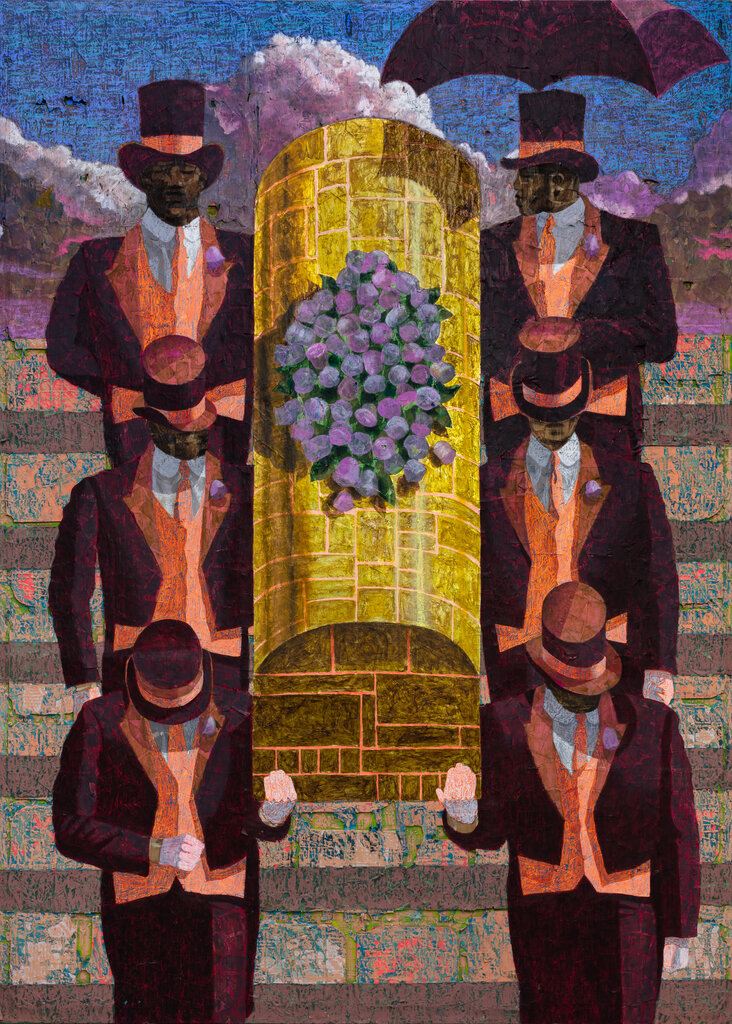
“… Black funerary tradition is on my mind,” he added. “Thinking about all the people who were not able to have funerals.”

… He covers a canvas or wood board with cardboard tiles, foil and other materials, and wraps it in newspaper (always The Financial Times, for its warm, salmon hue). The process repeats several times, with Mr. Fordjour applying washes of paint, then tearing and carving the accumulating surface as he goes.

(Siddhartha Mitter, “Derek Fordjour, From Anguish to Transcendence,” NYTimes, 11-19-20)

(c) 2020 JMN

Posted in Quotations | Tagged , | 1 Comment

The King’s Alphabet

… [Thai protestors] have… called for the king, Maha Vajiralongkorn Bodindradebayavarangkun, to…

(Richard C. Paddock, “Thai Hotel That Put American in Jail Gets New Label on Tripadvisor,” NYTimes, 11-11-20)

(c) 2020 JMN

Posted in Commentary, Quotations | Tagged | Leave a comment

From Concept to Chrome

Detroit Style: Car Design in the Motor City, 1950-2020,” an exhibition at the Detroit Institute of Arts, opens this month and runs through next June.

… The D.I.A. exhibition set out to communicate the journey that started with a designer’s vision… For instance, the ’70 Barracuda is seen not only as a production model on display but also in a development sketch, rendered in Prismacolor on vellum in 1967 by Milton Antonick, a Chrysler designer. Mr. Colman describes this image of the car’s tail end as “a humble drawing, an informal working document” that serves to bridge the gap between a styling concept and the final product made of sheet metal.

The discipline of creating a car’s look is today known as design, but in earlier times… the creators of curvaceous fenders and chrome flourishes were called stylists. “It was a matter of looking to how the practitioners described themselves in the era,” Mr. Colman said. “We felt it important to keep the historical language.”

“… These cars represent what I think has been a higher level of optimism in America. The world is changing, and we might be highlighting the end of an era, the moment just before the meteor wiped out the dinosaurs.”

(Norman Mayersohn, “‘A Love Letter to Detroit’ on Vellum and Chrome,” NYTimes, 11-26-20)

Epilogue: Mr. Colman, the exhibition’s curator, commutes to work by bicycle.

(c) 2020 JMN

Posted in Commentary, Quotations | Tagged , , , | Leave a comment

Attire Power

The pussy-bow blouse: the quintessential working woman’s uniform in the years when they began to flood into the professional sphere; the female version of the tie; the power accessory of Margaret Thatcher, the first female British prime minister.

(Vanessa Friedman, “Kamala Harris in a White Suit, Dressing for History,” NYTimes, 11-8-20)

(c) 2020 JMN

Posted in Quotations | Tagged , , , | Leave a comment

Knots Bound [CXIX]

[XCIX]
Otros días vendrán, será entendido
Other days will come, there will be heard
el silencio de plantas y planetas
the silence of plants and planets.
¡y cuántas cosas puras pasarán!
And so many pure things will happen!
¡Tendrán olor a luna los violines!
Violins will have a scent of moon!

El pan será tal vez como tú eres:
Bread will be, perhaps, the same as you:
tendrá tu voz, tu condición de trigo,
it will have your voice, your condition of wheat,
y hablarán otras cosas con tu voz:
and other things will speak with your voice:
los caballos perdidos del Otoño.
the lost horses of Autumn.

Aunque no sea como está dispuesto
Although it may not be as stipulated
el amor llenará grandes barricas
love will fill enormous casks
como la antigua miel de los pastores,
like the ancient honey of the shepherds,

y tú en el polvo de mi corazón
and you in the dust of my heart
(en donde habrán inmensos almacenes)
(where there will be immense storage vessels)
irás y volverás entre sandías.
will come and go among the watermelons.
(Pablo Neruda. English translation by JMN)

Veinte poemas de amor y una canción desesperada. Cien sonetos de amor
1924, Pablo Neruda y Herederos de Pablo Neruda
1994, Random House Mondadori
Cuarta edición en U.S.A: febrero 2004

(c) 2020 JMN

Posted in Anthology | Tagged , , , | Leave a comment

Knots Bound [C]

[C]
En medio de la tierra apartaré
In the midst of the earth I will separate
las esmeraldas para divisarte
the emeralds in order to spot you,
y tú estarás copiando las espigas
and you will be copying the ears of grain
con una pluma de agua mensajera.
with a pen of messengering water.

¡Qué mundo! ¡Qué profundo perejil!
What a world! What a profound adornment!
¡Qué nave navegando en la dulzura!
What a boat sailing in sweetness!
¡Y tú tal vez y yo tal vez topacio!
And you perhaps and I perhaps topaz!
Ya no habrá división en las campanas.
There will no longer be division in the bells.

Ya no habrá sino todo el aire libre,
There will be nothing but the open air,
las manzanas llevadas por el viento,
the apples carried by the wind,
el suculento libro en la enramada,
the succulent book in the arbor,

y allí donde respiran los claveles
and there where the carnations breathe
fundaremos un traje que resista
we will make a suit that holds up
la eternidad de un beso victorioso.
to the eternity of a triumphant kiss.

(Pablo Neruda. English translation by JMN)

Veinte poemas de amor y una canción desesperada. Cien sonetos de amor
1924, Pablo Neruda y Herederos de Pablo Neruda
1994, Random House Mondadori
Cuarta edición en U.S.A: febrero 2004

(c) 2020 JMN

Posted in Anthology | Tagged , , , , | Leave a comment

‘Hinge’ Figures in Art

Mari Carmen Ramírez, curator of Latin American art at the Museum of Fine Arts, Houston, has focused on collecting its less traveled avenues. “We have bet on artists who were not that well known in the U.S. or who had absolutely no market presence but we knew how important they were for art history,” she said.

Fanny Sanín was born in 1938 in Bogotá, Colombia, educated in London, and has been based in New York since 1971… “She’s a very interesting hinge figure who has never really entered the mainstream,” said Ms. Ramírez, who found the large-scale painting “Acrylic No. 5” (1973) hanging on the bedroom wall of Ms. Sanín’s small Manhattan apartment…

Virtually unknown outside Venezuela, where she spent her life (1925-94), Elsa Gramcko was largely self-taught and a pioneer of incorporating industrial refuse as an art material.

(Hilarie M. Sheets, “Inspiration from South of the Border Moves Center Stage in Houston,” NYTimes, 11-13-20)

(c) 2020 JMN

Posted in Quotations | Tagged , , , | Leave a comment