Hey, you. I’ll love you every kind of always.
(c) 2022 JMN — EthicalDative. All rights reserved

Hey, you. I’ll love you every kind of always.
(c) 2022 JMN — EthicalDative. All rights reserved

The small shops are sprouting where their readers are, in residential areas, keeping alive the rich literary scene that made Buenos Aires, Argentina’s capital, one of the cities with the most bookstores per capita in the world.

“Argentina may always be in crisis but there are a lot of readers,” said Cristian De Nápoli, author and owner of Otras Orillas, a small bookstore in the Recoleta neighborhood. “And they aren’t just any readers, but readers who are always in search of what’s new.”

(Daniel Politi, “Through a Recession and a Pandemic, the Book Business Is Thriving in Buenos Aires,” NYTimes, 5-26-22)
(c) 2022 JMN — EthicalDative. All rights reserved

L’aurore (the dawn)
“Low roar” is the best we can do.
Governor Abbott, born kids have a right to life, too.
(c) 2022 JMN — EthcalDative. All rights reserved

“It is foolish and childish, on the face of it, to affiliate ourselves with anything so insignificant and patently contrived and commercially exploitative as a professional sports team,” he wrote in his book “Five Seasons” (1977). “What is left out of this calculation, it seems to me, is the business of caring — caring deeply and passionately, really caring — which is a capacity or an emotion that has almost gone out of our lives.”
The bit about “caring” serves a large dollop of sentiment. The seriousness which the spectatorship invests in professional sport looks deucedly perfervid from outside the circle of fandom.
I warm more to the Angell who said, “The stuff about the connection between baseball and American life, the ‘Field of Dreams’ thing, gives me a pain… I hated that movie.”
And the one who “once referred to Ron Darling as ‘the best right-handed part-Chinese Yale history major among the Mets starters,’” and wrote that Carl Yastrzemski, “like so many great hitters, has oddly protuberant eyes.”
(Dwight Garner, “Roger Angell, Who Wrote About Baseball With Passion, Dies at 101,” NYTimes, 5-20-22)
(c) 2022 JMN — EthicalDative. All rights reserved

To Her
One’s home is her castle,
a refuge from hustle
and bustle of office,
the jostle of mobs;
nest in which refuge to seek
from apostles of doom
by the wherry that’s painted on wood
on a wall of the room.
Kitchen to mortar and pestle
the herbs for the grub
that she rustles;
nook where to nestle
in comfort and wrestle with issues,
indite her epistles,
ensconced at the trestle desk
cunningly made from a door,
delight in the whistle
of blackbirds, bristle of brushes,
the thistle-and-mistletoe theme
of the rug on the floor.
(JMN)
(c) 2022 JMN — EthicalDative. All rights reserved

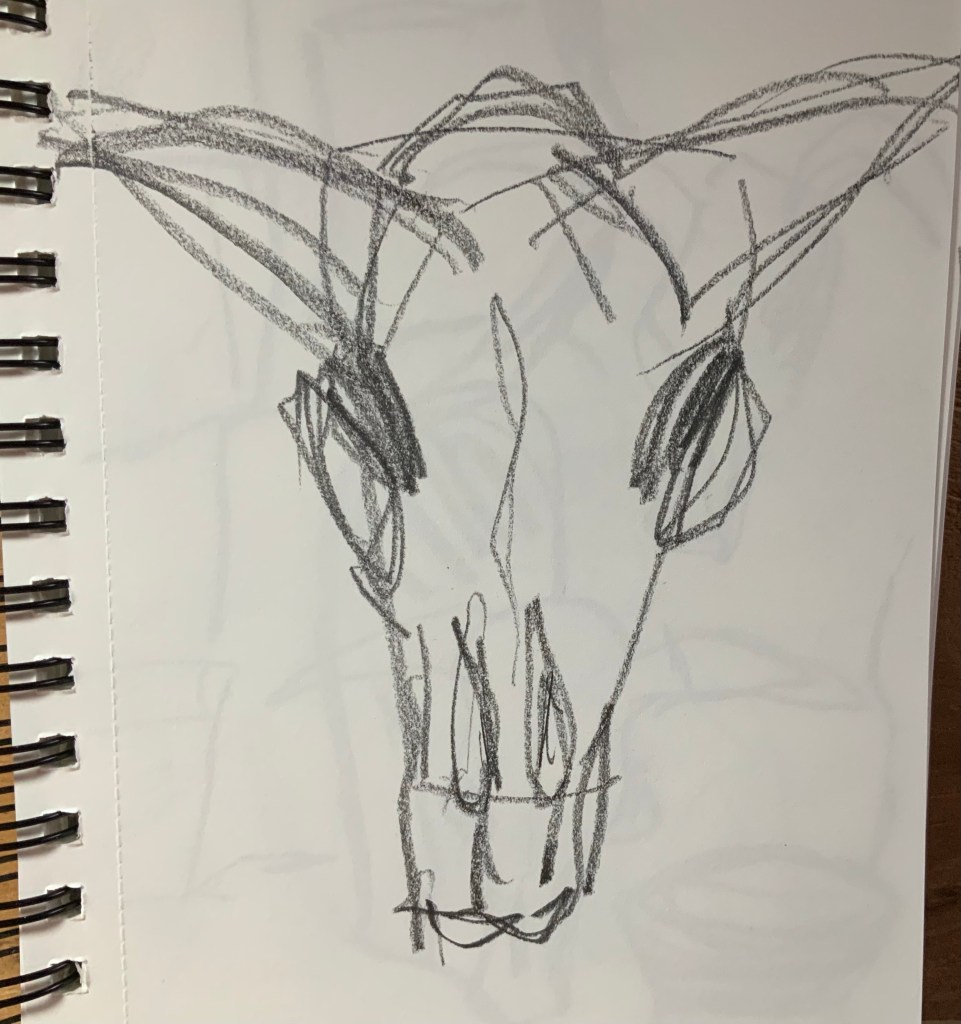
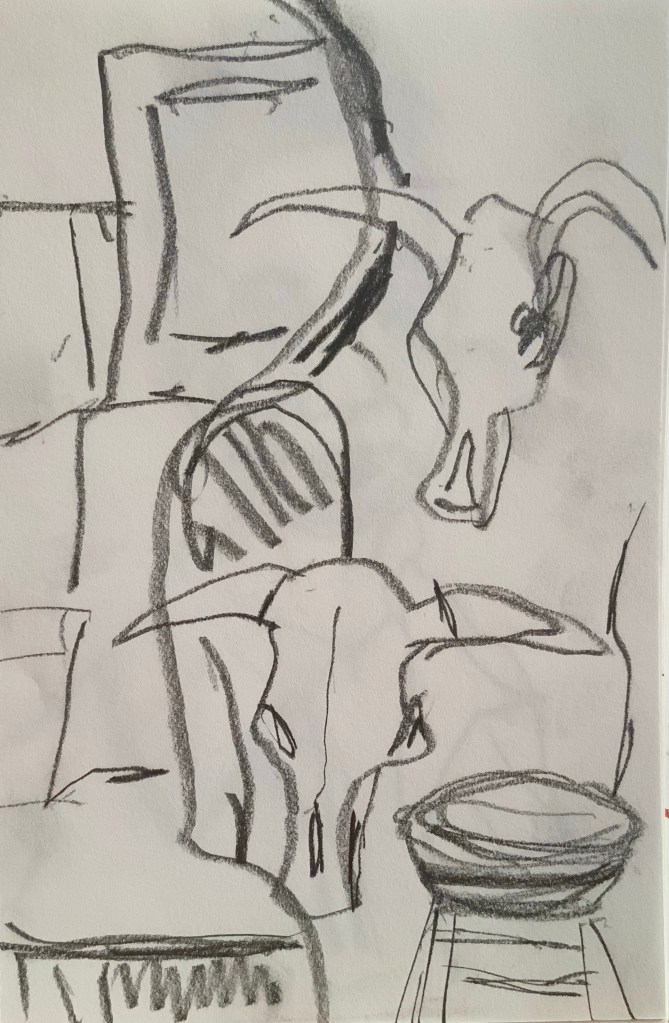
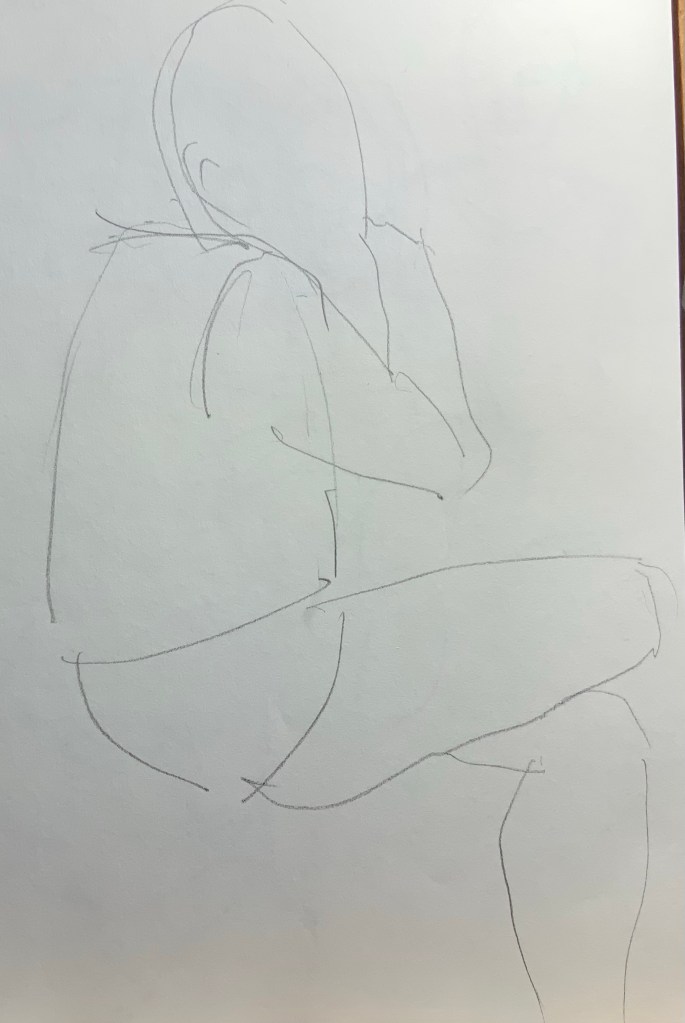
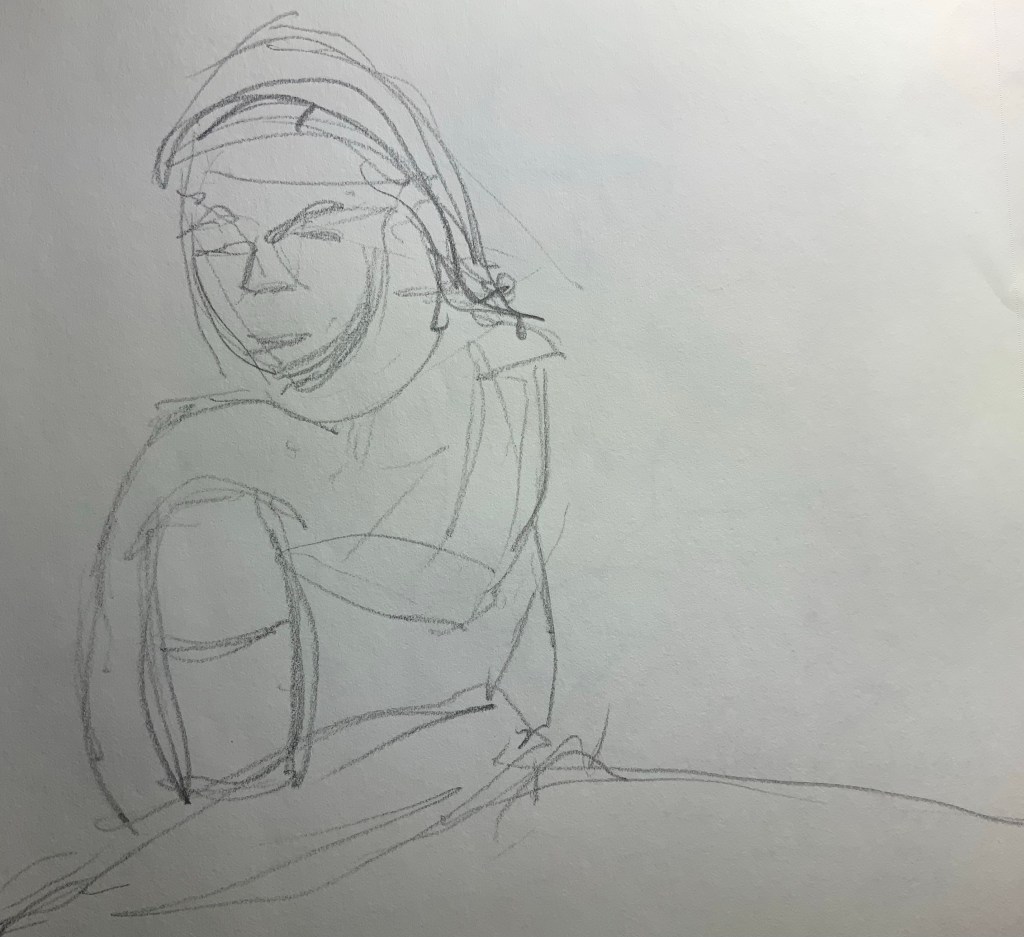
… The mark-making basic to drawing is the starting point of so much else: the development of written language, numbers, musical scores.

Drawings are the great teachers; they educate the eye and make us more conscious of seeing. They present visual power, relatively unbuffered by materials or size.

(Roberta Smith, “Drawing, a Cure for the January Blahs,” NYTimes, 1-20-22)
(c) 2022 JMN — EthicalDative. All rights reserved

Sally Michel (1902-2003) was 17 years his junior when she married Milton Avery (1885-1965) in 1926. A painter herself, she provided income as a freelance illustrator for 30 years while he painted full time. He never had a studio, and worked in their living room.

The view that Avery worked for decades to achieve a final blast of brilliance seems as antediluvian as the idea that he worked alone in a style that overpowered his wife’s work. First of all, they were more or less joined at the hip, working side by side, looking at and talking about art, for 40 years. As other art historians have suggested, it may be impossible to think of their style as anything but collaborative, especially since Michel was an illustrator, adept at abbreviating forms.

(Roberta Smith, “A Singular American Painter and His Perennially Disregarded Wife,” NYTimes, 5-12-22)
(c) 2022 JMN — EthicalDative. All rights reserved

“Mandible Wishbone Solvent” by Asiya Wadud (Poetry, March 2022). Pass 3 of 3.

Previous comment:
https://ethicaldative.com/2022/04/25/mandible-wishbone-solvent-pass-1-of-3/
https://ethicaldative.com/2022/05/01/mandible-wishbone-solvent-pass-2-of-3/

You. Be. Here. It’s an affirming imperative to exist, or be situate, in the speaker’s space-time. It’s addressed to “tilt” — twice “tender” now — and angled vertically to a plane christened “unearth,” or else one required to perform an act of unearth-ing, understood venturesomely as slipping Earth’s bond. The text pivots here as elsewhere on function-fluid diction in blurred contexts.

The reader has a blue-sky moment: A rocket breaking free of terrestrial gravity blazes its way towards a far trajectory. Gain of height thins blue atmosphere to a vanishing wake. Land and sea resolve into map-like features. It’s all a function of the “scant excess” of mad tilt, wrapped in whatever that “film” is. Such a sweet, severe angle would be “remiss in skies,” aeronautically delinquent for earthbound flight.

And to what end? “To wrest time.” Wresting is an act of forceful seizure. All life yanks itself from the jaws of death from one moment to the next, grabbing bits of time. Those “brimmed solvents,” the carbon syrups milked from ancient sediments on which futures for too long have been staked and stoked, are bested in promise by what “gives more” for snatching increments of futurity, which is …

And the reader’s meditation collapses. In the final analysis the text stands its ground, enclosed in its film, true only to its own designs. The reader has shaken his mind’s fist at it saying, You. Be. Clear. It has stayed frosty. It doesn’t give a shit for his demands. But when he averted his gaze in disgust, his eye had caught movement peripherally; the text made him look back. A loop was entered: attraction and repulsion went to war.

At length the reader exited the loop by ceding something — maybe a bit of complacency. Surrender feels not all good and not all bad. The reader makes a thing of his squabbles with the text. What you think isn’t what I wrote, says the poet. The reader responds, But you triggered a striving. You induced in me a commitment to be baffled for a time. And the reader is grateful for her text. He keeps whatever it wrested from him. It’s personal now.
(c) 2022 JMN — EthicalDative. All rights reserved

I’ve admired artist Outside Authority’s (www.outsideauthor.wordpress.com) lyrical renderings of UK churches and churchyards for some time. It’s stimulating to see a similar devotion to these spaces reflected in this Guardian article.

“Eight hundred years ago, pagan sites – springs, wells or woodland glades – had Christian churches built on top of them… Around the church is an area – the litten – where people are buried. A couple of hundred years later, somebody decided that all churches should have a wall placed around them. Since then, they’ve never been ploughed, treated with chemicals or anything like that. So you have this amazing genetic bank, which originated in whatever that habitat was 800 years ago, just sat there – and it’s still there.”
David Curry of the “Living Churchyards” project

(Alexander Turner, “God’s own gardens: why churchyards are some of our wildest nature sites,” theguardian.com, 5-6-22)
(c) 2022 JMN — EthicalDative. All rights reserved
Language Is a Weapon, Too. Keep It Sharp
When we lay fit blame at the feet of the venal, the craven and the vulpine, the blame lies at their feet.
Language standards must stand their ground. They’re all we’ve got at the moment.
(c) 2022 JMN — EthicalDative. All rights reserved