

Referencing https://ethicaldative.com/2021/06/20/the-quixote-funny-and-sad, in translating Martín de Riquer’s phrase “… Una diatriba para acabar con algo que hace mucho que se acabó…” I left out “hace mucho.” I should have written: “… A diatribe devoted to ending something which ended long ago…”
If Riquer had written hacía mucho, the translation would change to: “… A diatribe devoted to ending something which “had ended long ago…”
The pluperfect highlights a key point: Don Quijote is an anachronism in his own time. Everything about the crackpot knight on his shambling nag (rocín) is perceived by those he encounters as archaic. He exudes a whiff of olden times which are remote from their contemporary, 17th-century lives.
Cervantes legitimized writing that was meant to entertain, rather than instruct and edify. His beef with the stories that drove Alonso Quijano off the rails was that they were wretchedly told. He blew them out of the water with a new way of telling well nigh invented by him on the fly.
(c) 2021 JMN — EthicalDative. All rights reserved




 EthicalDative
Robert Hollander: Scholar-Translator
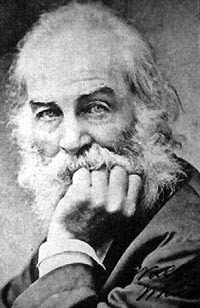
Robert Hollander, Princeton Dante scholar and translator, died in April, 2021. The translation of “The Divine Comedy” which he produced in close collaboration with wife Jean Hollander (d. 2019), herself a poet, is said to be among the “smoothest” and most accessible of the English versions.
Jean Hollander provided the spark for the translation project in 1997. Peering over her husband’s shoulder as he studied a 1939 translation of “The Divine Comedy,” she pronounced the text to be “awful.” Challenged by Mr. Hollander to do better, she returned two days later with a “free-verse rendering of the text in current English idiom.” “That’s not bad,” he said.
Their role-based collaboration is evoked in a tableau of tropical bliss:
(Alex Traub, “Robert Hollander, Who Led Readers Into ‘The Inferno,’ Dies at 87,” NYTimes, 6-8-21)
(c) 2021 JMN — EthicalDative. All rights reserved