Neruda XCIV

[XCIV]
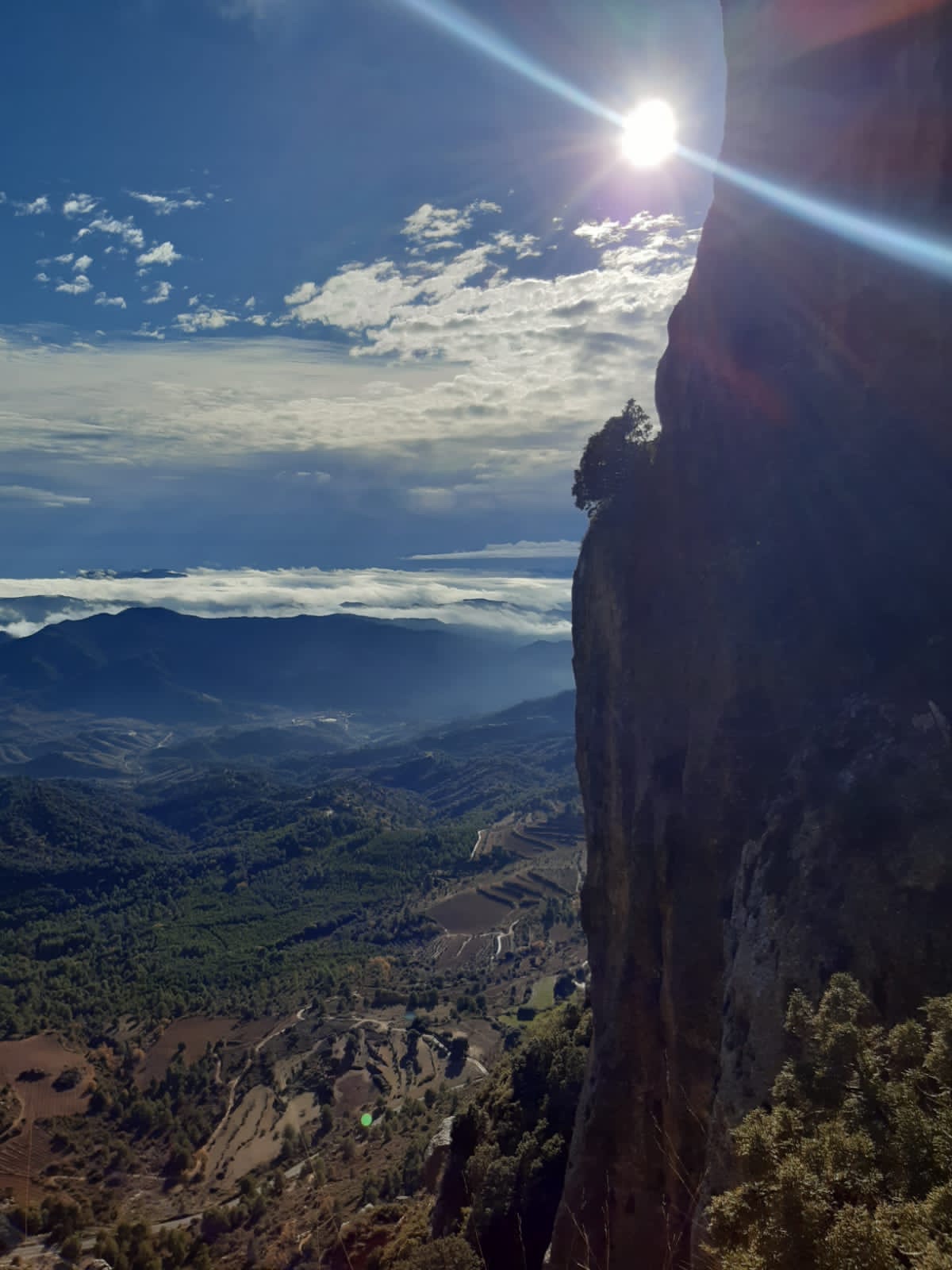
Si muero, sobrevíveme con tanta fuerza pura
If I die, survive me with so much pure force
que despiertes la furia del pálido y del frío,
that you awake the fury of the pallid and the cold,
de sur a sur levanta tus ojos indelebles,
from south to south raise your indelible eyes,
de sol a sol que suene tu boca de guitarra.
from sun to sun let your guitar mouth sound.

No quiero que vacilen tu risa ni tus pasos,
I want neither your laughter nor your steps to falter,
no quiero que se muera me herencia de alegría,
nor my inheritance of joy to die;
no llames a mi pecho, estoy ausente.
do not invoke my chest, I am gone.
Vive en mi ausencia como en una casa.
Live in my absence as if it were a house.

Es una casa tan grande la ausencia
It is such a grand house, absence,
que pasarás en ella a través de los muros
that in it you will pass straight through the walls
y colgarás los cuadros en el aire.
and you will hang the pictures in the air.

Es una casa tan transparente la ausencia
Absence is a house that’s so transparent
que yo sin vida te veré vivir
that, lifeless, I will see you live
y si sufres, mi amor, me moriré otra vez.
and if you suffer, love of mine, I’ll die again.

Veinte poemas de amor y una canción desesperada. Cien sonetos de amor, 1924, Pablo Neruda y Herederos de Pablo Neruda
1994, Random House Mondadori
Cuarta edición en U.S.A: febrero 2004

[English translation is mine.]

(c) 2020 JMN

Posted in Anthology | Tagged , , , , | Leave a comment

Alternatives to Fact

“I think that perception and comprehensible information based in truthful reality is what has been burned to the ground,” he says. “Answers are lit on fire like burning leaves in the wind. Nobody really has any facts.”

Never at a loss for words is George Condo. He calls his style “artificial realism” or “psychological cubism,” to give you an idea.

I keep returning to his remark that “nobody really has any facts.” The context is the viral divisiveness which is steadily gutting the American dispensation. Condo applies his wizard painting skills to the holocaust of perceptual consensus with gripping effect.

Having ditched Manhattan for the Hamptons to shelter from Covid, Condo pokes “truthful reality” in the kisser from his artful isolation. It’s as if the smithereens from serial explosions in the schism factory are landing on his picture plane. This-is-what-I-see-in-my-head contrivances confront the viewer with McEnany truculence: Look with these eyeballs, not yours.

The difference is that Condo’s disorienting figurations, modeled in loopy forms and luscious colors, are disarmingly engaging.

(Nadja Sayej, “George Condo: ‘Change can’t just be an idea or a slogan — it has to get real,’” theguardian.com, 11-6-20)

(c) 2020 JMN

Posted in Commentary, Quotations | Tagged , , , , , , | Leave a comment

Salman Toor

Ligaya Mishan’s early-December essay on cancel culture is well worth reading (“The Long and Tortured History of Cancel Culture,” NYTimes, 12-3-20).

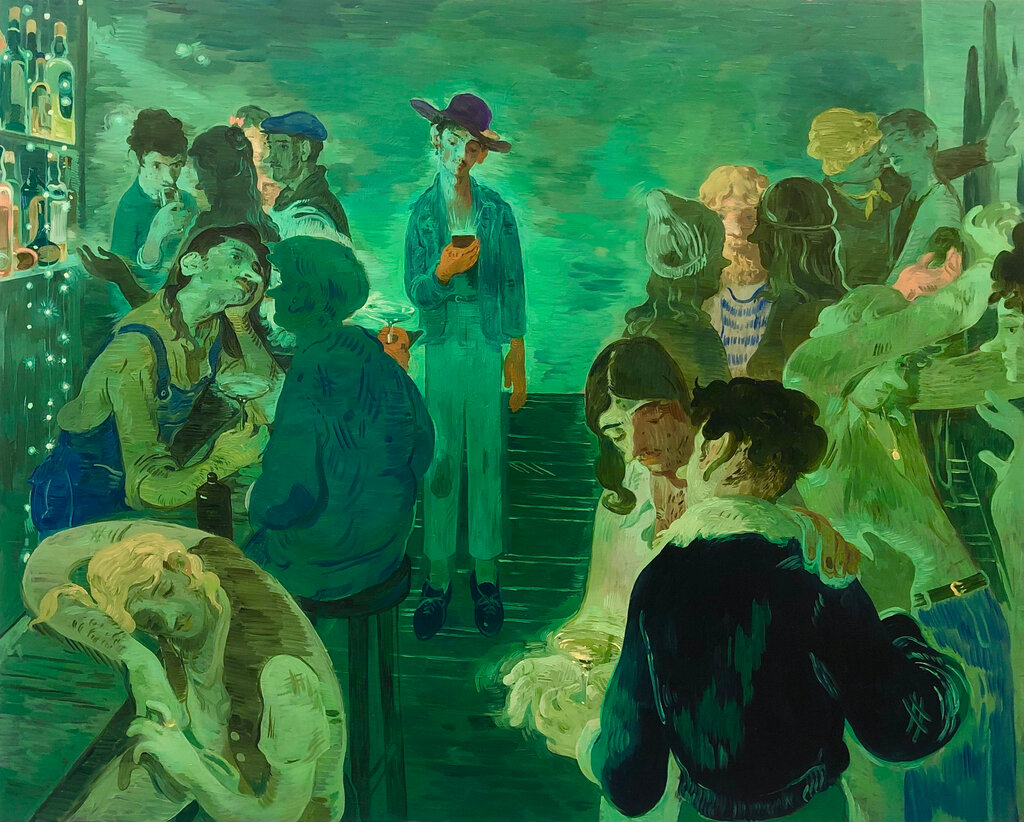
Initially, however, I was distracted from the essay itself by the paintings of Salman Toor which figure among the art works that illustrate it. I was attracted to Toor’s lush brushwork and use of pigment, as well as the arresting expressiveness, slightly cartoonish, of his figures. (Also, who has seen smart phones depicted in high art until now?)

Since then, Roberta Smith has given lavish treatment to the “evocative, tenderly executed paintings” of this Pakistan-born painter in “Salman Toor, A Painter at Home in Two Worlds” (NYTimes, 12-23-20). Mr. Toor (b. 1983) is based in New York City, and is the subject of a debut exhibition at the Whitney Museum of American Art.

I like Smith’s characterization of the show’s work as almost forming “an unusually sumptuous graphic novel.”

She ranks Toor among several “consummate stylists” whose paintings focus on gay life and love.

His delicate, caressing brush strokes and intriguing textures are somewhat too large for the images. So they remain staunchly visible and comforting, conveying crucial details and capturing the telling facial expressions at which the artist excels.

(c) 2020 JMN

Posted in Commentary, Quotations | Tagged , , , , , | 2 Comments

Missionary Phallacy

Shere Hite (1942-2020) published “The Hite Report” in 1976. It gathered candid feedback from women suggesting canonical sexual congress was not the be-all and end-all prescribed by male-centric orthodoxy. Two more best-selling studies followed in 1981 and 1987.

Hite’s work provoked a prolonged storm of blowback. Critics tagged her a man-hater. Social scientists faulted her conclusions as flawed and unreliable because her samples of women didn’t match census data. Critics referred to her as “Sheer Hype.” Playboy magazine called her book “The Hate Report.” Religious groups credited her with destroying traditional family values. She was stalked by paparazzi and received death threats.

Ultimately Hite found living in America untenable for continuing her work. In 1995, she became a German citizen and lived in Europe until her death this year. She published her last book, “The Hite Report on Hite: A Sexual and Political Autobiography,” in 2000.

The article referenced here cites her affecting description of discovering her sexuality “on her own”:

“Not hearing about it first through pornography or seeing naked bodies displayed for profit on every newsstand, but just alone in my room, in my own bed, finding my own sensual self.”

(Jazmine Hughes, “Shere Hite Explained How Women Orgasm, and Was Hated for It,” The New York Times Magazine, “Remembering some of the artists, innovators and thinkers we lost in the past year.” Hite’s obit was published in the NYTimes on 9-11-20)

(c) 2020 JMN

Posted in Commentary | Tagged , , , , , | Leave a comment

Language and Music

“It takes a lifetime to learn shakuhachi. The earlier you start, the longer it takes.”
(Japanese saying quoted by Zac Zinger on Adam Neely’s podcast. The shakuhachi is a bamboo flute.)

I learned Spanish because I had to. From puberty forward it kept calling and I spent thousands of hours at it. It was a dementedly persistent grappling for the mechanics and spirit of the language inflamed by lust to inhabit a different culture from mine.

When it came to teaching Spanish, however, I lacked the requisite charisma and phlogiston. The prescribed pedagogy said to avoid the stultification inflicted by conjugation and descriptive grammar. Apply instead dynamic improvisation, role playing, spontaneous invention of phrase-eliciting scenarios, fomentation of rich classroom interactions, targeted motivational cultural contextualization, and other strategies conducive to inciting a desire to acquire practical fluency within the confines of a compressed timeframe and mandated curriculum of core competencies exclusive of the foreign language elective.

A comparable evasiveness infiltrates guitar manuals and instructional videos; they, too, try to shorten the path. They dwell on finger patterns, eliding the complex business of grasping the musical structures and relationships behind those patterns.

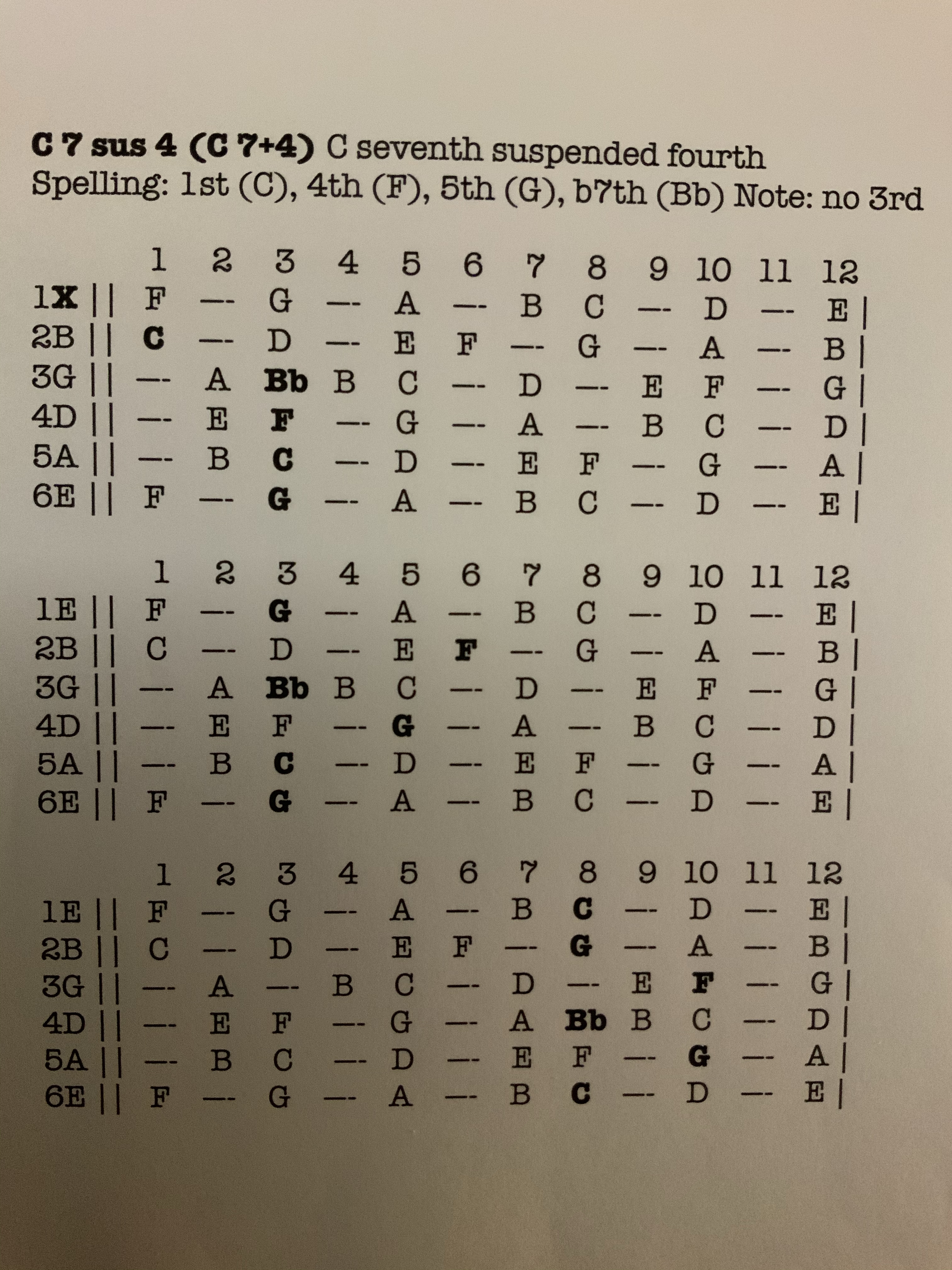
In my own guitar peregrination I’ve doubled back to acquire more of the rules and grammar of music: Where are all the B-flats on the neck? Which notes of a chord is each finger playing wherever the chord is fretted? This sterner, more exacting cerebration applied to practice gets me further than tourist riffs and licks.

A chord properly diagrammed has a compressed power akin to that of a verb paradigm or math formula or elegant algorithm.

(c) 2020 JMN

Posted in Commentary | Tagged , , | Leave a comment

Virago

A correspondent said she was reading a “virago book.” I said. “Is it by, or about, one?” It turns out Virago is a distinguished publishing house. As if on cue, this informative review of Lennie Goodings’s memoir appears.

Virago started up in London in 1973, with a mission to “shake the canon out of its primness and timidity, to shatter the silences around women’s lives.”

Goodings, a young Canadian, teamed with founder Carmen Callil in 1977, and found publishing to be “a fusty little industry, with men her own age braying at her, demanding coffee.”

They published Margaret Atwood, Angela Carter, Adrienne Rich, Grace Paley, Maya Angelou, Stevie Smith. Callil is credited with resurfacing the work of Vera Brittain, Willa Cather, Elizabeth Taylor, Rebecca West, and many others.

Anthony Burgess piggishly harrumphed in earshot of Virago about “chauvinist sows.”

The reviewer’s summation has supportive nuance:

… This deeply modest book… contains its own critique and argues against its own circumspection, deploring the feminine habits of “modesty, likability and anxiety.”

(Parul Sehgal, “When Publishing Women Was a Radical Act: A British Editor Looks Back,” NYTimes, 12-15-20)

(c) 2020 JMN

Posted in Commentary, Quotations | Tagged , , , , , | Leave a comment

Neruda XCV

[XCV]
¿Quiénes se amaron como nosotros? Busquemos
Who else has loved like us? Let us seek
las antiguas cenizas del corazón quemado
the ancient ashes of the burnt heart
y allí que caigan uno por uno nuestros besos
and there let our kisses fall one by one
hasta que resucite la flor deshabitada.
until the deserted flower returns to life.

Amemos el amor que consumió su fruto
Let us cherish the love that consumed its fruit
y descendió a la tierra con rostro y poderío:
and came down to earth with face and power:
tú y yo somos la luz que continúa,
you and I are the light that carries on —
su inquebrantable espiga delicada.
its delicate, unbreakable ear of grain.

Al amor sepultado por tanto tiempo frío,
To this love entombed for so much frigid time,
por nieve y primavera, por olvido y otoño,
by snow and Spring, forgetfulness and Fall,
acerquemos la luz de una nueva manzana,
let us draw close the light of a new apple,

de la frescura abierta de una nueva herida,
that of the open freshness of a new wound,
como el amor antiguo que camina en silencio
like the ancient love that walks in silence
por una eternidad de bocas enterradas.
through an eternity of buried mouths.

Veinte poemas de amor y una canción desesperada. Cien sonetos de amor 1924, Pablo Neruda y Herederos de Pablo Neruda 1994, Random House Mondadori Cuarta edición en U.S.A: febrero 2004

[English translation is mine.]

(c) 2020 JMN

Posted in Anthology | Tagged , , , , , , | Leave a comment

Beyond Noise

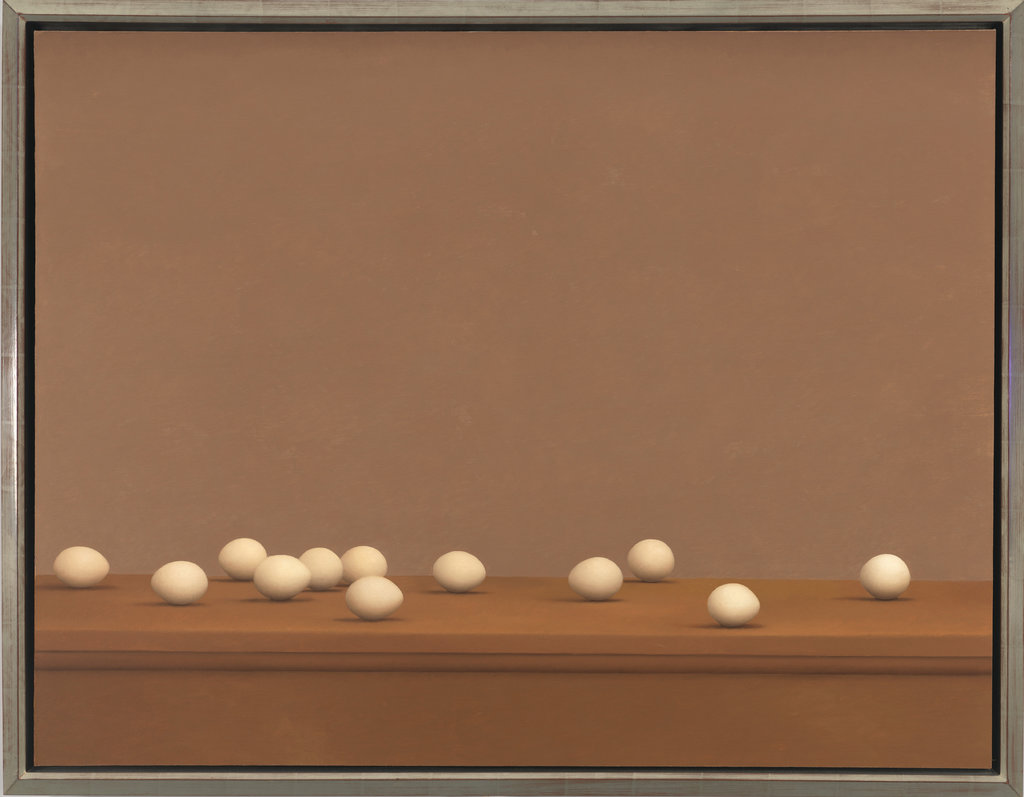
The painter William Bailey died in April, 2020, aged 89. He taught for many years at the Yale School of Art, and is said to have influenced generations of students.

In 2010, Bailey decried the amount of “noise” present in contemporary art. “So much gesture,” he said.

The comments about Bailey’s work make a certain amount of noise themselves, having in common a perception of complexity lurking beneath the silent surfaces.

He swathed simple objects “in a breathless, deceptively serene atmosphere heavy with mystery.”

He conjured a “timeless world inhabited by Platonic forms, recognizable but uncanny…”

“They are at once vividly real and objects in dream…” (Hilton Kramer, 1979).

His female figures… “are disconcertingly impassive, implacable and unreadable, fleshly presences breathing an otherworldly air.”

His apparent traditionalism was entirely idiosyncratic, “‘a modernism so contrarian,’ the artist Alexi Worth wrote…, ‘that it feels… almost like a brand of outsider art.”

My ten cents is that he ventured devoutly into the realm of the exquisitely plain, but Mr. Bailey has the last word:

“I admire painters who can work directly from nature, but for me that seems to lead to anecdotal painting… Realism is about interpreting daily life in the world around us. I’m trying to paint a world that’s not around us.”

(William Grimes, “William Bailey, Modernist Figurative Painter, Dies at 89,” NYTimes, 4-18-20)

(c) 2020 JMN

Posted in Commentary, Quotations | Tagged , , , , | Leave a comment

Lineation Meditation 1

This gallery contains 1 photo.

… If a clodbe washed awayby the sea,Europeis the lessas well as ifa promontory were,as well as ifa manor of thy friendsor thine ownwere… In free verse, are line breaks the product of daemonic possession? Sovereign whim? Delphic insight into … Continue reading

More Galleries | Tagged , , , , | Leave a comment

Beethovian

If there’s something that can be called a Beethovian gravitas assumable by a sculptor who is female, artist Maggi Hambling is a contender. That’s by way of an admiring aside to the topic of this article.

“Luxuriantly bushed,” “obligingly passive,” “implausibly perky” are phrases that Stuart Jeffries brings to bear on Hambling’s recently unveiled statue of a naked Mary Wollstonecraft, author of “A Vindication of the Rights of Woman,” in Newington Green, north London.

“Instant furore” around an art work almost always argues in its creative favor. There’s stolid momentum in all ages behind making only what middling palates want to taste. Hambling flouts it with style and fervor.

Bee Rowlatt, author of “In Search of Mary” and advocate for a statue of Wollstonecraft, states a useful slant to the case:

The idea, as Rowlatt explained, was to represent the birth of a movement, rather than Wollstonecraft herself. The hope, too, was to get away from putting people on pedestals.

(Stuart Jeffries, ‘There are plenty of schlongs in art’ — Maggi Hambling defends her nude sculpture of Mary Wollstonecraft,” theguardian.com, 12-16-20)

Footnote
This article corroborates the vitality of salty parlance around genitalia. I first heard the Yiddish slang for “penis” spoken to a national public when candidate Trump said, in 2015, that Hilary Clinton “got schlonged” by Barack Obama. “She lost, I mean she lost,” he added helpfully (cnn.com, 12-22-15). This was roughly a year before his earlier “pussy” remark came to light — another milestone. History will credit Trump with forcing journalism to flex its criteria for what’s printable.

(c) 2020 JMN

Posted in Commentary | Tagged , , , , , , , | Leave a comment