Travesía (7)

Versión castellana del poema “Crossing Brooklyn Ferry” (1856) de Walt Whitman
English text at http://www.poetryfoundation.org
Spanish Interpretation by JMN

Parts 4 and 5 in their entirety follow. Cleave to awareness there are 9 parts.

(4)
These and all else were to me the same as they are to you,
Todo esto y lo demás era lo mismo para mí que para vosotros,
I loved well those cities, loved well the stately and rapid river,
Quería bien aquellas ciudades, y bien quería el río majestuoso y raudo,
The men and women I saw were all near to me,
Los hombres y las mujeres que vi me eran todos cercanos,
Others the same—others who look back on me because I look’d forward to them,
Otros igual — los que me devuelven la mirada porque yo los vislumbré anticipadamente,
(The time will come, though I stop here to-day and to-night.)
(Vendrá la hora, aunque aquí me detengo hoy y esta noche.)

5
What is it then between us?
¿Qué es entonces lo que hay entre nosotros?
What is the count of the scores or hundreds of years between us?
¿Cuál es la suma de las veintenas o cientos de años que nos separan?

Whatever it is, it avails not—distance avails not, and place avails not,
La suma que sea, para nada sirve — no sirve la distancia, ni sirve el lugar,
I too lived, Brooklyn of ample hills was mine,
También yo viví, el Brooklyn de las amplias colinas era mía,
I too walk’d the streets of Manhattan island, and bathed in the waters around it,
También yo recorrí las calles de la isla de Manhattan, y me bañé en las aguas circundantes,
I too felt the curious abrupt questionings stir within me,
También yo sentí suscitarse en mí las interrogaciones curiosas y bruscas,
In the day among crowds of people sometimes they came upon me,
De día entre tropeles de gente a veces me sobrevenían,
In my walks home late at night or as I lay in my bed they came upon me,
En mi camino nocturno a casa o bien estirado en la cama me sobrevenían,
I too had been struck from the float forever held in solution,
También yo había sido acuñado de lo flotante guardado en solución sempiterna,
I too had receiv’d identity by my body,
También yo había recibido identidad por vía de mi cuerpo,
That I was I knew was of my body, and what I should be I knew I should be of my body.
Lo que era yo reconocía provenir de mi cuerpo, y lo que debería de ser yo reconocía deber provenir de mi cuerpo.

(c) 2021 JMN. All rights reserved

Posted in Anthology | Tagged , , , , | Leave a comment

Wide Load

Jason Farrago lavishes a container shipload of exegetical rumination on Julie Mehretu’s paintings.

Lines accreted in an essentially radial configuration, with large arcs orbiting an absent central axis, and orthogonal spokes sprouting from the core.

(The Mehretu black line is a thing of wonder, as confident and unmistakable as Schiele’s trembling contours.) It’s as if she discovered, after years translating cities and buildings into abstract form, that whole urban systems were already embedded inside her strokes.

(Jason Farrago, “Julie Mehretu’s Long Journey Home,” NYTimes, 3-25-21)

Less talkin’, more gawkin’, sez me.

(c) 2021 JMN

Posted in Commentary, Quotations | Tagged , , , , , , , , | 7 Comments

Clarice Beckett – The Present Moment — leonieandrews — Silicon Valley Types

“roll up your catalogue and view each picture through it. … You will be rewarded with a wonderful suggestion of light and air and sufficient detail, and finish.” So said critic Percy Leason and  fellow student of Clarice Beckett (1887- 1935), of her 1931 solo exhibition *. Tea Gardens, c.1933, oil on canvas on pulpboard, […] […]

Clarice Beckett – The Present Moment — leonieandrews — Silicon Valley Types
Posted in Commentary | Tagged | Leave a comment

Neruda LXXXV

[LXXXV]
Del mar hacia las calles corre la vaga niebla
A seaward-springing hint of fog runs through the streets
como el vapor de un buey enterrado en el frío,
like steam from an ox interred in the cold,
y largas lenguas de agua se acumulan cubriendo
and long tongues of water rise to inundate
el mes que a nuestras vidas prometió ser celeste.
the month that promised to our lives to be sky-blue.

Adelantado otoño, panal silbante de hojas,
Autumnal leading edge, sibilant honeycomb of leaves,
cuando sobre los pueblos palpita tu estandarte
when your standard flutters over towns
cantan mujeres locas despidiendo a los ríos,
madwomen sing goodbyes to the rivers,
los caballos relinchan hacia la Patagonia.
horses neigh in Patagonia’s direction.

Hay una enredadera vespertina en tu rostro
There is a climbing evening vine upon your face
que crece silenciosa por el amor llevada
which grows in silence transported by love
hasta las herraduras crepitantes del cielo.
to the very sky’s clatter of shod hooves.

Me inclino sobre el fuego de tu cuerpo nocturno
I lean over the fire of your nocturnal body
y no sólo tus senos amo sino el otoño
and love not just your breasts but autumn, too,
que esparce por la niebla su sangre ultramarina.
that smears its ultramarine blood through the mist.

Veinte poemas de amor y una canción desesperada. Cien sonetos de amor
1924, Pablo Neruda y Herederos de Pablo Neruda
1994, Random House Mondadori
Cuarta edición en U.S.A: febrero 2004

[English translation by JMN.]

(c) 2020 JMN. All rights reserved

Posted in Anthology | Tagged , , , , | Leave a comment

Animales/Animals

Learn Spanish Knowing Mexican Culture/Blanca Caballero

Animales/Animals
Posted in Commentary | Leave a comment

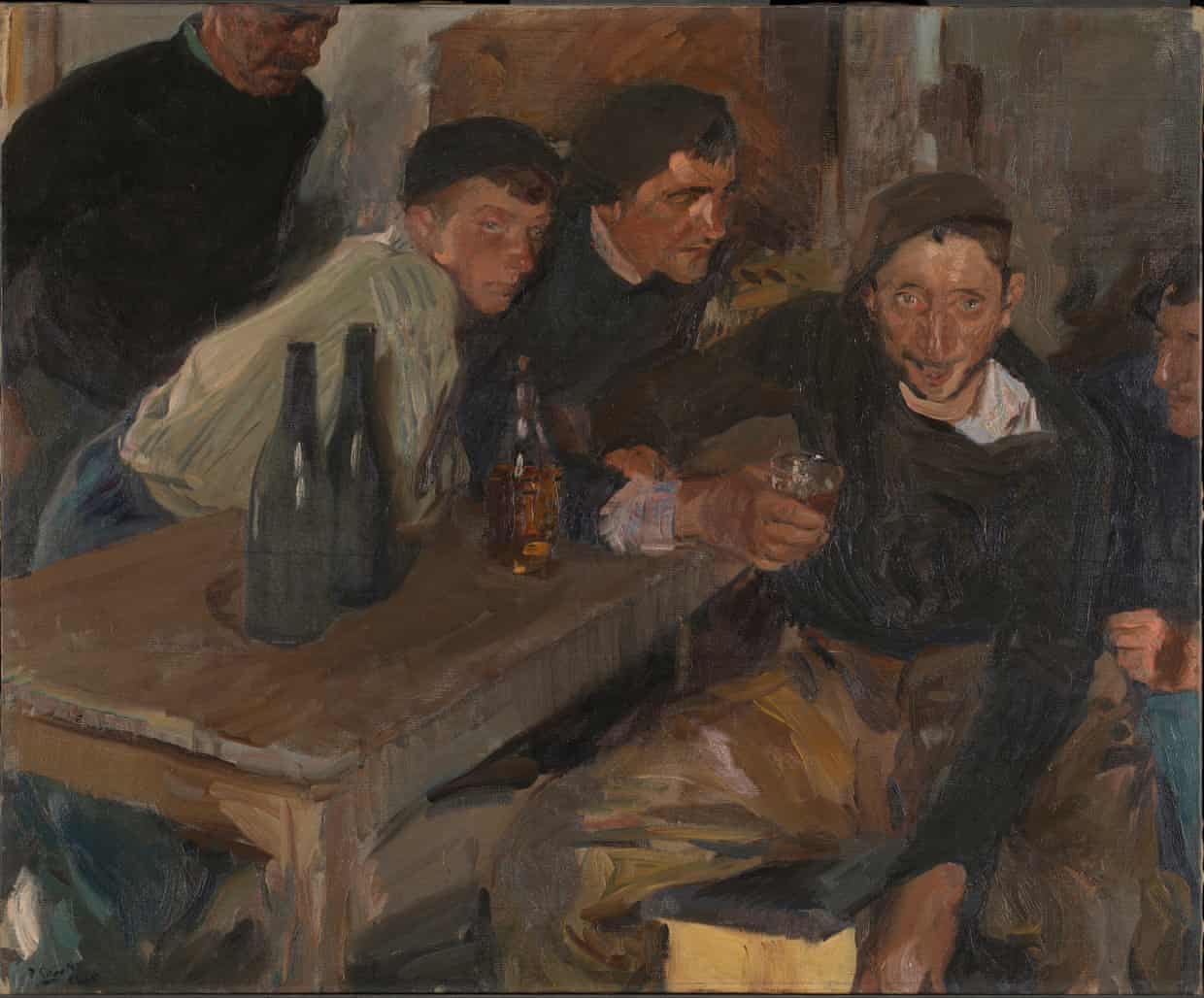
‘El Borracho’ de Joaquín Sorolla

“As if in preparation, with this deeply human painting he returned to his engagement with the Spanish peasant and, perhaps as important, to making brilliant use once more of the indispensable Spanish colour – black.”

(Mark Brown, “National Gallery buys ‘dazzling’ Joaquín Sorolla painting,” theguardian.com, 6-9-20)

Comentario docente españolista a favor de la persona que sabe quién ella es, o sea, que se autoidentifica en leyendo esto. ¿Está claro?

— Oye, ****, me gusta este cuadro de Sorolla. ¿A ti te gusta? Hay un colorido sobrio pero rico — negros y grises, sí, pero veo también amarillos, morados, verdes y azules. Y blancos, desde luego. Son matices. ¿Te acuerdas de la palabra ‘matiz’ junto con ‘lápiz” que vimos el lunes? Hay un poco de ‘bosquejo’ en este cuadro. El pintor maneja el pincel con mucha confianza y soltura. Es un estilo que admiro. Pincelazos fuertes.
¡Hasta pronto!
Jaime

(c) 2021 JMN

Posted in Commentary | Tagged , , , , | 2 Comments

Travesía (6)

Versión castellana del poema “Crossing Brooklyn Ferry” (1856) de Walt Whitman
English text at http://www.poetryfoundation.org
Spanish Interpretation by JMN

[Translator’s note: I’m uncomfortably aware that I border on paraphrase and not translation in the last line particularly. The line casts flicker down into the clefts of streets, which sounds glorious to me in English — street clefts! — but I could not pull out anything down into “las hendiduras de calles” or alternatives that didn’t grind the gears in Spanish.]

End of part 3. Be mindful there are 9 parts.

(…3)
The sailors at work in the rigging or out astride the spars,
Los marineros al trabajo en la jarcia o bien a horcajadas sobre los palos,
The round masts, the swinging motion of the hulls, the slender serpentine pennants,
Los mástiles redondos, el balanceo de los cascos, los delgados banderines serpentinos,
The large and small steamers in motion, the pilots in their pilot-houses,
Los buques de vapor grandes y pequeños en marcha, los timoneles en sus cámaras,
The white wake left by the passage, the quick tremulous whirl of the wheels,
La estela blanca que deja el pasaje, el remolino rápido y trémolo de las ruedas,
The flags of all nations, the falling of them at sunset,
Las banderas de todas las naciones, su caída al ponerse el sol,
The scallop-edged waves in the twilight, the ladled cups, the frolicsome crests and glistening,
Las olas de borde festoneado en el crepúsculo, las copas servidas de cucharón, las crestas juguetonas y relucientes,
The stretch afar growing dimmer and dimmer, the gray walls of the granite storehouses by the docks,
El tramo lejano volviéndose cada vez más tenue, las muros grises de los almacenes graníticos lindando los muelles,
On the river the shadowy group, the big steam-tug closely flank’d on each side by the barges, the hay-boat, the belated lighter,
En el río el grupo sombrío, el gran remolcador de vapor flanqueado de las barcazas, el barco de heno, la gabarra tardía,
On the neighboring shore the fires from the foundry chimneys burning high and glaringly into the night,
En la orilla colindante los fuegos de las chimeneas fundidoras ardiendo altos y deslumbrantes hasta entrada la noche,
Casting their flicker of black contrasted with wild red and yellow light over the tops of houses, and down into the clefts of streets.
Destellando su contraste de negro con el delirio de luz roja y amarilla arrojada sobre los techos, y penetrando los recovecos callejeros.

(c) 2021 JMN. All rights reserved
Posted in Anthology | Tagged , , , , | Leave a comment

Still Life

(c) 2021 JMN

Posted in Commentary | Tagged | Leave a comment

Neruda LXXXVI

http://www.outsideauthor.wordpress.com

[LXXXVI]
Oh Cruz del Sur, oh trébol de fósforo fragante,
O Southern Cross, O cloverleaf of fragrant phosphorous,
con cuatro besos hoy penetró tu hermosura
today your beauty pierced with four kisses
y atravesó la sombra y mi sombrero:
and crossed over the shadow and my hat:
la luna iba redonda por el frío.
the moon was going roundly through the cold.

Entonces con mi amor, con mi amada, oh diamantes
Then with my love, with my loved one, O diamonds
de escarcha azul, serenidad del cielo,
of blue frost, serenity of sky,
espejo, apareciste y se llenó la noche
mirror, you came out and the night brimmed
con tus cuatro bodegas temblorosas de vino.
with your four quivering cellars of wine.

Oh palpitante plata de pez pulido y puro,
O throbbing piscatory silver polished and pure,
cruz verde, perejil de la sombra radiante,
green cross, adornment of the radiant shade,
luciérnaga a la unidad del cielo condenada,
firefly consigned to the oneness of the sky,

descansa en mí, cerremos tus ojos y los míos.
rest in me, let us, you and I, close our eyes.
Por un minuto duerme con la noche del hombre.
For one minute sleep with mankind’s night.
Enciende en mí tus cuatro números constelados.
Light inside me your four starry numerals.

Veinte poemas de amor y una canción desesperada. Cien sonetos de amor
1924, Pablo Neruda y Herederos de Pablo Neruda
1994, Random House Mondadori
Cuarta edición en U.S.A: febrero 2004

[English translation by JMN.]

(c) 2021 JMN. All rights reserved
Posted in Anthology | Tagged , , , , | Leave a comment

Story Power

There is one form of power that has fascinated me ever since I was a girl… the power of storytelling.

In this May, 2019 essay, novelist Elena Ferrante writes that the “Decameron” by Giovanni Boccaccio (1313-1375) made a great impression on her in her youth.

In this work, which is at the origin of the grand Italian and European narrative traditions, 10 youths — seven women and three men — take turns telling stories for 10 days.

The young Ferrante liked that seven of Boccaccio’s ten narrators were women. (In the framework that Boccaccio contrives for his tales the storytellers are passing the time while shielding from the Black Death in a country villa. It was seven centuries before Netflix.)

Ferrante’s conclusion seems as vital today as it was in the 14th century and last May:

The female story, told with increasing skill, increasingly widespread and unapologetic, is what must now assume power.

Elena Ferrante is the author of the four Neapolitan novels: “My Brilliant Friend,” “The Story of a New Name,” “Those Who Leave and Those Who Stay” and “The Story of the Lost Child.” This essay was translated by Ann Goldstein from the Italian.

(Elena Ferrante, “A Power of Our Own,” NYTimes, 5-17-19. The photograph is from Moya Lothian-McLean, “She Was Just Walking Home,” NYTimes, 3-17-21))

(c) 2021 JMN

Posted in Commentary, Quotations | Tagged , , , , , , | Leave a comment