

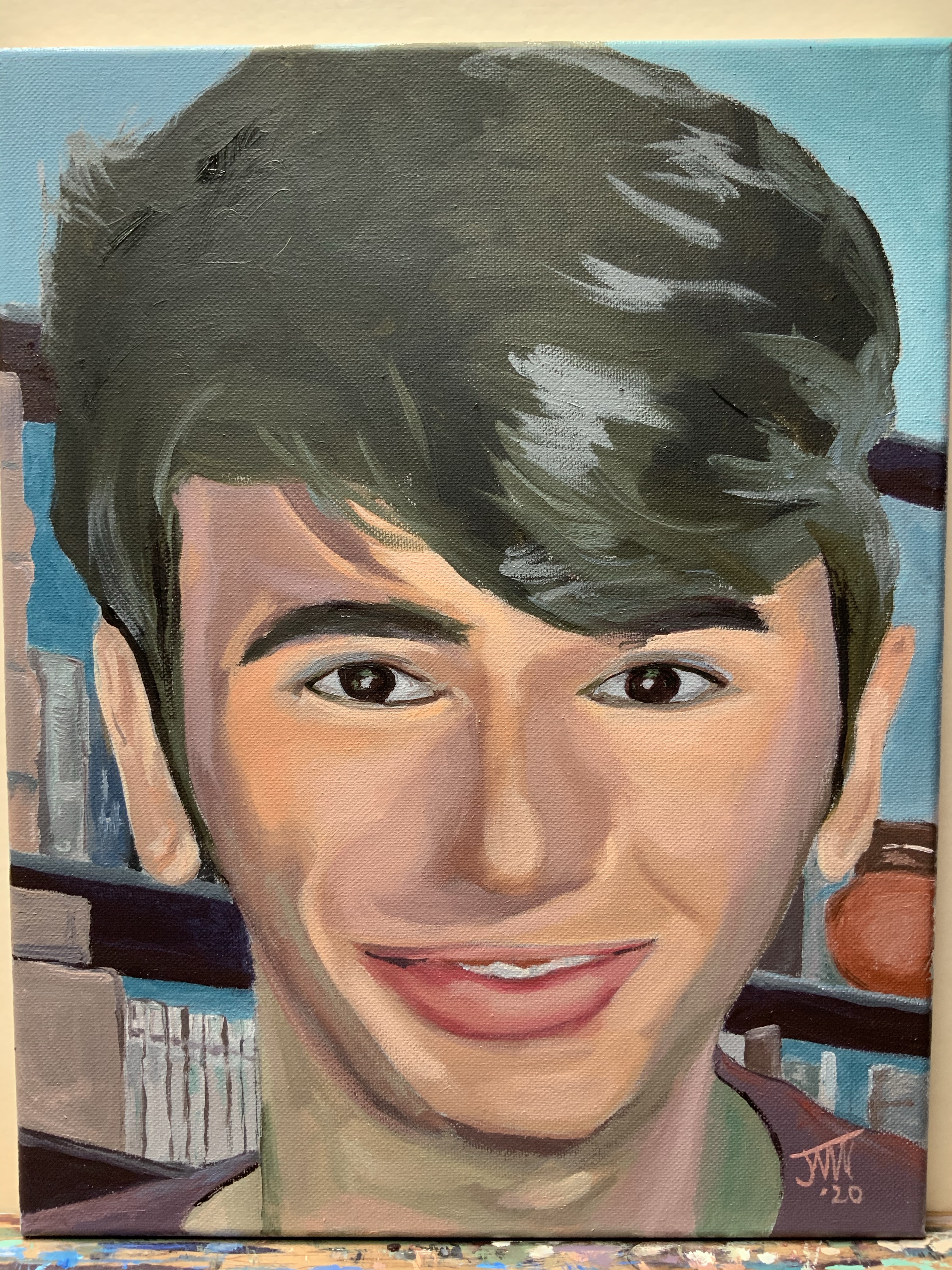
On Sept. 20, 1958, while signing copies of his first book “Stride Toward Freedom” in a Harlem department store, Dr. Martin Luther King was stabbed in the chest by a young woman. The weapon, a letter opener, grazed his aorta.
His attacker, Izola Ware Curry, was a mentally ill woman who believed Dr. King and others were following her.
NYPD Officer Al Romano, age 31 and on the job three years, took the call accompanied by rookie Officer Philip Romano. Their alert actions helped save Dr. King.
Dr. King spent weeks in New York City recovering. He addressed reporters from Harlem Hospital: “First let me say that I feel no ill will toward Mrs. Izola Curry and know that thoughtful people will do all in their power to see that she gets the help she apparently needs if she is to become a free and constructive member of society… A climate of hatred and bitterness so permeates areas of our nation that inevitably deeds of extreme violence must erupt.”

[Dr. King] later wrote a letter to thank the police. “I have long been aware of the meaning of the phrase ‘New York’s finest’ when applied to members of the N.Y. Police Department,” he wrote. “From the moment of my unfortunate accident, I have concurred, wholeheartedly, in that appellation. There are none finer.”
During a speech in Memphis in 1968, he would reflect on that day… “It came out in The New York Times the next morning that if I had merely sneezed, I would have died… I’m so happy that I didn’t sneeze”…
The following day, Dr. King was shot dead.
(Michael Wilson, “Before ‘I Have a Dream,’ Martin Luther King Almost Died. This Man Saved Him,” NYTimes, 1-14-21)
(c) 2020 JMN





On a Parlous Trek the Ground Slopes East
The gap between China and the United States is shrinking as China is the only major economy expected to report economic growth for 2020 despite the pandemic. And brawling with itself at some crossroad truck stop far over the horizon lay my lost homeland.
Paul Salopek is walking around the world. He’s at work on a book about his experiences. Two things leap from his essay in the NYTimes: (1) the eloquence of a prize-winning journalist; (2) the intrepidity bordering on death wish of his undertaking, partnered with a capacity for punishing exertion and privation.
Walking through Afghanistan in 2017, I saw how little the outside world’s disdain for Central Asia has changed since then… The only visible evidence of America’s catatonic, $2 trillion war in Afghanistan was the exhausted face in my pocket shaving mirror.
… Meanwhile, the world walks on. And the ground slopes east toward an Asian century… In Kazakhstan, Chinese workers dressed in spotless coveralls came out to gape as I led my cargo horse through their colossal oil field. I must have seemed a raggedy apparition from the distant past, some mirage conjured by the wild steppe. I felt like one. They fed me ice cream.
(Paul Salopek, “Shadows on the Silk Road,” NYTimes, 1-16-21)
(c) 2020 JMN