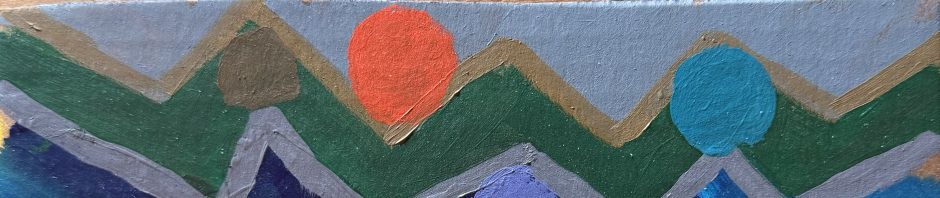

Two descriptions in this article about Cézanne are helpful for me.
One concerns Camille Pissarro’s treatment of edges:
Pissarro was the subtlest of the leading Impressionists, devising ways of giving distinctive presence to each part of a painting, by, for example, defining the edges of objects with the paint that surrounded them. For him, an edge was a place where paint didn’t stop but only changed color.
This supports a leeriness I picked up somewhere at using hard outlining in painting — no more defensible a stance, of course, than any other hideboundedness respecting style or technique.
The second concerns Cézanne’s approach to drawing:
Cézanne was fearless of error. You see that in his figure drawings from sculpture. If a contour isn’t quite right, he doesn’t correct it (the one drafting tool that he seems never to have employed is the eraser): he multiplies it, with lines on top of lines. (There’s accuracy in there somewhere.)
The approach woos me away from some of the terror of error in drawing, though I’m led to wonder if “accuracy” is precisely, or all of, what Cézanne strove for. (?)
(Peter Schjeldahl, “My Struggle With Cézanne,” The New Yorker, 6-21-21)
(c) 2021 JMN — EthicalDative. All rights reserved


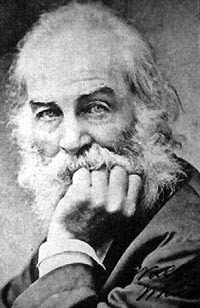



 EthicalDative
¡Salve, Profesor!
I connected me and a dot out of the blue last night. A bouncy man I remember only as “Dr. Rubio” who taught the Latin class of my cohort at the University of Barcelona cropped up in a scholarly note:
“In the collation of the text of the first edition [of the Avellaneda “Quijote”] don Gabriel Oliver and don Francisco Rico Manrique have assisted me; for the interpretation of the Latin verses of chapters XI and XXXVI I’ve had recourse to the invaluable assistance of professors don Lisardo Rubio, don Sebastián Mariner and don Juan Bastardas. My cordial thanks to all of them.” (My translation)
Lisardo Rubio Fernández, redoubtable Latinist, lived from 1915 to 2006. He was born in Narayola, district of Camponaraya, in El Bierzo, province of León. He held the chair of Latin philology at the University of Barcelona and afterwards at the Complutense University of Madrid until retiring in 1985. Eminent among his translations are “The Golden Ass” of Apuleius and “The Satyricon” of Petronius. (Wikipedia)
¡Salve, Doctor! Much respect from the sole gringo in your class. Descanse en paz.
(c) 2021 JMN — EthicalDative. All rights reserved